Bitcoin began August near US$62,800 (AU$87,920) and broke above US$80,000 (AU$112,000) by August 24. It was Bitcoin’s best monthly performance since 2017. Three forces helped drive the rally: a US Treasury liquidity move, a major short squeeze, and US$1.92 billion in weekly ETF inflows. At the same time, Strategy raised US$2 billion without buying a single bitcoin. That could be disciplined treasury management. It could also be a signal worth watching. XRP surged 44% as crypto adoption gathered pace in South Korea. The country’s largest financial groups are building stablecoin infrastructure, while Ripple continues to expand its banking partnerships. Ethereum also took its first clear step toward protection from future quantum-computing threats. And Standard Chartered analyst Geoff Kendrick kept his US$500,000 (AU$700,000) Bitcoin price target for 2030. That target looks different with Bitcoin near US$80,000 than it did near US$62,000. Let’s get into it.
Bitcoin’s Best Month Since 2017
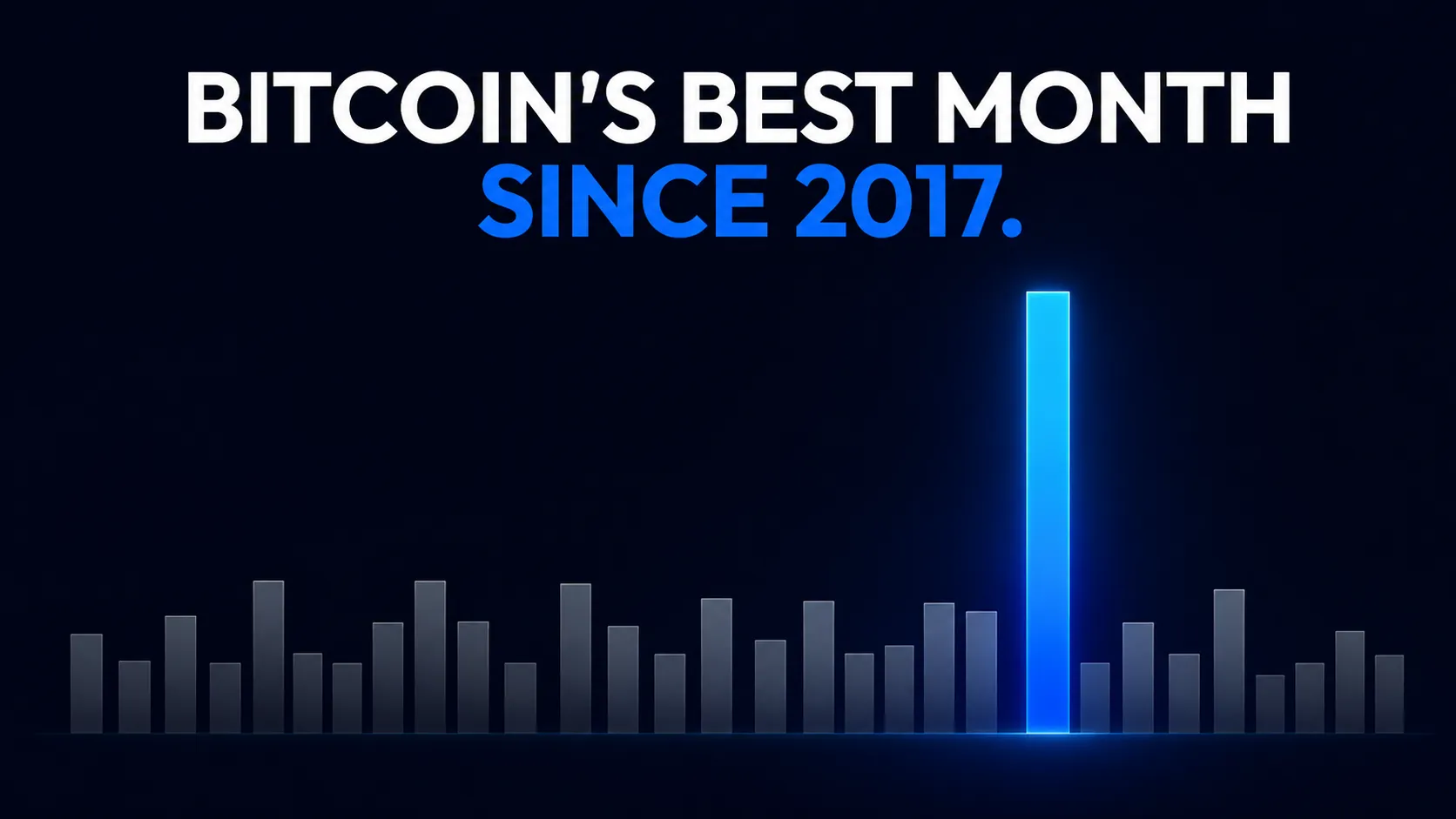
Bitcoin started August around US$62,800 (AU$87,920) and briefly broke above US$81,000 (AU$113,400) on August 24. It gained roughly 25% during the month, its strongest monthly performance since 2017.
Three main forces drove the move.
The first was a US Treasury decision to double its bond buyback program from US$2 billion to at least US$4 billion per operation.
In simple terms, the government increased the amount of its own debt it buys from the market. These purchases can put more cash into the financial system and ease financial conditions.
Easier financial conditions often support assets such as Bitcoin. Investors tend to take more risk when cash is easier to access and borrowing costs fall. Markets saw the Treasury move as a sign that conditions could loosen, and Bitcoin rallied soon after.
The second force was a short squeeze.
A short squeeze happens when traders bet that a price will fall, but it rises instead. Those traders may have to buy the asset to limit their losses. Their buying pushes the price higher and can force more short sellers to do the same.
More than US$4 billion (AU$5.6 billion) in bearish crypto positions were liquidated within days. That added heavy buying pressure to the market.
The third force was demand for Bitcoin ETFs.
An exchange-traded fund, or ETF, lets investors gain exposure to Bitcoin’s price without buying or storing Bitcoin themselves. Investors can trade these funds on regular stock exchanges.
US spot Bitcoin ETFs attracted about US$1.92 billion (AU$2.69 billion) in net inflows during the week ending August 21. It was their strongest week since October 2025.
These inflows matter because they represent investors choosing to put fresh capital into Bitcoin exposure. A short squeeze, by contrast, forces traders to buy to close losing positions.
The question now is whether ETF demand can keep supporting the rally. The market could also have moved from too many short positions to too many long positions. If so, another sharp move could follow.
XRP Up 44%: Korea Is the Story
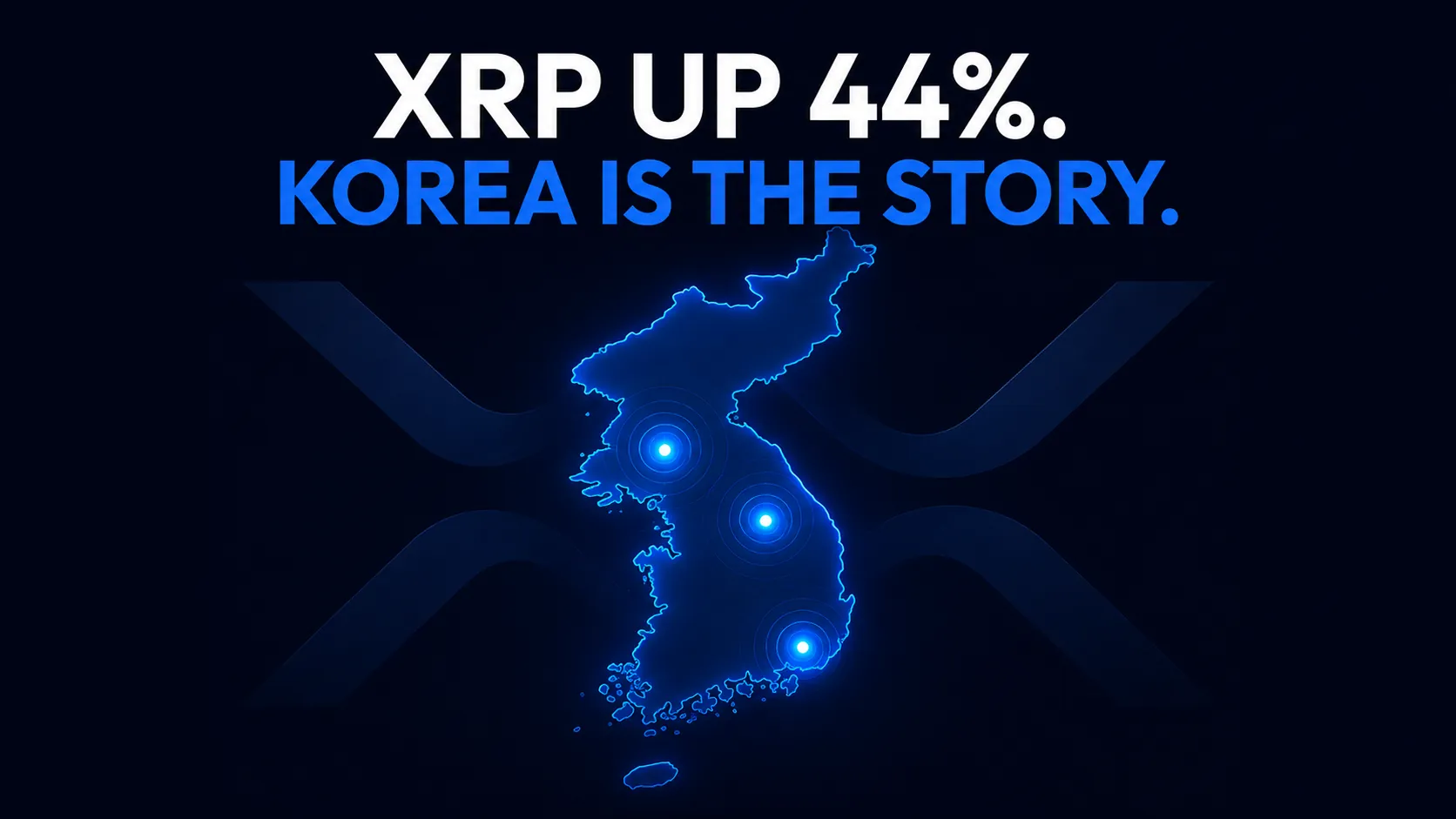
XRP gained about 44% over seven days, making it the best-performing asset among the ten largest cryptocurrencies by market value.
South Korean demand helped drive the rally. Trading volume on Upbit, the country’s largest crypto exchange, reached US$327 million (AU$457.8 million) in one 24-hour period.
Leveraged XRP positions on Binance also reached a seven-month high.
But the bigger story may be what is happening inside South Korea’s financial system.
Ripple announced its third Korean banking partnership of 2026 this week. Jeonbuk Bank, a regional lender founded in 1969, became the first regional Korean bank to use Ripple Payments for cross-border transfers.
Cross-border transfers move money between countries. Businesses use them to pay overseas suppliers or receive money from foreign customers.
Traditional international bank transfers often rely on the SWIFT messaging network and can take several days. Ripple says its system can settle payments within seconds or minutes and operate around the clock.
Jeonbuk Bank plans to offer the service to business customers, including importers, exporters, and technology companies.
The deal follows earlier 2026 partnerships with K Bank and Kyobo Life Insurance. Korea has become one of Ripple’s most active markets.
But one detail matters: the Jeonbuk deal does not confirm that XRP itself will be used for payments.
Ripple’s infrastructure can also settle payments using RLUSD, its US dollar-pegged stablecoin. The announcement did not say which asset Jeonbuk Bank will use.
That distinction matters because some investors may expect the partnership to create direct demand for XRP. It may not.
Still, stablecoin liquidity on the XRP Ledger has now passed US$1 billion (AU$1.4 billion). That marks an important milestone for the network, even if individual payments do not use XRP.
Strategy Raised US$2 Billion and Didn’t Buy Bitcoin
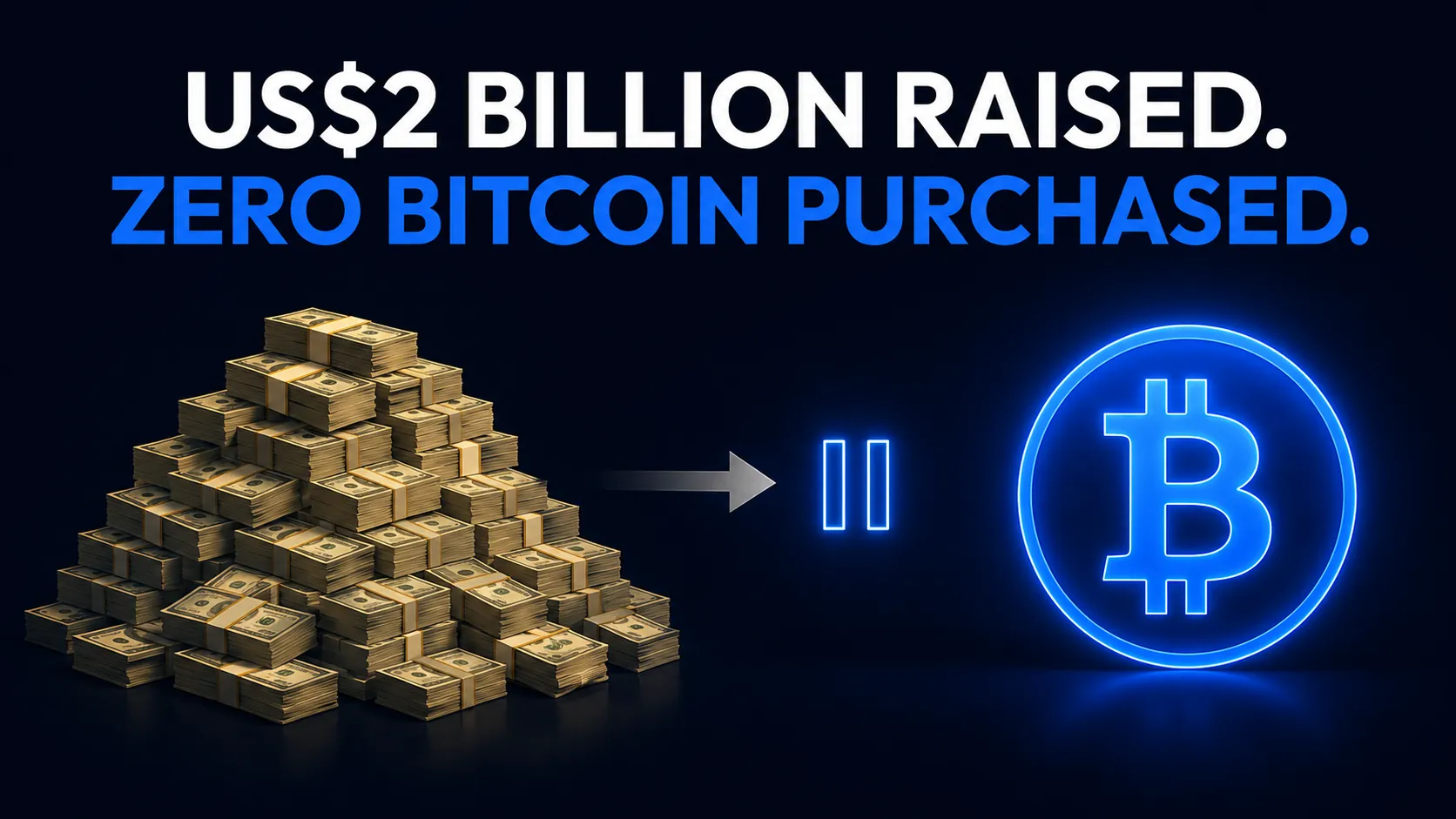
Between August 17 and 23, Strategy sold 18.26 million of its own shares and raised US$2.01 billion (AU$2.81 billion).
Its Bitcoin holdings did not change.
Strategy bought no Bitcoin and sold none during that period.
That is unusual for a company that built its identity around buying Bitcoin as a treasury asset.
Strategy, formerly MicroStrategy, is the world’s largest corporate Bitcoin holder. It controls about 4% of Bitcoin’s total supply.
Executive chairman Michael Saylor has spent years arguing that companies should convert excess capital into Bitcoin. Strategy has raised billions through share sales and debt deals to fund Bitcoin purchases.
As a result, investors have learned to expect a Bitcoin purchase soon after Strategy raises money.
This time, that did not happen.
Instead, Strategy placed much of the money into a new USD Cash pool. The pool holds US$1.59 billion (AU$2.23 billion), which management can use to buy Bitcoin, repurchase shares, pay dividends, or manage debt.
Another US$300 million (AU$420 million) went into the company’s existing cash reserve. That lifted total dollar liquidity to US$6.69 billion (AU$9.37 billion).
Strategy also spent US$136.4 million (AU$191 million) buying back preferred shares.
Its net leverage has fallen to about zero. In other words, its cash holdings now almost match its convertible debt.
Analyst Scott Melker pointed to the unusual timing. Strategy sold shares during the correction, held the cash, and then watched Bitcoin rally about 25%.
Strategy has not bought Bitcoin since June 2026 and has been a net seller of about 6,948 BTC since May.
The world’s most closely watched Bitcoin treasury sat on the sidelines during August’s rally.
South Korea and Visa Build Stablecoin Infrastructure
Shinhan Financial Group, one of South Korea’s five largest financial groups, announced a partnership with Visa this week.
The companies will test stablecoin infrastructure across Shinhan’s domestic banking operations.
The project uses Visa’s enterprise stablecoin platform to test three key functions: issuance, remittance, and redemption.
Issuance means creating digital currency backed by regular currency held in reserve. Remittance means moving money, often across borders. Redemption means converting the digital currency back into regular cash.
Shinhan plans to test all three.
The companies will also design what they describe as a Korea-specific business model for stablecoin payments.
The deal matters beyond Shinhan.
Shinhan is the first major Korean financial group to formally adopt Visa’s enterprise stablecoin infrastructure. That gives Visa an early position in bank-based stablecoin settlement in one of Asia’s most active crypto markets.
Shinhan also signed a separate agreement this month to test a Korean won-denominated tokenised fund on the Solana blockchain. It is working with the Solana Foundation, Etherfuse, and decentralised exchange Orca.
A tokenised fund is a traditional investment fund that records ownership and transactions on a blockchain. This system could make some processes faster and cheaper.
Put these developments beside Ripple’s three Korean banking partnerships this year and a larger picture appears.
South Korea is building a broad institutional crypto and stablecoin network at a fast pace.
The country’s Digital Asset Basic Act is also moving through the legislature. That could provide a regulatory base for the commercial projects now being developed.
For Australian investors watching institutional crypto adoption in Asia, South Korea has become a market worth following.
Ethereum Takes Its First Quantum Step
Ethereum developers published a draft proposal this week aimed at protecting the network from future quantum-computing attacks.
Quantum computers process information differently from normal computers. Powerful future machines could solve some mathematical problems much faster than today’s computers.
That creates a potential risk for Ethereum.
A powerful enough quantum computer could one day break parts of the cryptography that protect validator keys.
Validators verify transactions and help keep Ethereum running. If an attacker gained access to their keys, they could forge signatures and threaten the network.
The new proposal, listed under the placeholder number EIP-8394, focuses on Ethereum’s deposit contract.
The deposit contract is the system people use to lock up ETH and become validators.
Today, it accepts one type of cryptographic key called a BLS key. The contract is built around the exact size and format of that key.
That creates a problem. Ethereum cannot simply switch to a new quantum-resistant key if developers agree on one.
The draft proposal would change that.
It would rebuild the deposit contract so it could support several cryptographic systems. Each deposit would include a tag showing which system it uses.
BLS keys would continue to work at first. Future tags could support a quantum-resistant system once developers choose one.
Ethereum could later stop accepting new BLS deposits. New validators would then need to use the stronger system. Existing validators using BLS keys could continue operating.
The proposal follows a Google Quantum AI research paper published in March 2026. The paper mapped five possible quantum attack paths against Ethereum.
It identified more than US$100 billion (AU$140 billion) in assets across wallets, staking, smart contracts, and Layer 2 systems as potentially exposed.
About 42.4 million ETH, worth roughly US$104 billion (AU$145.6 billion), is secured by the BLS format that Ethereum may eventually replace.
The Ethereum Foundation is targeting about 2029 for the main protocol changes.
This proposal does not solve the quantum threat. It is an early draft and still needs review and further development.
But it marks an important first step toward a transition that could take years.
The US$500,000 Bitcoin Target Looks Different at US$80,000
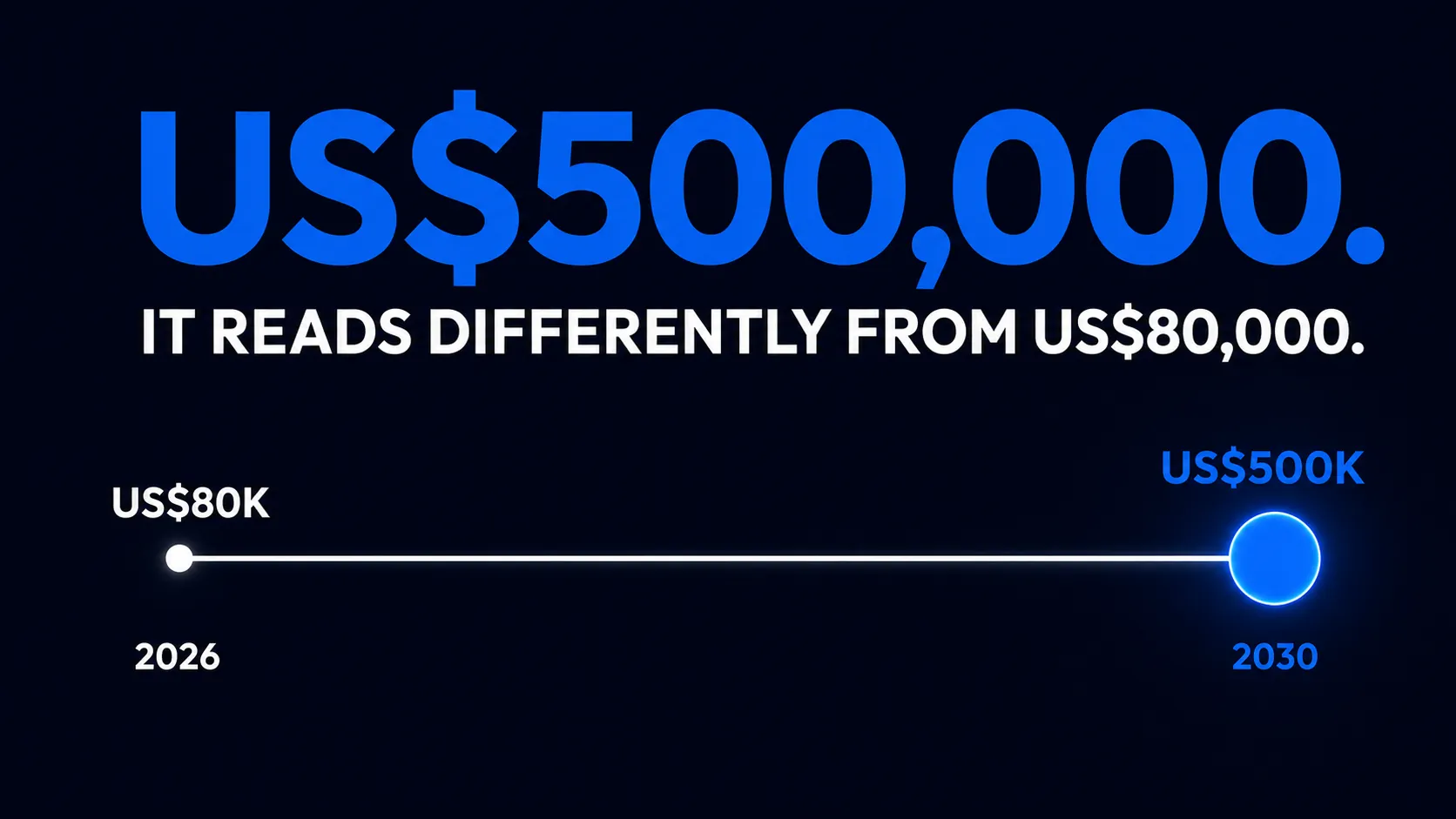
Standard Chartered’s Head of Digital Assets Research, Geoff Kendrick, kept his US$500,000 (AU$700,000) Bitcoin price target for 2030 this week.
He has maintained the target throughout Bitcoin’s 11-month correction.
Kendrick argues that ETF buying has become a major force behind Bitcoin’s price. In his view, ETF demand is replacing corporate treasury purchases as the main source of new institutional demand.
When a pension fund, endowment, or wealth manager buys a Bitcoin ETF, it puts real capital into Bitcoin exposure.
Kendrick expects this demand to grow as more institutions gain approval to hold Bitcoin through ETFs. They also need internal risk systems and enough client demand before making large investments.
His US$500,000 target reflects where he believes that long-term trend could take Bitcoin by 2030. That is roughly six times its price as this edition goes to press.
But his 2026 forecast provides important context.
Kendrick entered the year with a US$200,000 (AU$280,000) Bitcoin target. That forecast assumed better economic conditions and a smoother path for crypto laws.
Bitcoin is trading around US$78,000 (AU$109,200) as this edition goes to press. That puts it about 60% below his 2026 target.
Kendrick has acknowledged the economic pressures but has kept his longer-term view.
Whether the US$500,000 target makes sense depends on one key question: Will institutional ETF demand keep growing for years?
August offers some support for that argument. US spot Bitcoin ETFs attracted US$1.92 billion in one week.
But the rally also received a major boost from forced buying during the short squeeze.
Once that pressure fades, the market will face a clearer test. Long-term investors will need to provide enough demand to keep the rally going.
Founder's Corner
August was the kind of month that shows why your time horizon matters so much in this market.
Bitcoin gained 25% in a matter of weeks. Investors who held through five months of range-bound trading between US$58,000 (AU$81,200) and US$66,500 (AU$93,100) saw that gain. They stayed invested even as the headlines remained negative.
Those who sold in June because of the difficult economic outlook missed it.
That does not tell us where Bitcoin goes next. It simply shows how quickly this market can move, often when few people expect it.
The Strategy story is the one I find most interesting this week, but not for the reason getting the most attention.
Saylor raised US$2 billion and did not buy Bitcoin. That is unusual, but I think it points to a company taking a more mature approach to managing its treasury.
Strategy has built a US$6.69 billion (AU$9.37 billion) cash reserve and reduced its net leverage to about zero. I do not see that as a loss of conviction in Bitcoin.
Instead, it suggests Strategy learned from earlier this year, when its dividend obligations created selling pressure.
A stronger balance sheet gives the company more room to handle difficult markets. That serves Bitcoin holders better than keeping leverage at its limit.
Whether Strategy eventually uses that cash to buy Bitcoin is a question the next few months will answer.
The Korea story is also worth watching beyond XRP's price move.
Ripple has signed its third Korean banking deal. Shinhan has partnered with Visa on stablecoin infrastructure. It is also testing a tokenised fund on Solana.
These are not simply bets on future crypto adoption. Regulated financial institutions are building payment and settlement systems using blockchain technology.
They are doing it at a pace and scale that many Western markets have yet to match.
The direction in Asia becomes clearer each week. At Wayex, we watch these developments closely because institutional infrastructure can pave the way for wider retail access.
And on that note, we reached an important milestone of our own this morning: our Australian Financial Services Licence (AFSL) was granted.
For us, this is about more than a licence. It reflects the kind of business we want to build.
Crypto is maturing, and we believe strong compliance needs to grow with it. Our focus has always been on building Wayex for the long term, with the right controls, processes and safeguards in place.
Our AFSL approval strengthens that foundation. It supports our commitment to operating within Australia's financial-services framework and putting customer protection at the centre of how we grow.
We want our customers to feel confident that as Wayex expands, we will keep investing in compliance, security and responsible operations.
It is a significant step for Wayex, and one we are proud to have reached.
Richard Voice Co-Founder, Wayex
Things That Made Us Laugh This Week