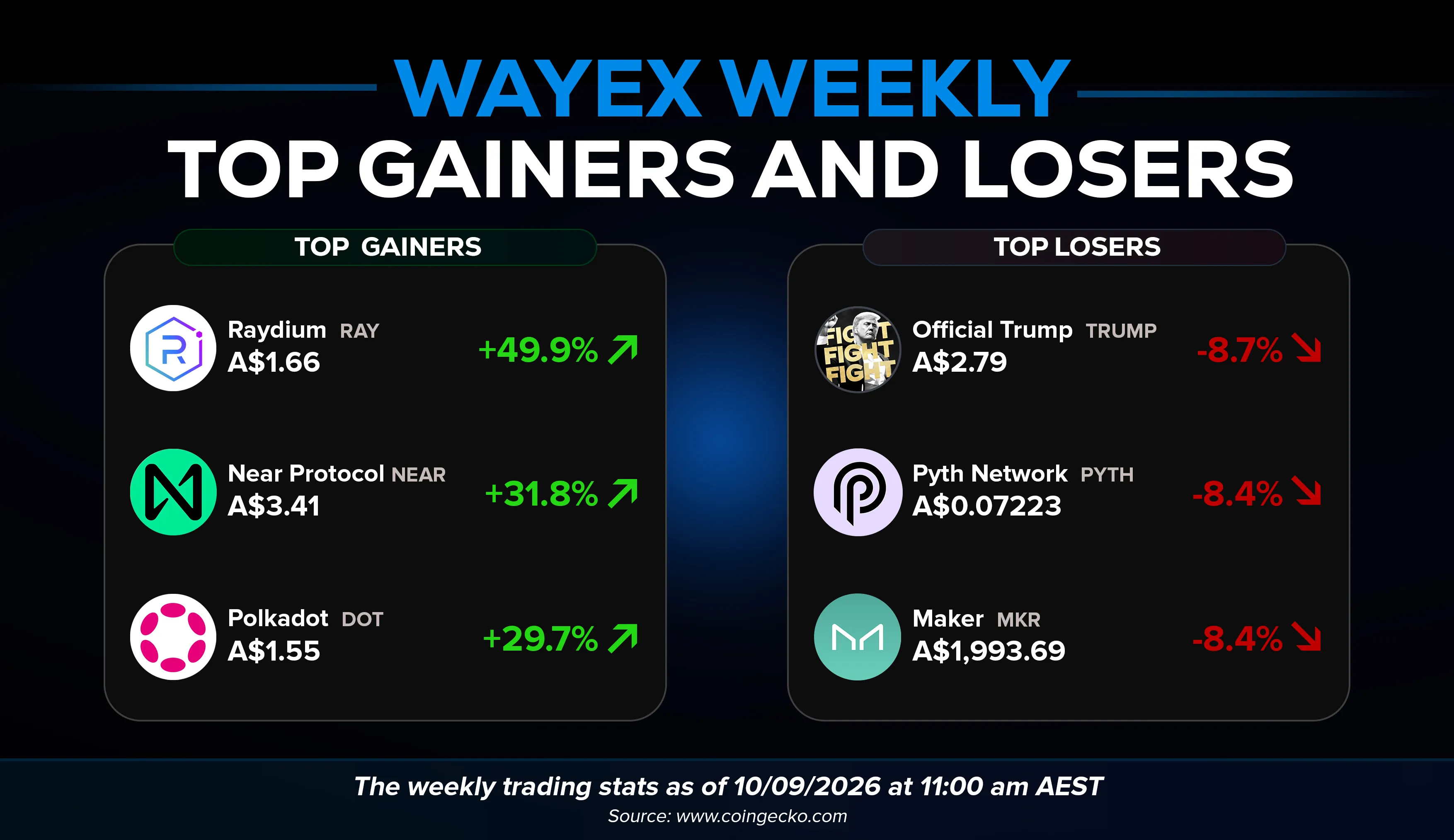
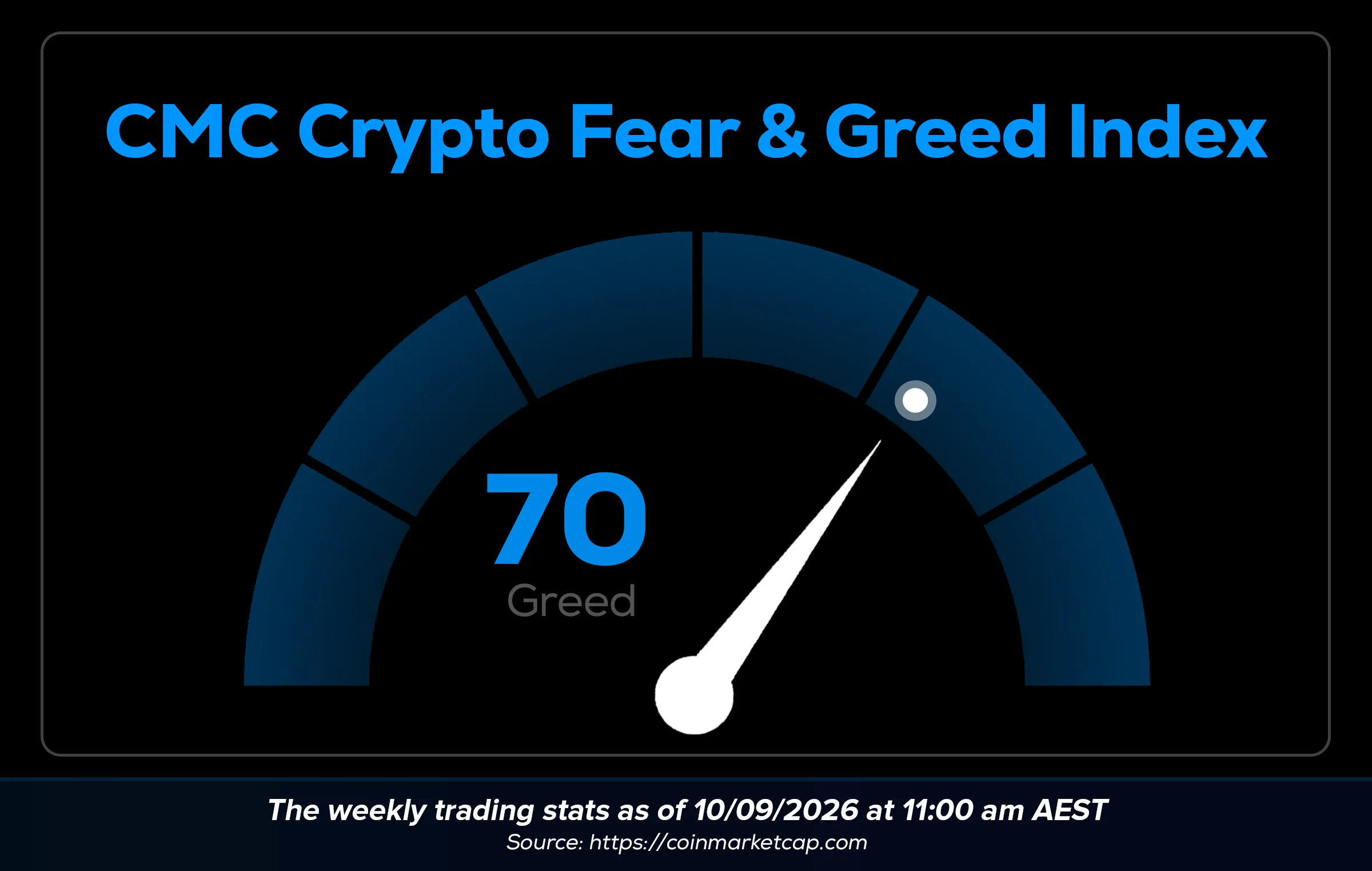
Strong US jobs data landed on Friday and pushed Bitcoin below US$80,000 (AU$110,400). Hopes for an early rate cut faded, and Citigroup moved its forecast for the first Fed cut to June 2027. By Tuesday, Bitcoin was climbing back. The bigger stories this week were quieter. Tether, PayPal and Visa all made moves in stablecoin infrastructure. Each took a different approach, but all pointed in the same direction. Consensys split into two companies, with Joe Lubin taking over as MetaMask’s full-time CEO. The US Treasury sanctioned a Chinese-language criminal marketplace linked to US$24 billion (AU$33.1 billion) in crypto transactions. AUSTRAC removed 45 crypto and remittance firms from Australia’s compliance registers. And a 22-year-old from Singapore pleaded guilty to helping steal more than US$245 million (AU$338.1 million) in crypto from a single victim. He then spent millions on nightclubs, luxury cars and watches before the FBI caught up with him. Let’s get into it.
Bitcoin and the Fed: What Strong Jobs Data Actually Means
On Friday, September 5, the US Bureau of Labour Statistics released its August nonfarm payrolls report.
Nonfarm payrolls measure how many jobs the US economy added outside the farming sector. It is one of the world’s most closely watched economic figures because it gives the Federal Reserve a read on the strength of the economy.
August came in at 162,000 new jobs, more than triple the 53,000 economists had expected.
Bitcoin fell as much as 3.5% after the news, dropping below US$80,000 (AU$110,400) to around US$79,019 (AU$109,046). Ethereum fell 2.07%, Solana lost 1.95%, and XRP dropped 3.61%.
When several unrelated risk assets fall at the same time, the cause is often bigger than crypto. In this case, it was the economic outlook.
The reason strong jobs data can hurt Bitcoin comes down to interest rates.
The Federal Reserve uses interest rates to control inflation and keep the economy stable. Strong jobs growth can signal that the economy remains hot. That gives the Fed more reason to keep rates high.
Higher rates make cash and bonds more attractive because investors can earn a reasonable return with less risk. That can pull money away from more volatile assets such as crypto and growth stocks.
After the jobs report, traders quickly lowered their expectations for rate cuts. Citigroup moved its forecast for the first Fed cut from October 2026 to June 2027.
That means another eight months of higher rates than previously expected. Bitcoin reacted almost at once.
Bitcoin ETF inflows also fell 76% on the day of the jobs report. They dropped from US$730 million (AU$1.007 billion) on Thursday to US$174.6 million (AU$241 million) on Friday.
Then the picture changed.
Over the next three trading sessions, Bitcoin ETFs attracted a combined US$1 billion (AU$1.38 billion) in net inflows. BlackRock’s IBIT alone attracted US$686.8 million (AU$947.8 million).
Bitcoin moved back above US$78,000 (AU$107,640) and pushed toward US$80,000 by Tuesday.
At the same time, oil climbed above US$100 (AU$138) a barrel as tensions with Iran increased. Bitcoin has sometimes benefited during periods of geopolitical uncertainty because some investors view it as an alternative store of value.
The September 11 CPI inflation report is the next major test for the Fed’s rate outlook. The Clarity Act procedural vote on September 15 follows soon after.
Both could tell us more about Bitcoin’s next move than one jobs report alone.
The Stablecoin Week: Tether, PayPal and Visa All Move at Once
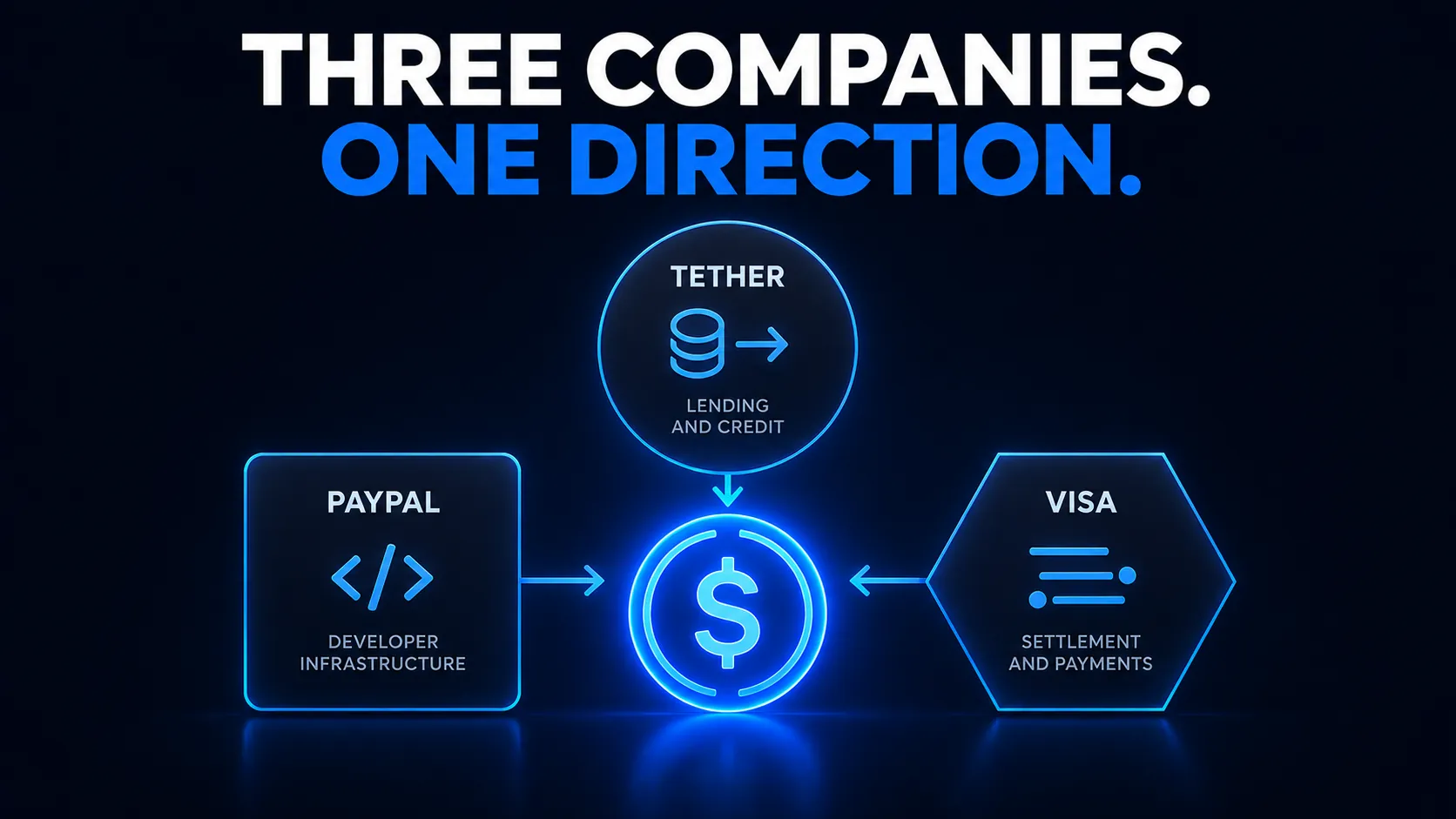
Three major stablecoin announcements landed this week from three very different companies.
Taken together, they tell a bigger story.
Stablecoins are moving beyond crypto trading and into mainstream financial infrastructure. And increasingly, the companies building that infrastructure are not traditional crypto companies.
Tether and London-based asset manager Fasanara Capital launched StableFund on September 9.
The private credit fund begins with US$400 million (AU$552 million) in committed capital and aims to attract up to US$3 billion (AU$4.14 billion) from outside investors.
Private credit simply means lending money to businesses or consumers outside the traditional banking system.
It has grown into a global market worth about US$3 trillion (AU$4.14 trillion) and is expected to reach US$5 trillion (AU$6.9 trillion) by 2029.
StableFund plans to lend through Fasanara’s fintech network across more than 60 countries. Its focus will include small and medium-sized businesses, which face an estimated US$5.7 trillion (AU$7.87 trillion) global funding gap.
Tether’s role is important.
USDT will act as settlement infrastructure, helping move money across borders and between traditional currencies and digital dollars.
That pushes Tether beyond simply issuing a stablecoin. It puts USDT into the financial infrastructure behind institutional lending.
PayPal made its own move on the same day.
The company launched PYUSDx with token infrastructure provider M0 and crypto payments company MoonPay.
The platform allows businesses to create their own branded stablecoins backed one-for-one by PayPal USD.
M0 provides the technology, while MoonPay handles issuance and distribution. Businesses can build on PayPal’s infrastructure instead of creating their own stablecoin systems from scratch.
Three crypto firms: Saturn, Concrete and Cap became the first issuers on the platform. Together, they have processed more than US$100 million (AU$138 million) in volume.
The potential use cases extend well beyond crypto companies. Fintechs, neobanks, payment providers and e-commerce businesses could all create their own digital dollars using the platform.
Visa completed the week’s stablecoin picture.
Its stablecoin settlement volume has now passed a US$20 billion (AU$27.6 billion) annualised rate, up more than 15 times from a year ago.
More than 160 stablecoin-linked card programs now operate on Visa’s network. Payment volume across those programs has risen almost 200% year over year.
Visa is also opening parts of its settlement data to blockchain-based lenders.
The idea is simple. Lenders can see the money a card program expects to receive from Visa settlements. They can then lend against those future payments using smart contracts.
Repayments can come directly from the settlement flow.
Visa has tested the model with Credit Coop. Since 2023, the program has financed more than US$2.5 billion (AU$3.45 billion) in settlement volume with zero defaults.
Onchain lending has already processed more than US$694 billion (AU$958 billion) since 2020. Most of that activity has stayed inside crypto markets.
Visa is trying to connect those lending tools with everyday business finance.
Three companies. Three different approaches. One clear trend: stablecoins are becoming part of the financial plumbing.
Consensys Splits in Two. MetaMask Goes Its Own Way.
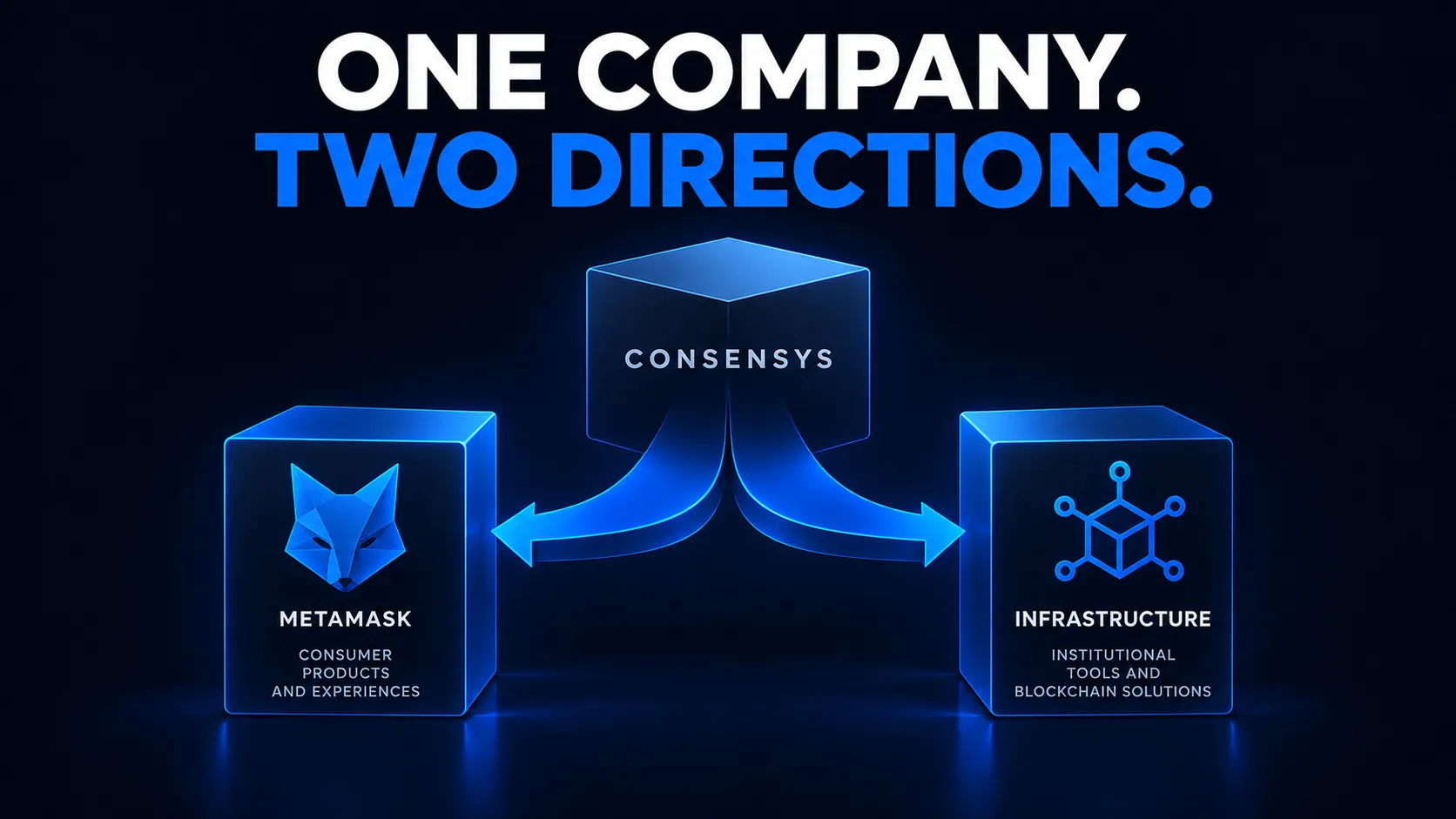
Consensys Software announced this week that it will split its consumer and institutional businesses into two independent companies.
The existing Consensys Software business will become MetaMask. Joe Lubin will take over as chairman and full-time CEO.
A new company will keep the Consensys name. Mike Kriak will serve as CEO, David Cunningham as president, and Lubin as executive chairman.
The split is expected to finish by the end of 2026.
The reasoning becomes clearer when you look at what the two sides of the company now do.
MetaMask is one of the world’s most widely used self-custodial crypto wallets. It has more than 100 million downloads across roughly 190 countries and has helped process trillions of dollars in transactions since launch.
In June, MetaMask launched Money Account. The product combines stablecoin yield, card payments and trading within one balance.
MetaMask has described its longer-term goal as creating a neo-banking experience for crypto users.
That makes it a consumer finance business.
Consensys will focus on a different market.
It will continue developing Linea, Ethereum’s Layer 2 network, as well as Besu and Teku. Banks, asset managers and payment companies use these tools to build blockchain infrastructure.
That makes Consensys an institutional infrastructure business.
The two sides serve different customers, make money in different ways and face different competitors. Keeping them under one company had become harder to justify.
Lubin’s decision to personally lead MetaMask is perhaps the most interesting part.
He is one of Ethereum’s co-founders and has spent years building Consensys into a major part of Ethereum’s infrastructure.
Choosing to focus his attention on MetaMask signals how seriously he takes the consumer opportunity.
MetaMask wants to become a financial gateway for crypto users. Lubin putting his full attention behind that goal suggests he believes the opportunity could be significant.
The Treasury Sanctioned a US$24 Billion Scam Hub

The US Treasury sanctioned Xinbi Guarantee this week.
US authorities allege that the Chinese-language online marketplace processed up to US$24 billion (AU$33.1 billion) in crypto-linked criminal transactions after launching in 2022.
The Treasury describes Xinbi as a transnational criminal organisation. It says the marketplace provided services to scam centres across Southeast Asia, money-laundering networks and North Korean state-backed hackers.
In simple terms, it acted as a service provider for large-scale cybercrime.
The UK had already sanctioned Xinbi in March. The latest action adds US financial sanctions.
That effectively cuts the organisation off from much of the global financial system because US people and businesses can no longer transact with it.
How Xinbi allegedly operated is also important.
According to the Treasury, Xinbi did not need to steal money itself. Instead, it provided services that helped other criminals run and profit from scams.
Those services included equipment and staffing for scam centres. It also helped move money through crypto channels to hide where the funds came from.
When authorities and technology providers increased pressure on Xinbi’s main platform, the organisation allegedly shifted activity elsewhere.
Treasury says merchant and money-laundering activity moved to an encrypted messaging app developed by Singapore-based SafeW Technology. Xinbi also created a separate XinbiPay wallet built by Cambodia-based Anwen Technology.
US sanctions now cover both SafeW and Anwen as well.
The action is part of a wider crackdown.
Treasury sanctioned Cambodia’s Prince Group in October 2025 over links to pig-butchering scams. It also targeted Huione Group in May 2025 for allegedly acting as a financial hub for similar networks.
The Scam Centre Strike Force, launched in November 2025, has recovered more than US$800 million (AU$1.1 billion) through its enforcement work.
Xinbi’s alleged US$24 billion (AU$33.1 billion) in activity shows the scale of the challenge.
Crypto-linked crime is not limited to isolated scammers. Organised networks have built large businesses around fraud, money laundering and cybercrime.
Regulators are now targeting the infrastructure that supports those networks rather than chasing individual transactions one by one.
AUSTRAC Clears 45 Firms From Australia’s Crypto Registers
AUSTRAC announced on September 7 that it had cancelled, suspended or refused to renew 45 registrations over the previous 12 months.
The action covered remittance dealers and virtual asset service providers.
Removing these businesses from Australia’s AML registers means they can no longer legally provide the regulated services covered by those registrations.
In some cases, AUSTRAC also referred the people behind the businesses to Australian and overseas law enforcement agencies.
The reasons for removal varied.
Some businesses were dormant or had never started trading after registering. Others became insolvent or stopped providing regulated services for long periods without telling AUSTRAC.
A smaller group presented what AUSTRAC described as higher risks of money laundering or terrorism financing.
Those cases are the most serious and are more likely to result in law-enforcement referrals.
One of the most prominent cases involved BA Digital Ventures Pty Ltd, which traded as GetCoins.
AUSTRAC cancelled its registration on June 4 after working with the National Anti-Scam Centre. The regulator described the action as a disruption measure following customer complaints that linked GetCoins to organised investment scams.
Another major case was the Cryptolink suspension, which we covered in an earlier edition. That action took 96 crypto ATMs offline across Australian cities.
AUSTRAC CEO Brendan Thomas said businesses in high-risk financial sectors must understand their risks, maintain effective controls and meet their reporting duties.
Losing registration means those businesses must stop providing the relevant services.
Australian crypto users can also check AUSTRAC’s public VASP register to confirm whether a provider holds a current registration before depositing funds.
That is a simple check worth making.
AUSTRAC has signalled that enforcement will continue. Its current work includes local exchanges, over-the-counter crypto businesses and crypto-to-cash providers.
The 45 removals are therefore not the end of the process. They show a regulator working through the register and removing businesses that fail to meet the required standard.
At Wayex, our AUSTRAC registration and AFSL approval are current, public and verifiable.
That is the standard we believe the industry should meet, and it is the standard we hold ourselves to.
The US$245 Million Bitcoin Theft That Started With a Fake Google Call

Malone Lam, a 22-year-old Singaporean national living in Miami, pleaded guilty this week to federal racketeering conspiracy charges.
He admitted his role in a network that stole more than US$245 million (AU$338.1 million) in cryptocurrency from a single victim in Washington DC in August 2024.
It was one of the largest crypto thefts from an individual in US history.
Lam faces up to 20 years in prison. A sentencing date has not yet been set.
What makes this case important is how simple the attack was.
Lam and his associates did not find a software flaw or hack an exchange.
They made a phone call.
The group pretended to represent Google and the Gemini crypto exchange. They told the victim his accounts had been compromised.
They then convinced him to move his crypto to a “secure” wallet for safekeeping.
The wallet belonged to the criminals.
This technique is called social engineering. Instead of breaking into a computer system, criminals manipulate a person into giving them access.
The victim transferred more than 4,100 Bitcoin, worth about US$245 million (AU$338.1 million) at the time.
The entire theft relied on deception rather than code. Lam reportedly even live-streamed parts of the operation to friends.
What followed was an extraordinary spending spree.
Lam and his network moved the stolen funds through crypto mixers, exchanges and other wallets before converting some of the money into cash.
Lam spent about US$4 million (AU$5.52 million) at nightclubs in Los Angeles. That included US$569,000 (AU$785,220) in a single night.
He also bought more than 30 luxury vehicles, including Porsches, Lamborghinis and Ferraris, as well as a US$2 million (AU$2.76 million) watch.
His co-conspirator, Jeandiel Serrano, rented a California home for US$47,500 (AU$65,550) a month. FBI agents arrested him at Los Angeles International Airport while he was wearing a US$500,000 (AU$690,000) watch.
The spending lasted about a month before federal agents closed in.
An off-duty law-enforcement officer warned Lam that his arrest was coming. Lam threw his phone into Biscayne Bay before authorities arrested him at one of his Miami homes.
The case carries a simple lesson for Australian crypto holders.
You do not need to be inexperienced to fall victim to social engineering. These attacks succeed because the person contacting you can sound informed, urgent and trustworthy.
The strongest defence is also simple.
A legitimate exchange, company or support team should never ask you to move funds into a wallet it controls or provides for “safekeeping.”
If someone makes that request, stop the transaction and contact the company through its official channels.
Founder’s Corner
A common thread ran through several stories this week.
The Malone Lam guilty plea, the Xinbi sanctions, AUSTRAC’s register clean-up and the scam warnings we have covered over recent months all point to the same challenge.
Crypto’s openness is one of its strengths. But that same openness can attract people who want to move money without accountability.
Technology alone will not solve that problem.
The industry also needs stronger compliance systems, clearer regulation and effective enforcement.
This week gave us examples of all three working at the same time. That is progress worth recognising, even when the stories behind it are uncomfortable.
The other side of this week is far more exciting.
Tether is using USDT to support private credit for businesses across more than 60 countries. PayPal is opening its stablecoin infrastructure to businesses that want to build their own digital dollars. Visa is connecting settlement data with onchain lenders so payment businesses can access working capital through blockchain infrastructure.
Three companies. Three approaches. One direction.
The stablecoins that succeed over the next decade may not be the ones with the cleverest token design.
They may be the ones that become deeply embedded in the financial systems businesses and consumers already use every day.
That race is happening now, and it is moving faster than many expected even six months ago.
The Clarity Act vote is September 15.
Whatever happens, it could help set the tone for the next stage of crypto regulation in the world’s largest financial market.
At Wayex, we will be watching closely and covering the outcome in full next week.
Richard Voice Co-Founder, Wayex
Things That Made Us Laugh This Week