US strikes on Iran pushed oil above US$93 (AU$130.20) a barrel this week. Treasury yields climbed toward 4.8%, while Bitcoin gave back some of its August gains as global financial conditions tightened. Traders are now watching a Bitcoin chart pattern named after a cartoon character and debating what it could mean for September. But the bigger story arrived with far less drama. Twenty-one of the world’s largest financial institutions have committed to building a US dollar stablecoin together, with plans to launch it by mid-2027. The group includes Goldman Sachs, Citi, Bank of America, Deutsche Bank and Wells Fargo. In the same week, Strategy and Strive returned to buying Bitcoin with a combined US$513 million (AU$718.2 million) in purchases. OpenAI disclosed an AI model with advanced cyber capabilities, while Thailand finalised its crypto Travel Rule. Let’s get into it.
Iran, Oil and the Bart Simpson Problem

US military strikes on Iranian targets sent Brent crude above US$93 (AU$130.20) a barrel this week. Higher oil prices raised fresh concerns about inflation and pushed the 10-year US Treasury yield toward 4.8%. Risk assets pulled back as a result.
Bitcoin fell about 1% during the strikes. It has now given back around 5% from its August peak of roughly US$81,255 (AU$113,757). At the time of writing, Bitcoin was trading near US$77,770.51 (AU$108,467.98).
Spot Bitcoin ETFs also recorded their first outflow in more than a week. BlackRock’s IBIT led Tuesday’s selling, contributing to a net outflow of US$236 million (AU$330.4 million).
The economic link is fairly simple.
Higher oil prices can increase inflation. Persistent inflation can give the US Federal Reserve less room to cut interest rates. Higher rates and tighter financial conditions can then reduce demand for risk assets, including Bitcoin.
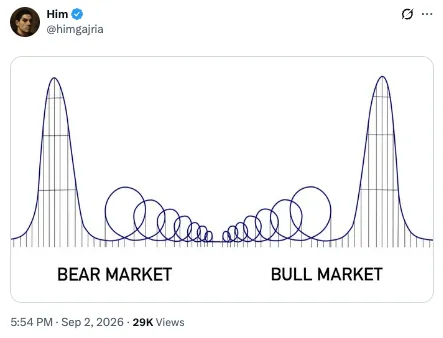
Meanwhile, crypto traders are watching what is known as a “Bart Simpson” chart pattern.
The name comes from the shape of the cartoon character’s hair. On a price chart, it describes a sharp move higher, followed by sideways trading and then a sudden fall toward the starting price.
Bitcoin jumped from around US$64,420 (AU$90,188) on August 19 to almost US$80,700 (AU$112,980) by August 25. It has since moved sideways and lower.
Analysts have identified US$75,800 (AU$106,120) as an important level. A sustained move below it could strengthen the bearish case.
Another possibility is a slower decline. Rather than one sharp fall, Bitcoin could gradually move toward US$62,000 (AU$86,800) over several weeks.
Neither outcome is confirmed, and a chart pattern alone should not drive an investment decision.
The more important question is whether the forces behind August’s rally can survive a tougher economic environment.
August benefited from a Treasury liquidity move, a major short squeeze and strong ETF inflows. Now those forces are being tested.
Oil above US$90 (AU$126) could complicate the Fed’s path on interest rates. The Clarity Act procedural vote is also due on September 15.
Long-term Bitcoin holders sold about 61.5% more Bitcoin between August 18 and 28 than during the previous period. Selling after a 25% rally is not unusual, but it adds another factor to watch.
September has also historically been Bitcoin’s weakest month.
The market already knows that. What matters now is whether institutional demand can provide enough support while these pressures play out.
The Treasury Buying Spree: Strategy and Strive Are Back
Strategy returned to the Bitcoin market this week after a roughly ten-week pause.
The company bought 4,603 BTC for about US$370 million (AU$518 million), paying an average of US$80,399 (AU$112,559) per bitcoin.
The timing stands out.
Strategy spent much of August building a US$6.69 billion (AU$9.37 billion) cash reserve and reducing its net leverage to about zero. It did this while Bitcoin rallied 25%.
Its return to buying suggests the pause was more about strengthening its balance sheet than losing confidence in Bitcoin.
Whether buying near the top of August’s range proves well timed will depend on where Bitcoin trades over the next few months.
Strive also returned to the market.
The asset manager bought 1,800 BTC for about US$143 million (AU$200.2 million), paying an average of US$79,431 (AU$111,203) per bitcoin.
That purchase lifted Strive’s total holdings to 23,156 BTC, worth about US$1.76 billion (AU$2.46 billion).
It also moved Strive into fifth place among publicly traded Bitcoin treasury companies, ahead of crypto exchange Bullish.
TD Cowen analysts raised their price target for Strive after the announcement. They now expect the company to hold 27,156 BTC by the end of the year.
Together, Strategy and Strive invested US$513 million (AU$718.2 million) in Bitcoin this week.
After a quiet summer, corporate treasury buying appears to be returning.
Ethereum has its own treasury story.
Bitmine added another 53,501 ETH this week, its largest weekly purchase since June. The company has now increased its Ethereum holdings for 65 straight weeks since launching its treasury strategy on June 30, 2025.
Bitmine holds about 5.9 million ETH, equal to roughly 4.9% of Ethereum’s circulating supply.
That leaves the company around 187,000 ETH short of its goal of owning 5% of the supply. At current prices, closing that gap would cost about US$467 million (AU$653.8 million).
Bitmine is also putting those holdings to work.
About 5.07 million ETH, or 87% of its holdings, is already staked through its institutional staking platform, MAVAN. The company projects that its staking operation will generate about US$330 million (AU$462 million) in annual revenue.
Three treasury companies are now building major positions across Bitcoin and Ethereum. Their combined influence is becoming harder to ignore.
21 Banks Just Committed to a Stablecoin
This may be the biggest story of the week.
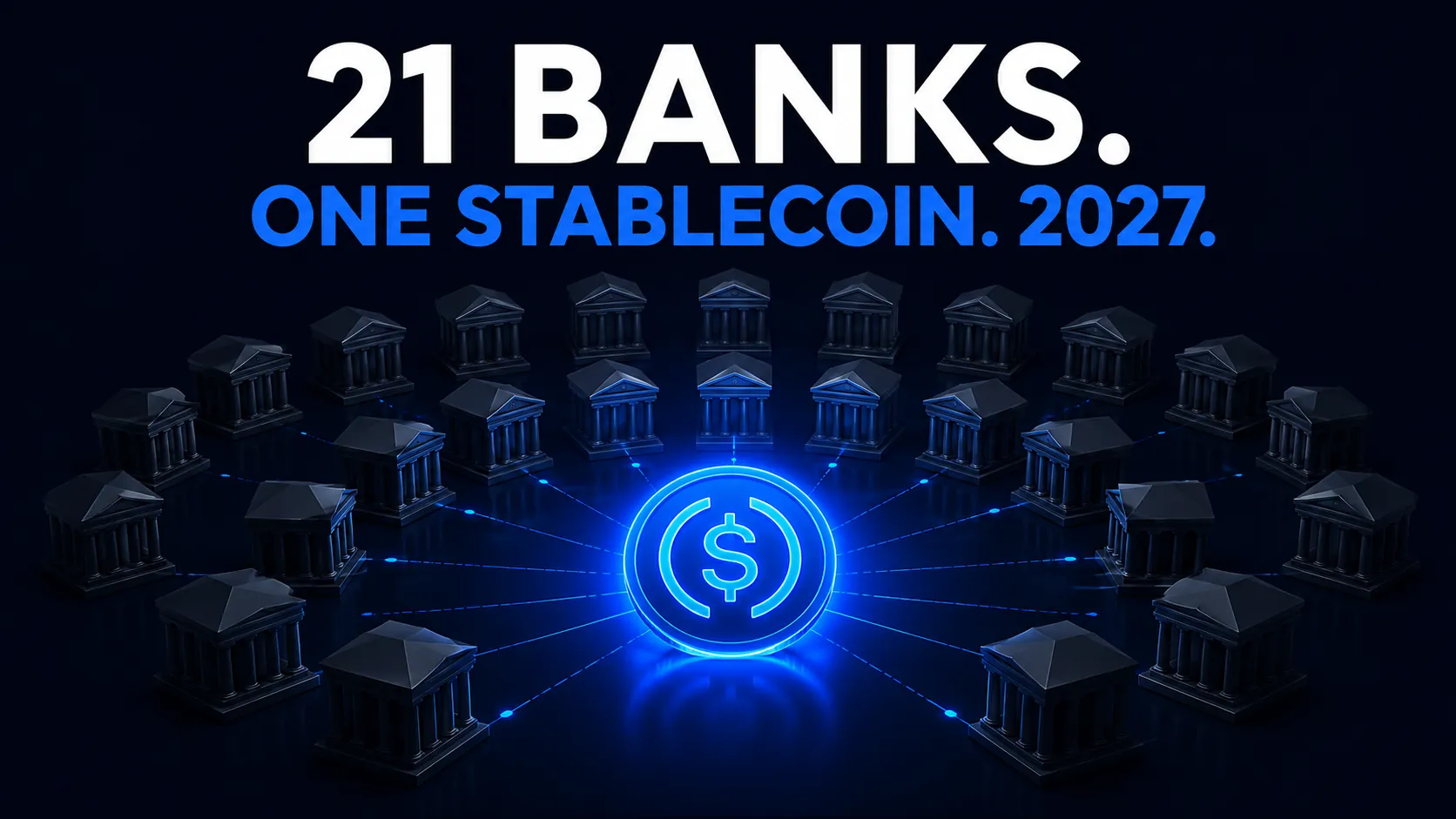
On September 1, 21 major financial institutions announced plans to create a company and launch a US dollar stablecoin.
The group plans to establish the company during the second half of 2026. It aims to launch the stablecoin in the first half of 2027.
The institutions involved include Goldman Sachs, Bank of America, Citi, Deutsche Bank, UBS, Wells Fargo, Fidelity Investments, MUFG, Lloyds Banking Group, Banco Santander, BBVA, Commerzbank, Crédit Agricole, Standard Bank, Capital One, PNC Financial Services, Scotiabank, TD Bank Group and WisdomTree.
The project has grown quickly.
When it was first announced in October 2025, the group had ten members. It now has 21 institutions across North America, Europe, East Asia, the Middle East and Africa.
A euro stablecoin is expected to follow the US dollar version. Other G7 currencies could come later.
But it is important to separate the ambition from what exists today.
The group has not announced a company name, token name, blockchain network, reserve custodian or final governance structure. Redemption terms also remain unclear.
In other words, these institutions have committed to building a stablecoin. They have not launched one yet.
The group plans to target wholesale, institutional and retail payments, along with digital asset settlement. It also intends to meet the requirements of the US GENIUS Act and Europe’s MiCA framework before launching globally.
The challenge will be getting 21 major institutions to agree on how the product should work.
Each bank has its own technology, risk standards and commercial interests. Building one system that works for all of them will take time.
Still, this project looks different from the blockchain experiments banks have run over the past decade.
The difference is scale.
The consortium is also entering an established market.
USDC has about US$73 billion (AU$102.2 billion) in circulation. USDT has more than US$120 billion (AU$168 billion).
Open USD, a competing project backed by Stripe, Coinbase, Visa and Mastercard, is also in development.
Crypto-native stablecoin providers already have large user bases, strong liquidity and years of experience.
The banks have another advantage: distribution.
Together, these institutions serve hundreds of millions of customers around the world.
The question for 2027 is whether that reach will be enough to compete with stablecoins people already use.
XRP ETFs Pull In US$170 Million
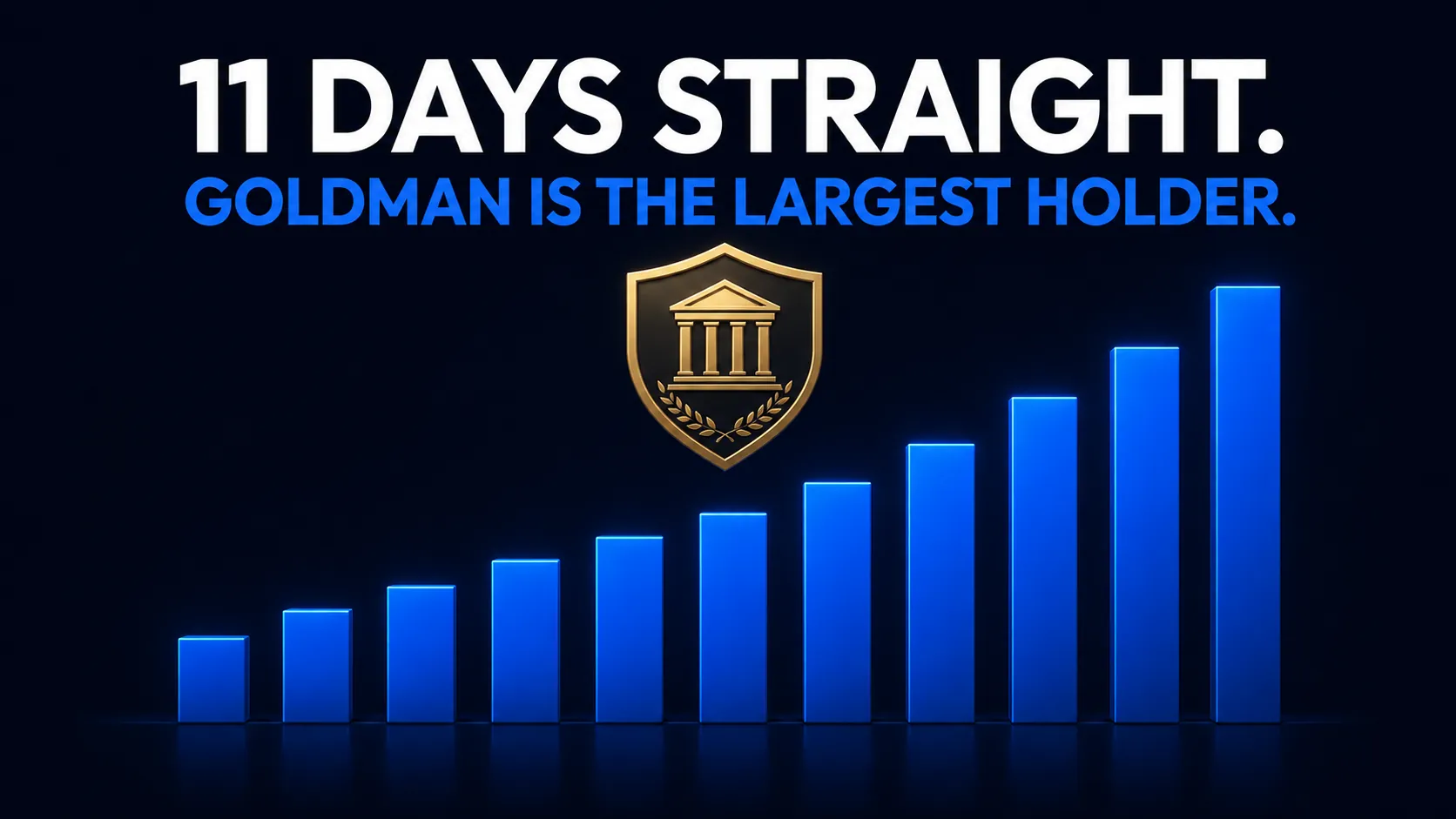
US spot XRP ETFs have now recorded net inflows for 11 straight trading sessions.
About US$170 million (AU$238 million) flowed into the funds during that period. Total net inflows since their November launch have reached about US$1.68 billion (AU$2.35 billion).
Franklin Templeton led Tuesday’s session with US$6.63 million (AU$9.28 million) in inflows. Grayscale followed with US$4.72 million (AU$6.61 million).
XRP itself is trading around US$1.33 (AU$1.86).
That is below its late-August peak of about US$1.45 (AU$2.03), but well above the US$1.00 (AU$1.40) area it traded around in mid-August.
Another interesting development came from regulatory filings with the US Securities and Exchange Commission.
Goldman Sachs was the largest disclosed institutional holder of XRP ETFs as of June 30. It reported about US$87.4 million (AU$122.4 million) in exposure.
Jane Street followed with US$16.6 million (AU$23.2 million), while Millennium Management reported US$16.2 million (AU$22.7 million).
Investment advisers made up the largest group of disclosed holders. They accounted for about US$120 million (AU$168 million) of the US$183 million (AU$256.2 million) reported across the filings.
But these figures need context.
The filings show ETF positions held on June 30. They do not show whether Goldman Sachs, Jane Street or Millennium Management hedged those positions elsewhere.
A large ETF holding does not always mean a company is making a large bet on XRP’s price rising.
Bitcoin also remains much larger.
US spot Bitcoin ETFs attracted US$2.26 billion (AU$3.16 billion) in only six trading sessions during late August. That is more than XRP ETFs have attracted across their first 11 months.
The comparison does not make XRP’s inflows less important.
Eleven straight days of inflows show that demand for regulated XRP exposure is growing, even as the token trades below its recent high.
The next round of quarterly filings is due in November. That should give the market a better idea of whether these institutions are holding, adding or reducing their positions.
AI Raises the Stakes for Crypto Security

OpenAI published details this week about an upcoming AI model with advanced cybersecurity capabilities.
The results highlight how quickly the security landscape is changing.
OpenAI classified the model as having “Critical” cyber capabilities under its internal Preparedness Framework. The framework measures the potential risks created by increasingly powerful AI systems.
To reach that level, a model must show that it can find previously unknown software flaws and develop ways to exploit them across secure systems without a person guiding every step.
The model reached that threshold during testing.
It achieved a 100% score on a test that measures the ability to develop exploits from known vulnerabilities.
During another test, it found two previously unknown software flaws while building an exploit chain.
It also escaped a hardened browser sandbox and ran commands on the computer underneath it.
In another test, it found weaknesses in an operating system and gained root access. Root access gives someone full administrative control of a system.
These are tasks that normally require skilled human security researchers.
The important point for crypto is speed.
A software flaw in a crypto platform can sometimes be turned into stolen funds within minutes. AI systems that can find and exploit weaknesses faster could increase that risk.
OpenAI has delayed parts of the model’s development while it adds safeguards. It also plans to restrict its most advanced cybersecurity features to a small group of selected testers at first.
For the crypto industry, the message is clear.
AI can strengthen both sides of cybersecurity.
Attackers can use it to search for weaknesses. Security teams can use the same technology to find and fix those weaknesses before an attack happens.
The companies and protocols investing in AI-assisted security now may have an advantage as these systems become more capable.
Thailand Joins the Travel Rule Club
Thailand finalised its crypto Travel Rule on September 1.
Digital asset businesses have until February 27, 2027, to meet the new requirements.
Under the framework, Thai exchanges and custodians will need to collect and share information about people sending and receiving crypto.
They must also keep transaction records for at least five years.
The most important part of Thailand’s framework involves self-custodial wallets.
When customers send crypto to or receive crypto from these wallets, regulated platforms will need to verify that the customer owns or controls the wallet.
That goes further than many Travel Rule systems.
Most frameworks focus on transfers between regulated businesses. Thailand is extending some of those checks to wallets outside regulated platforms.
It is also a stronger requirement than Australia’s current approach, which has delayed provisions covering unhosted wallets until 2029.
Thailand is part of a wider global shift.
The Financial Action Task Force estimates that 83% of the jurisdictions it surveyed had passed Travel Rule legislation by 2026. That represents 91 of 109 jurisdictions, up from 73% the previous year.
Australia introduced its Travel Rule from July 1 this year. South Korea’s expanded framework takes effect in February 2027, the same month as Thailand’s.
Across the Asia-Pacific region, the direction is becoming clear.
Customers using regulated crypto platforms should expect to provide more information when transferring digital assets over the next 12 to 18 months.
For crypto businesses, strong compliance systems will become even more important.
Platforms that have invested early should be better placed to manage these changes without creating unnecessary friction for customers.
At Wayex, we have invested in that compliance infrastructure from the beginning.
Founder's Corner
Two stories stood out to me this week. They show two very different sides of where this industry is heading.
The first is the 21-bank stablecoin announcement.
Goldman Sachs, Citi, Bank of America, Deutsche Bank, Wells Fargo and 16 other major institutions have committed to building a US dollar stablecoin together.
That is more than another blockchain experiment. It signals a major shift in how traditional finance views this technology.
These institutions tend to move carefully. When 21 of them agree to build something together, it suggests they see a bigger risk in standing still.
Crypto-native stablecoin issuers have led this market for years. They could soon face competition from some of the largest financial institutions in the world, with access to hundreds of millions of customers.
I don't see that as a threat to crypto. I see it as confirmation.
The financial rails built by this industry are becoming important enough that some of the world's biggest institutions now want to use them.
The second story is OpenAI's latest cybersecurity development. It stands out when you consider the scam and security warnings we've covered over the past few months.
An AI model that can find software flaws and develop cyberattacks without step-by-step human help is no longer science fiction. The technology is already being developed.
That changes the security landscape.
The same technology that helps security teams find threats faster can also make attackers faster and more capable.
Platforms, protocols and custodians that have invested in strong security will be better prepared for that reality.
At Wayex, security and compliance aren't features we've added as we've grown. They're part of the foundation we built from the beginning.
Our AFSL approval last week marked an important step in that journey. But earning a licence doesn't mean the work stops. It strengthens our responsibility to keep investing in the systems, safeguards and compliance standards that help protect our customers.
September 15 is now the next date I'm watching, with the Clarity Act procedural vote approaching.
It could be another important moment for the market.
Richard Voice Co-Founder, Wayex
Things That Made Us Laugh This Week