Bitcoin briefly touched US$70,000 (AU$98,700) on Wednesday for the first time since June, and for once the reasons behind the move are as interesting as the move itself. Three things converged in a single session: Trump pushed Congress to pass the Clarity Act at a White House crypto summit, Treasury Secretary Bessent doubled the bond buyback program in a move markets read as a liquidity signal, and Senate Banking Committee Chairman Tim Scott said the bill has a genuine chance in September. The SEC published its most significant crypto regulatory proposal in years on the same day. VanEck says 8 of 12 capitulation signals are firing and the correction may be nearing its end. Coinbase opened a tokenisation hub in Abu Dhabi, and ASIC warned that AI-powered investment scams are now sophisticated enough that looking carefully at one is no longer enough to tell if it is real. That last story is the one every Australian crypto holder needs to read this week. Let's get into it.
Bitcoin Touches US$70,000. Here's What Actually Moved It.
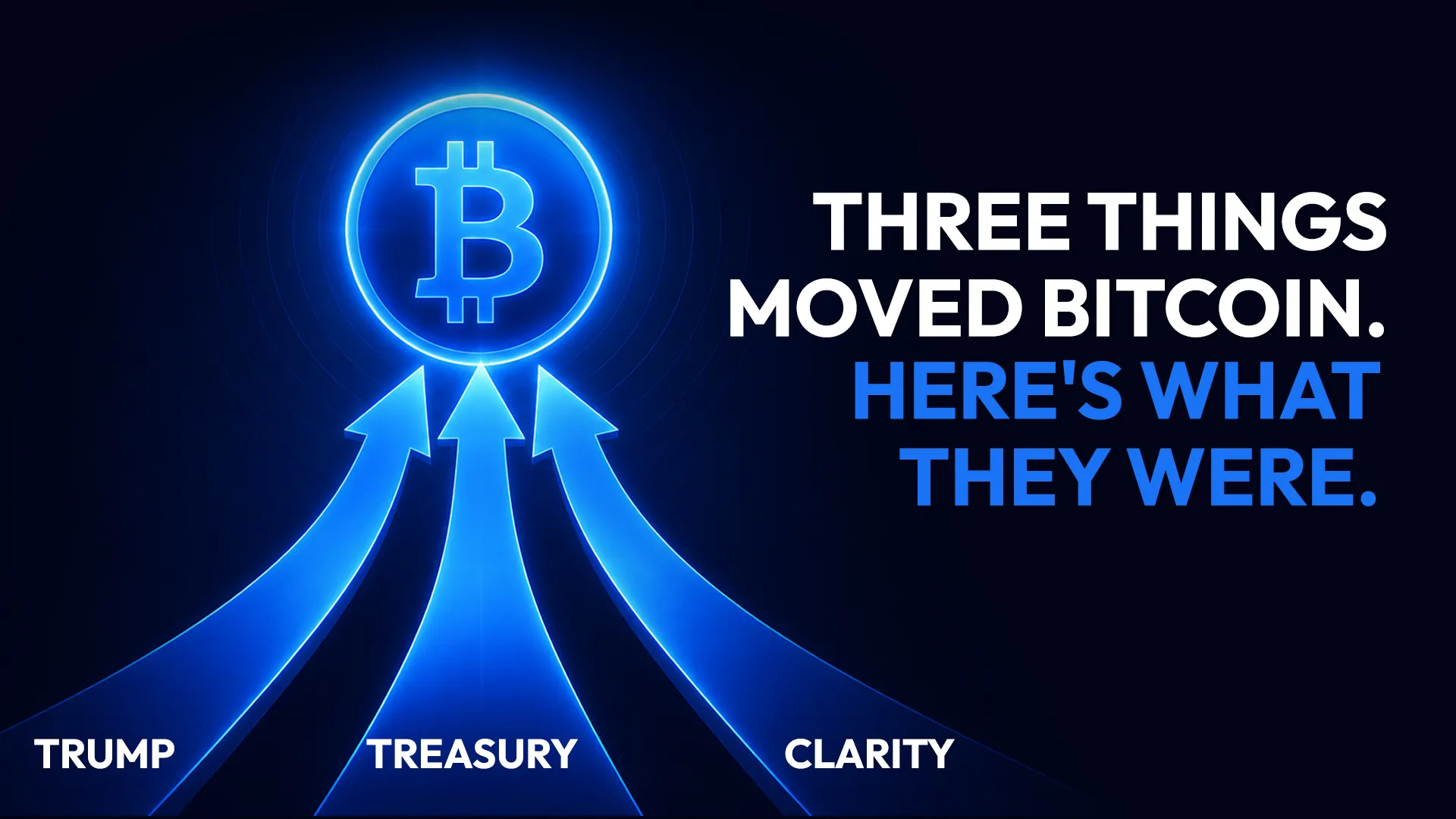
Bitcoin briefly touched US$70,000 (AU$98,700) on Wednesday on Coinbase, its highest level since June 2, before pulling back below that level to close around US$69,200 (AU$97,572). The move represented a gain of more than 7% in 24 hours and liquidated more than US$1.4 billion (AU$1.97 billion) in short positions that had been building through a summer of range-bound trading between US$58,000 (AU$81,780) and US$66,500 (AU$93,765). Three catalysts converged in a single session to produce the move, and understanding each of them separately is more useful than treating the day as a single event.
The first was Donald Trump. At a White House gathering of crypto and technology executives that included CEOs from Coinbase, Gemini, Ripple, and Chainlink Labs, the president called on Congress to take the next step and pass a fair version of the Digital Asset Market Clarity Act. He described the bill as critically important for keeping America ahead of China and ahead of everyone else. Coinbase CEO Brian Armstrong stood beside him and called for the crypto industry to come together to get the bill over the finish line. Senate Banking Committee Chairman Tim Scott told the SALT conference on Tuesday that the bill has a good chance of advancing in September, with a procedural vote now set for September 15. For a bill that has spent months stalled in the Senate, the combination of presidential pressure and a confirmed vote date in September moved markets.
The second was Treasury. Secretary Scott Bessent doubled the size of the Treasury Department's bond buyback operations, a move traders read as a backstop for liquidity in the more than US$30 trillion (AU$42.3 trillion) Treasury market. Easier financial conditions support risk assets, and Bitcoin responded before equities did. The third was technical. Market technician Aksel Kibar had flagged an inverse head-and-shoulders pattern forming since Bitcoin's June lows, with its neckline near US$66,600 (AU$93,906). Wednesday's move broke that level cleanly, pointing to a potential target near US$76,000 (AU$107,160) if the breakout holds. The Fed minutes released Wednesday complicated the picture, with several officials favouring a rate hike if inflation fails to fall. Bitcoin gave back some of the intraday gains into the close, but the weekly move remains the most significant since the correction began.
Trump Pushes the Clarity Act. September Is the Window.

The White House crypto summit on Wednesday was more than a backdrop for Bitcoin's price move. It was the most direct presidential intervention in the Clarity Act process since the bill stalled earlier this month, and the policy developments that surrounded it deserve their own treatment. Trump's public call for Congress to pass a fair version of the bill, flanked by some of the most prominent names in the industry, sent a signal that the administration is treating next month as a genuine deadline rather than a soft target. SEC Chairman Paul Atkins, speaking at the same event, said his agency's new crypto proposal was explicitly designed to provide the legal certainty that makes the Clarity Act's passage more urgent, not less.
The SEC's Regulation Crypto Assets proposal, published the same day, is the most significant regulatory action the commission has taken on crypto since Gary Gensler's departure. It introduces two capital-raising exemptions for crypto projects: a startup exemption permitting offerings of up to US$5 million (AU$7.05 million) over four years, and a fundraising exemption permitting offerings of up to US$75 million (AU$105.75 million) every 12 months. Both require principles-based narrative disclosures and leave issuers subject to federal antifraud and anti-manipulation provisions. Alongside those exemptions, the proposal includes a conditional safe harbour that would allow a crypto asset to be formally delinked from the investment contract with which it was once associated, once the issuer has completed or permanently ceased all essential managerial efforts under that contract. SEC Commissioner Hester Peirce described the safe harbour as a pathway for crypto assets to graduate out of securities classification as their networks mature.
The practical implications for the industry are significant and worth being clear about. For years, the central legal uncertainty hanging over crypto in the United States has been whether tokens are securities, and if so, which ones and under what circumstances. The SEC's proposal does not resolve that question for every asset. What it does is create formal pathways for projects to raise capital within the securities framework and for mature networks to exit it. Combined with the Clarity Act's September procedural vote, the week represented the most concentrated policy movement in US crypto since the Bitcoin ETF approvals in early 2024. For Australian users, the relevance is the same as it has always been: US regulatory clarity drives global institutional capital flows, and those flows are part of what determines where this market goes next.
VanEck Says the Bottom May Be Near
VanEck's Head of Digital Assets Research, Matthew Sigel, and Senior Investment Analyst, Patrick Bush, published the firm's mid-August Bitcoin Chaincheck report this week, and the conclusion is worth sitting with carefully rather than treating it as a simple buy signal. Eight of the twelve indicators in VanEck's proprietary Bitcoin Capitulation Check framework are currently firing, and notably, all twelve have entered their capitulation zone at some point over the past three months. The researchers described the pattern as reflecting what appears to be Bitcoin price capitulation and said the market is nearing or currently in an accumulation phase. Bitcoin was trading around US$64,500 (AU$90,945) at the time of the report's publication, having spent most of the past two months range-bound between US$58,000 (AU$81,780) and US$66,500 (AU$93,765), a band that sits approximately 48% below the October 2025 all-time high of US$126,300 (AU$178,083).
The historical context VanEck provides is instructive. The previous three Bitcoin bear market phases took an average of 12.7 months from peak to maximum drawdown. Bitcoin is now approximately eleven months past its early October 2025 peak, placing a potential transition into accumulation somewhere between September and November 2026 if historical cycles repeat. Long-term holders shed approximately 356,000 BTC over the past month, dropping their supply share below 60% of total circulating supply for the first time in this cycle. US spot Bitcoin ETFs recorded their highest daily net inflow since early May during the same period, suggesting institutional demand is quietly rebuilding even as retail sentiment remains cautious. VanEck also noted that the absence of major exchange collapses, lender failures, and contagion events that amplified previous downturns, such as the FTX, Celsius, and Terra Luna era, gives it reason to expect a shallower trough this cycle compared with 2022.
The caveat VanEck was careful to include is the one worth remembering. Prior periods where eight to twelve of its signals fired simultaneously produced average 90-day and 180-day forward returns that came in below Bitcoin's typical baseline performance. Capitulation signals are not a reliable short-term timing tool. What they signal is seller exhaustion and a shift in market structure, not an imminent price recovery. On a longer horizon, buying near capitulation zones has historically produced above-average one-year forward returns, though VanEck acknowledged the sample size is small given Bitcoin's relatively short trading history. The framework is most useful not as a precise entry signal but as a read on where the market is in its cycle. On that measure, VanEck's conclusion is that the worst of this correction is likely behind us, even if the path forward is not linear.
Coinbase Plants a Flag in Abu Dhabi
Coinbase secured a licence from Abu Dhabi's Financial Services Regulatory Authority this week and announced it is establishing an international tokenisation hub in the emirate, the latest move in a global expansion strategy that is accelerating as US regulatory clarity inches closer to resolution. The licence permits Coinbase to offer tokenised securities, arrange deals, and provide custody services in Abu Dhabi, with a structure that allows it to sell directly to customers holding digital wallets, cutting out the correspondent banking relationships and brokerage account requirements that have traditionally added friction and cost to cross-border financial services. The hub will focus on bringing tokenised versions of real-world assets, including securities and funds, to institutional and retail participants across the Gulf region.
The Abu Dhabi move fits into a broader pattern that Coinbase has been executing with increasing speed. The firm launched conventional US stock trading with zero commissions earlier this year, announced 1:1 backed tokenised US stocks available to non-US users, rolled out spot crypto trading for E*TRADE customers through Zero Hash, and has been building Coinbase Tokenise as a platform for institutional tokenised asset issuance. Each of these moves is a tile in the same mosaic: a financial services platform that handles crypto, stocks, tokenised real-world assets, and custody under a single regulated roof, accessible from anywhere in the world. Abu Dhabi is not just a new market. It is a demonstration that the everything exchange vision Coinbase CEO Brian Armstrong has been articulating for months is being built simultaneously across multiple jurisdictions.
The UAE context matters. Abu Dhabi and Dubai have positioned themselves aggressively as global hubs for digital asset businesses, offering regulatory frameworks that move faster than most Western jurisdictions and sovereign wealth funds willing to deploy capital into the sector. MGX, a UAE state-backed technology investment firm, made a US$2 billion (AU$2.82 billion) investment in Binance earlier this year, and the country has attracted licences from a significant number of major crypto firms. For Coinbase, the Abu Dhabi licence is both a market entry and a signal to the rest of the industry that the most credible players are not waiting for US regulatory resolution before building their international infrastructure. The race for global tokenisation leadership is already underway, and the firms that planted early flags in well-regulated international jurisdictions will have a structural advantage when the broader institutional wave arrives.
AI Scams Are Getting Harder to Spot. Here's What to Know.
ASIC published its annual scam takedown figures this week, and the numbers are striking. The regulator removed a record 19,400 scams online in the 2026 financial year, an 182% surge from the previous year, including 3,106 cryptocurrency investment scams, nearly a 30% increase on the prior period. The scale of the enforcement effort is significant. What makes it more significant is that ASIC Chair Sarah Court described it as insufficient. The regulator is removing scams faster than ever, and the problem is still getting worse, because the technology being used to create them has fundamentally changed what a convincing scam looks like.
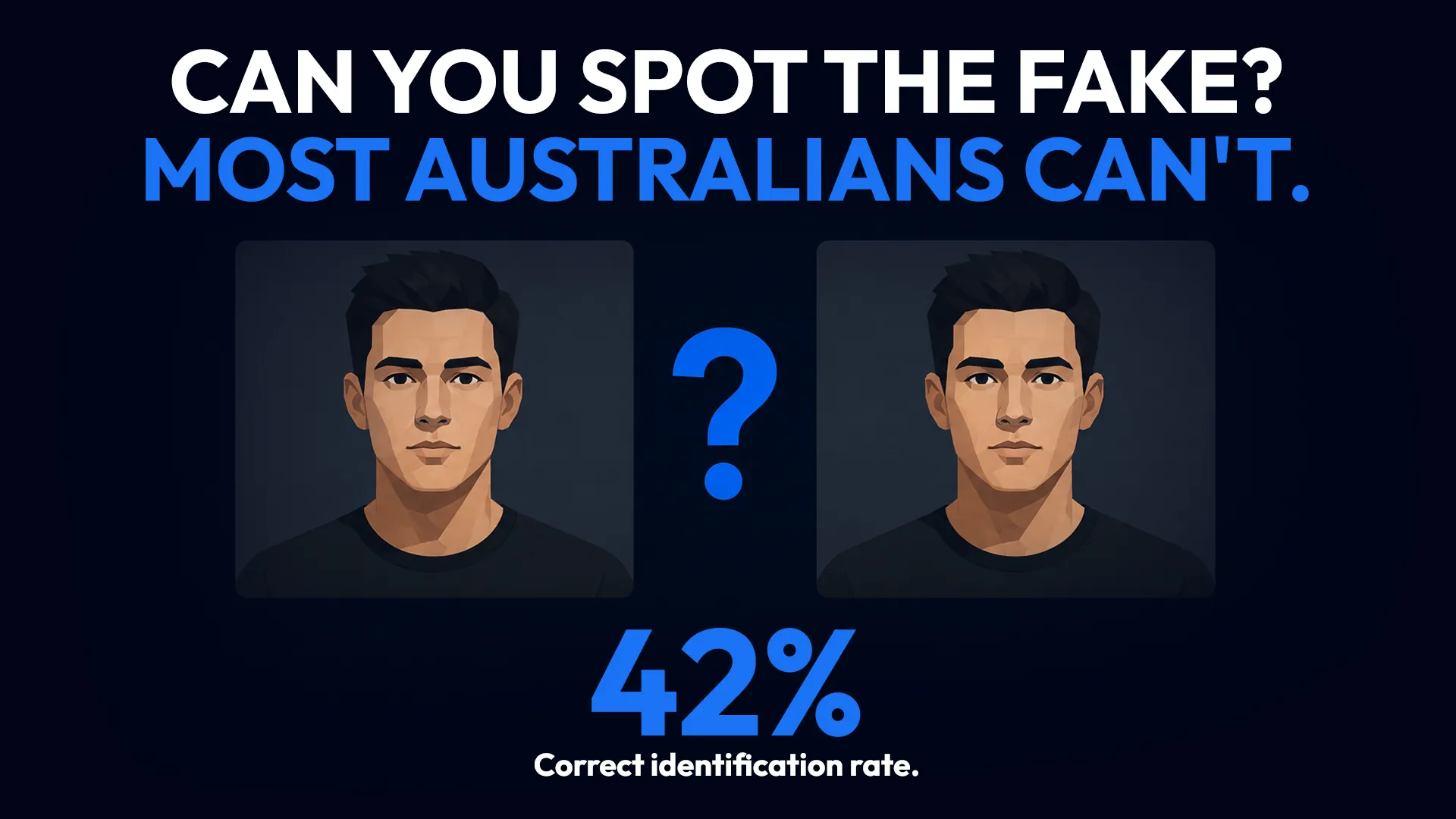
The specific threat ASIC is warning about is AI-powered deepfake content. Scammers are using generative AI tools to create professional-quality videos featuring Australian public figures, including Prime Minister Anthony Albanese, financial commentator Alan Kohler, Reserve Bank Governor Michele Bullock, and Dick Smith, apparently endorsing crypto investment platforms that do not exist or are designed purely to extract funds from victims. The court said plainly that you can look at these very carefully, take your time, and still not be able to tell they are fake. That assessment is backed by data. CommBank research found that 89% of Australians are confident they can spot an AI-generated scam, but when tested on real versus AI-generated images, they identified them correctly just 42% of the time, worse than random chance. The gap between confidence and actual detection ability is exactly the vulnerability these scams are designed to exploit.
The numbers behind the human cost are worth stating clearly. Australians lost AU$837.7 million to investment scams in 2025, representing more than 38% of total scam losses for the year. Scamwatch has already recorded more than AU$45 million in investment scam losses in 2026, and the figure is rising. Crypto investment platforms are among the most common vehicles for these schemes, partly because of genuine public curiosity about the asset class and partly because the promise of high returns in a volatile market is easier to make credible. The practical guidance from ASIC is worth repeating: a polished website, a professional video, and a recognisable face are no longer sufficient indicators that an investment opportunity is legitimate. The only reliable protection is using platforms with verifiable regulatory credentials, checking ASIC's registers directly, and treating any unsolicited investment opportunity with extreme scepticism regardless of how convincing the presentation appears. At Wayex, our AUSTRAC registration and Australian regulatory oversight are public and verifiable. That is not a marketing claim. It is the standard of accountability that every platform asking for your money should be able to meet.
How AI Saved Bybit US$700 Million
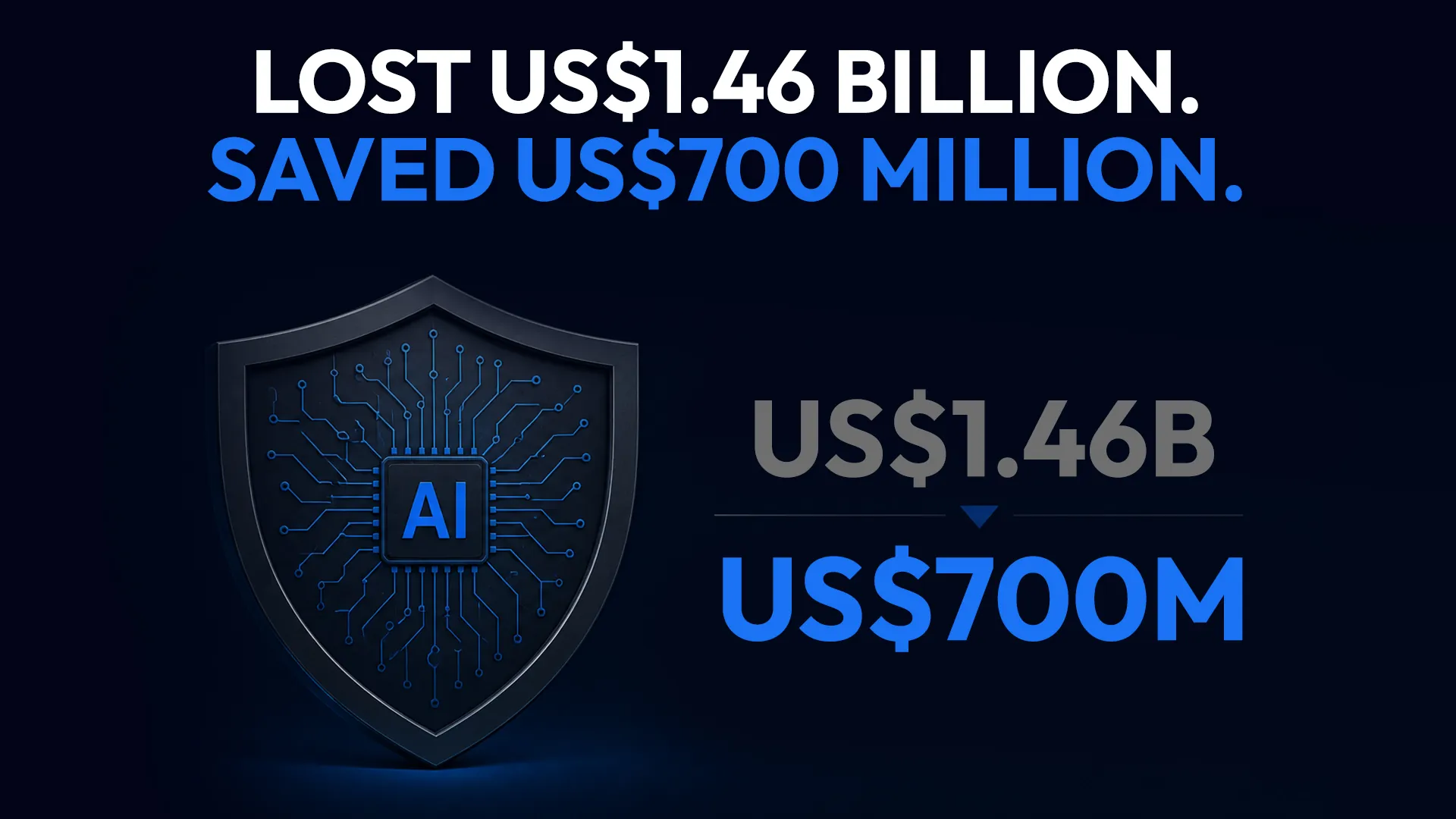
In February 2025, Bybit lost US$1.46 billion (AU$2.06 billion) in the largest theft in crypto history, attributed to North Korea's Lazarus Group. Eighteen months later, the exchange published something the industry has been waiting for: actual numbers on what AI-assisted security infrastructure can do when a well-funded firm builds it properly. Between January 1 and June 15 this year, Bybit's AI systems scanned 1,489 public-facing assets, processed more than 100,000 security alerts, uncovered more than 100 high-severity vulnerabilities, and blocked more than 30,000 suspicious withdrawal requests affecting close to 20,000 users. The estimated value of losses prevented: more than US$700 million (AU$987 million). The average time between a flagged withdrawal and a first human review: 4.7 minutes.
The numbers cannot be independently verified and Bybit is transparent about that distinction, describing the US$700 million as potential losses from withdrawals it stopped rather than confirmed theft in progress. What makes the disclosure significant regardless is the operational detail behind it. AI-assisted auditing found high-severity vulnerabilities at up to five times the rate of manual review, and cut the time between identifying an asset and completing security testing from approximately two weeks to under two hours. The firm also flagged around US$212 million (AU$299 million) in funds linked to fraud and blacklisted more than 10,000 addresses during the same period. David Zong, Bybit's head of group risk control and security, described the current environment as a cybersecurity arms race that has entered an era of minutes, where the speed of AI detection is the difference between blocking an attack and absorbing a loss.
The broader context matters. Bybit's disclosure arrives in a month when dozens of crypto firms, including Coinbase and Block, signed an open letter asking AI labs for early access to their most advanced models, arguing that defenders are currently working with weaker tools than the state-sponsored attackers targeting them. A volunteer group calling itself the Bitcoin Red Team has been pointing AI models at Bitcoin codebases and filing thousands of vulnerability reports. The same week, Bybit published its security figures, and ASIC warned that scammers are using the same category of AI tools to build investment fraud platforms sophisticated enough to fool most Australians. The technology cuts in both directions simultaneously. The exchanges and platforms investing seriously in AI-assisted defence are building a structural advantage that compounds over time. The ones that are not are accumulating a structural vulnerability that attackers are already exploiting.
Founder's Corner
This was the week the Clarity Act stopped feeling like a waiting game. Trump at the White House, Tim Scott confirming a September 15 procedural vote, the SEC publishing its first major crypto regulatory proposal in years, and Bitcoin breaking above US$70,000 (AU$98,700) for the first time since June, all in the same 48-hour window. The policy and the price told the same story for once, and that alignment is worth noting even if the path from here is not guaranteed to be clean.
The VanEck report is the one I keep coming back to. Eight of twelve capitulation signals firing, eleven months into a correction that has historically averaged 12.7 months peak to trough, with long-term holders shedding 356,000 BTC in thirty days. VanEck is careful to say these signals are not a short-term timing tool and neither are we. What the data does is describe a market that has done most of the painful work that corrections are supposed to do. Whether September or November marks the actual bottom is a question nobody can answer honestly. What is clearer is that the structure of this correction looks more like a cycle completing than a trend continuing.
The ASIC scam story is the one I want every Wayex user to share with someone they care about. The regulator removed 19,400 scams last financial year and said it still is not enough, because the technology is outpacing the enforcement. AI deepfakes of the Prime Minister and the RBA Governor promoting fake crypto platforms are circulating right now and the average Australian cannot tell them apart from the real thing. The answer is not to avoid crypto. It is to use platforms that are registered, regulated, and accountable. At Wayex, that is what we are. It is also what we have always been.
Richard Voice, Co-Founder, Wayex