Bitcoin dipped below US$60,000 (AU$87,031.56) this week, the debasement trade that defined 2025 is unwinding, and the Clarity Act, the legislation the entire crypto industry has been banking on, just got caught in a political crossfire it did not see coming. None of that stopped Meta from deciding it wants to build a prediction market, or the Ethereum Foundation from restructuring itself in ways that have divided the industry between those who think it is a crisis and those who think it is exactly what was needed. On July 1, every Australian crypto holder will feel a regulatory change that has been building for months. There is a lot to get through this week. Let's get into it.
When the Debasement Trade Unwinds
Bitcoin fell below US$60,000 (AU$87,031.56) this week for the second time this month, breaking beneath its 200-week moving average, a level that has historically marked the boundary between corrections and something more structural. Gold dropped below US$4,000 (AU$5,802.10) per ounce, down 28% from its January 2025 peak of US$5,600 (AU$8,122.95). Silver fell below US$59 (AU$85.58) per ounce, more than 50% off its record high. The three assets that defined the debasement trade, the bet that persistent fiscal deficits and rising government debt would erode the purchasing power of fiat currencies, are falling together as markets price in two 25 basis point Fed rate hikes by March 2027 under Chair Kevin Warsh.

The capital has not disappeared. It has rotated. South Korean memory chip giant SK Hynix filed to raise nearly US$30 billion (AU$43.52 billion) in a US share offering this week, the largest overseas capital raise since Saudi Aramco's US$26 (AU$37.71) billion sale in 2019, and the Nasdaq was up 0.8% on the same day Bitcoin fell 3.2%. AI stocks are absorbing the liquidity that hard assets are losing, and the competition for that capital is not subtle. Billionaire hedge fund manager Philippe Laffont told CNBC this week that he has become a little more worried about Bitcoin's future, arguing that companies like SpaceX and emerging AI firms offer growth stories that are easier to evaluate over long time horizons, and that the rise of stablecoins has reduced Bitcoin's uniqueness as an alternative financial asset. It is a view that is spreading in rooms where it was not common twelve months ago.
One silver lining worth noting: Bitcoin has outperformed both gold and silver since February, gaining roughly 30% against gold and more than 55% against silver over that period. The debasement trade is unwinding, but Bitcoin is unwinding it less badly than the metals it was grouped with. Whether that distinction matters depends on what you thought you owned and why. For Australian holders holding positions opened during the 2025 run, the honest question is whether the macro thesis that supported those positions has changed, and, if so, by how much. The Clarity Act story in the next section adds another layer to that question that is worth reading carefully.
The Clarity Act Just Hit a Political Wall
The Clarity Act, the landmark US legislation that would establish a comprehensive regulatory framework for digital assets and has been the single most anticipated piece of crypto policy in years, is now facing a timeline threat that the industry did not fully anticipate. President Trump refused this week to sign a housing bill that contained a CBDC ban, demanding instead that Congress attach his preferred elections legislation before he would sign anything. The procedural standoff has stalled congressional momentum and created real uncertainty about whether the Clarity Act can clear both chambers before the session window closes.
The stakes are significant. The Clarity Act would resolve the foundational question that has hung over the US crypto industry for years: which assets are commodities, which are securities, and which regulatory body has authority over each. Without it, the industry continues to operate in a framework of enforcement actions and legal uncertainty that constrains institutional participation, dampens exchange activity, and leaves Australian users of US-based platforms exposed to regulatory risk they cannot fully price. Analysis published this week modelled three scenarios: a delayed but eventual passage that maintains the current trajectory, a failure that triggers a return to the enforcement-first approach of the previous administration, and a partial outcome that resolves some questions while leaving others to litigation. None of the scenarios are catastrophic for the long term, but the difference between them is material for the next twelve to eighteen months.
The honest read is that the Clarity Act was never a certainty, and Trump's willingness to use unrelated legislation as leverage is a reminder that crypto policy in Washington is not immune to the same political dynamics that slow everything else. For Australian users, the direct relevance is real: US regulatory clarity drives institutional capital flows into the asset class globally, and those flows are part of what determines whether the current drawdown is a prolonged bear market or a floor being established before the next move. The Clarity Act is not just an American story. It is a global one. Watch what happens in the next two to three weeks as Congress navigates whether it can thread this needle before the session runs out of time.
Upheaval at the Ethereum Foundation
The Ethereum Foundation had one of its most eventful weeks in years, and the industry cannot agree on whether to read it as a warning sign or a turning point. On Monday, EthLabs launched a new independent Ethereum research organisation backed by more than 50 major ecosystem stakeholders, including SharpLink, with significant committed capital and a founding team drawn from Ethereum's most respected researchers and developers. One day later, the Foundation announced it was cutting its budget by 40% and laying off approximately 20% of its workforce. The sequencing was either unfortunate timing or a deliberate signal that the ecosystem's centre of gravity is shifting. Probably both.
The pessimistic read is the obvious one. Organisations do not slash budgets and cut jobs when everything is going well. Critics pointed to Ethereum's increasing competition from rival blockchain ecosystems, persistent questions about the Foundation's leadership and direction following a series of high-profile departures earlier this year, and the concern that further spending cuts could contribute to ETH outflows. ETH is already trading below US$1,800 (AU$2,610.95), down more than 60% from its all-time high, and the Foundation's restructuring landed in a market with little appetite for uncertainty about the network's stewardship.
The optimistic read is more interesting and arguably more considered. Solana co-founder Anatoly Yakovenko, one of Ethereum's most prominent competitors, described the restructuring as bullish, arguing that budget constraints force prioritisation and that a leaner Foundation will move faster and course correct more effectively. Consensys CEO Joe Lubin, Ethereum's co-founder, framed it as the natural evolution of a network that has grown far beyond any single institution, describing a future he calls Metropolitan Ethereum: a distributed ecosystem of aligned but independent organisations in which the Foundation is one node among many rather than the centre of everything. EthLabs, in his view, is the clearest expression yet of that future arriving. The launch of an independent, well-funded research organisation the day before the Foundation's cuts is less a coincidence than a handoff. Whether the ecosystem catches what is being thrown remains the question worth watching.
Australia's Travel Rule Kicks In on July 1. Here's What You Need to Know.

From July 1, every crypto exchange operating in Australia must collect and pass on sender and recipient information for every digital asset transfer, regardless of the amount. There is no value threshold. A US$50 transfer carries the same reporting requirement as a AU$50,000 one. The rule is enforced by AUSTRAC and brings Australian crypto transfers in line with how international bank wires have operated for years, requiring exchanges to verify and record the identities of both parties before a transaction is processed. If the required information is missing, transfers can be delayed, returned, or refused entirely.
The practical implications are real and immediate. Exchanges including Binance Australia and Independent Reserve have already updated their platforms to collect sender details for incoming deposits and beneficiary information for outgoing withdrawals, including full name, country of residence, and city or locality. Transfers between two exchanges will require verified withdrawal addresses on both sides. Some Australian Bitcoin holders have already moved assets to self-custody ahead of the deadline, prompted partly by the additional friction of the new verification steps and partly by a broader preference for direct control over their holdings. It is worth being clear about what the rule does not do: it applies to exchanges and other custodial service providers, not to individuals transacting directly between their own self-hosted wallets. Reporting obligations for transfers involving unverified self-hosted wallets have been deferred to 2029.
For Wayex users, the transition is already underway. Wayex has operated as a regulated, AUSTRAC-compliant platform since inception, and the Travel Rule requirements are consistent with the compliance infrastructure we have had in place. If you transfer crypto to or from your Wayex account after July 1, you may be asked to provide additional information about the sending or receiving party, depending on the nature of the transfer. The best preparation is straightforward: make sure your account details are current, have your counterparty information ready before initiating transfers between exchanges, and if you have questions about how the rule applies to your specific situation, reach out to the Wayex support team directly. More information will be provided to you soon.
Meta Wants to Bet on Everything
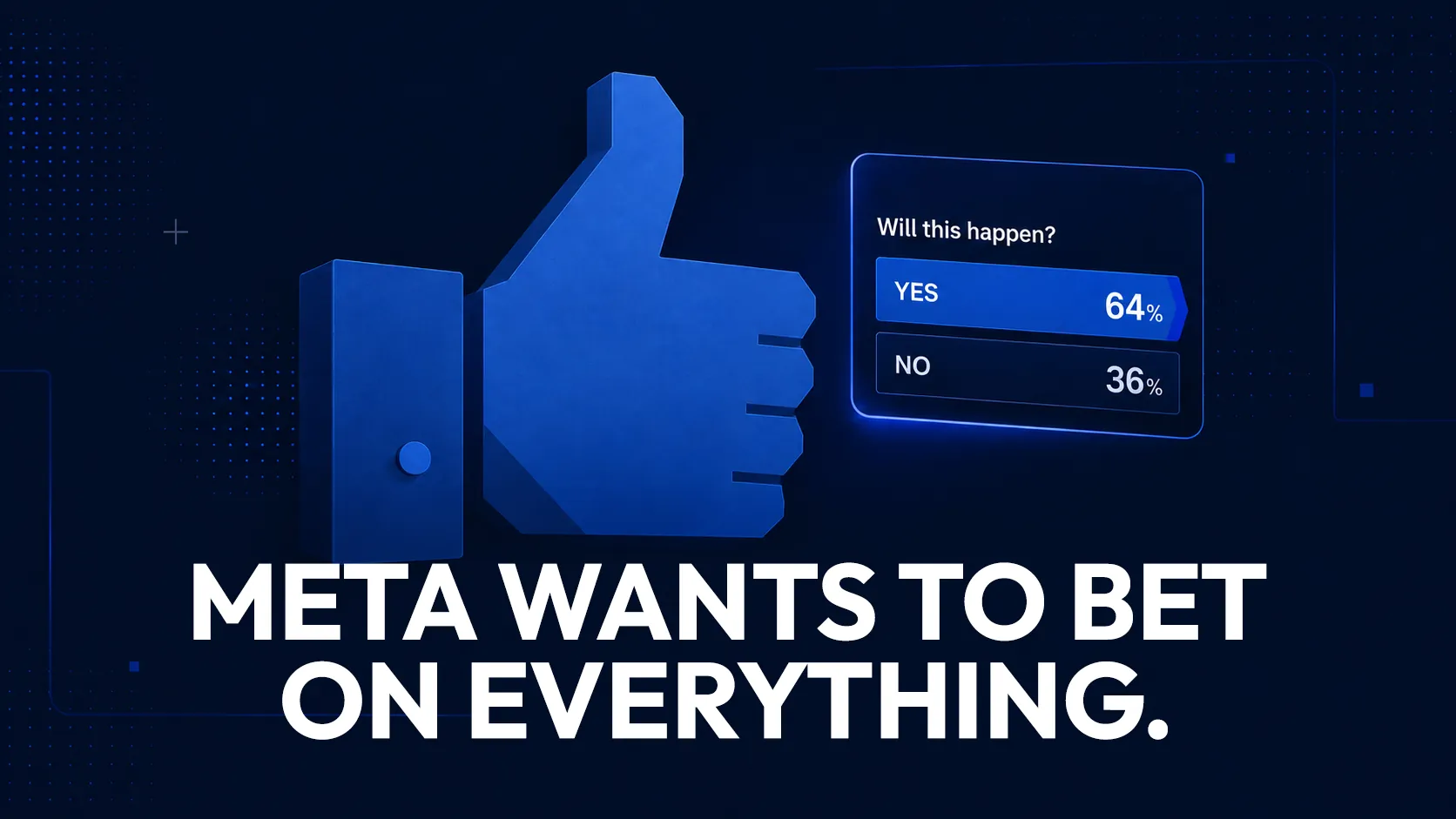
Mark Zuckerberg has directed a team at Meta to build a standalone prediction markets app internally called Arena, according to reporting by the New York Times, confirmed by sources familiar with the project. The app would let users forecast the outcomes of real-world events across politics, sports, entertainment, and world affairs using a points-based system rather than real money, at least at launch, with the door to eventual cash wagering left deliberately open. Meta declined to comment publicly. The timing is not a coincidence. Combined trading volume across Kalshi and Polymarket has hit US$130 billion (AU$188.57 billion) in 2026 alone, up from US$50 billion (AU$72.53 billion) across both platforms last year. Kalshi is reportedly targeting a US$40 billion (AU$58.02 billion) valuation. The sector that crypto built has become too large for the world's largest social network to ignore.
It is worth noting that Meta has been here before. In 2020, the company launched Forecast, a crowdsourced prediction app that let users make calls on world events during the early stages of the pandemic. It shut it down in 2022. Arena is being built into a very different market than the one Forecast entered, with a mature regulatory debate already underway, more than 30 pending lawsuits over the legality of prediction market contracts, and established platforms with billions in volume that Meta would be competing against from day one. The advantage Meta brings is not technology or liquidity. It is a distribution. The company's suite of apps reaches 3.56 billion daily users, an audience no crypto-native prediction platform can approach. Whether a points-based gamified version of what Polymarket and Kalshi do translates across that audience is the genuine unknown.
For the crypto industry, the arrival of Meta is a double-edged signal. On one side, it validates the sector in the most visible way possible: the world's largest social media company is building toward it. On the other hand, it introduces a competitor with resources, reach, and regulatory patience that no existing prediction market platform can match. Cboe, the exchange operator behind the VIX volatility index, also launched its own S&P 500 prediction market product this week. The prediction market group chat is getting crowded fast, and the platforms that built this category are about to find out what it means to defend territory rather than discover it.
Mark Cuban Is Back in Court. Sort Of.
Voyager Digital investors filed a notice of appeal this week with the Eleventh Circuit, challenging a Florida federal judge's December 2025 dismissal of their class-action lawsuit against Mark Cuban and the Dallas Mavericks. The original case, filed in 2022, alleged that Cuban and the Mavericks engaged in false representations and deceptive conduct tied to a 2021 marketing partnership with Voyager, a crypto brokerage that collapsed in July 2022 after lending hundreds of millions of dollars to Three Arrows Capital. The judge dismissed the case on jurisdictional grounds, finding that the plaintiffs had not established sufficient ties to Florida to make it the appropriate venue. The appeal challenges that dismissal and asks the Eleventh Circuit to review it. Cuban and the Mavericks are now the sole remaining defendants, after retired NFL star Rob Gronkowski, NBA player Victor Oladipo, and NASCAR driver Landon Cassill settled for US$2.4 million (AU$3.48 million) in 2024.
The case is a useful reminder of how long the legal tail from the 2022 crypto collapse actually is. A press conference appearance and a sponsorship deal in 2021 have generated years of litigation, jurisdictional discovery, multiple amended complaints, and now a federal appellate proceeding. Cuban has been one of the more vocal pro-regulation voices in the crypto space in the years since, arguing publicly that oversight is not the enemy of crypto but the condition for its mainstream adoption. That evolution in his position does not resolve the claims against him, which turn on what was said and disclosed in 2021, not on what he believes about regulation in 2026.
The broader lesson is one the industry keeps relearning. Celebrity endorsements and platform sponsorships carry legal risk that does not expire when the market cycle turns. The Voyager collapse happened four years ago. The litigation is still running. For anyone currently holding assets on platforms promoted by public figures without clear disclosure of the risks involved, the Cuban case is a useful data point about how accountability eventually catches up, even when it takes a very long time to do so.
Founder's Corner
This week had a particular kind of weight to it. Not the dramatic weight of a crash or a scandal, but the quieter weight of a week where several things that matter moved at once, and not all of them in the same direction.
Bitcoin below US$60,000 (AU$87,031.56) is uncomfortable to sit with. The debasement trade unwinding, the Clarity Act hitting a political wall, the Ethereum Foundation cutting a fifth of its staff: none of that is easy reading. What I keep coming back to is that none of it has changed the underlying reasons this industry exists or the problems it is trying to solve. The macro environment is difficult. The regulatory timeline is uncertain. The price is down. Those things are all true simultaneously with the fact that Australia's Travel Rule kicking in on July 1 represents a meaningful step toward a crypto market that looks more like the regulated financial system it is trying to earn a place inside. Compliance is not the opposite of ambition. It is what makes ambition durable.
The Ethereum Foundation story is the one I find most interesting this week, not because of the layoffs, but because of the argument underneath them. Vitalik Buterin has been saying for some time that the Foundation should become one node in a larger ecosystem rather than its centre. EthLabs launching the day before the cuts arrived looks less like chaos and more like a deliberate transfer of responsibility to a broader set of hands. That is how mature ecosystems are supposed to work. It is also how Wayex thinks about its own role: not as the centre of anything, but as a reliable, regulated part of an infrastructure that serves Australian crypto holders for the long term. The weeks that test that commitment are the ones that matter most.
Richard Voice, Co-Founder, Wayex
Things That Made Us Laugh