Trump's financial disclosure landed this week with the kind of numbers that make the conflict of interest debate impossible to sidestep: more than US$1.4 billion (AU$2.03 billion) in crypto income in a single year, from ventures his administration has simultaneously been regulating. On the same day, a 140-company consortium backed by Stripe, Coinbase, Visa, Mastercard, and BlackRock launched a stablecoin designed to compete directly with Circle's USDC, and Circle's stock fell more than 17% before the session closed. MetaMask launched a product that blurs the line between a crypto wallet and a bank account, Taiwan passed one of the most serious crypto laws anywhere in the world, and Binance arrived in a London courtroom facing nearly 1,700 claimants. A week that was equal parts consequential and uncomfortable. Let's get into it.
The President's Crypto Billion
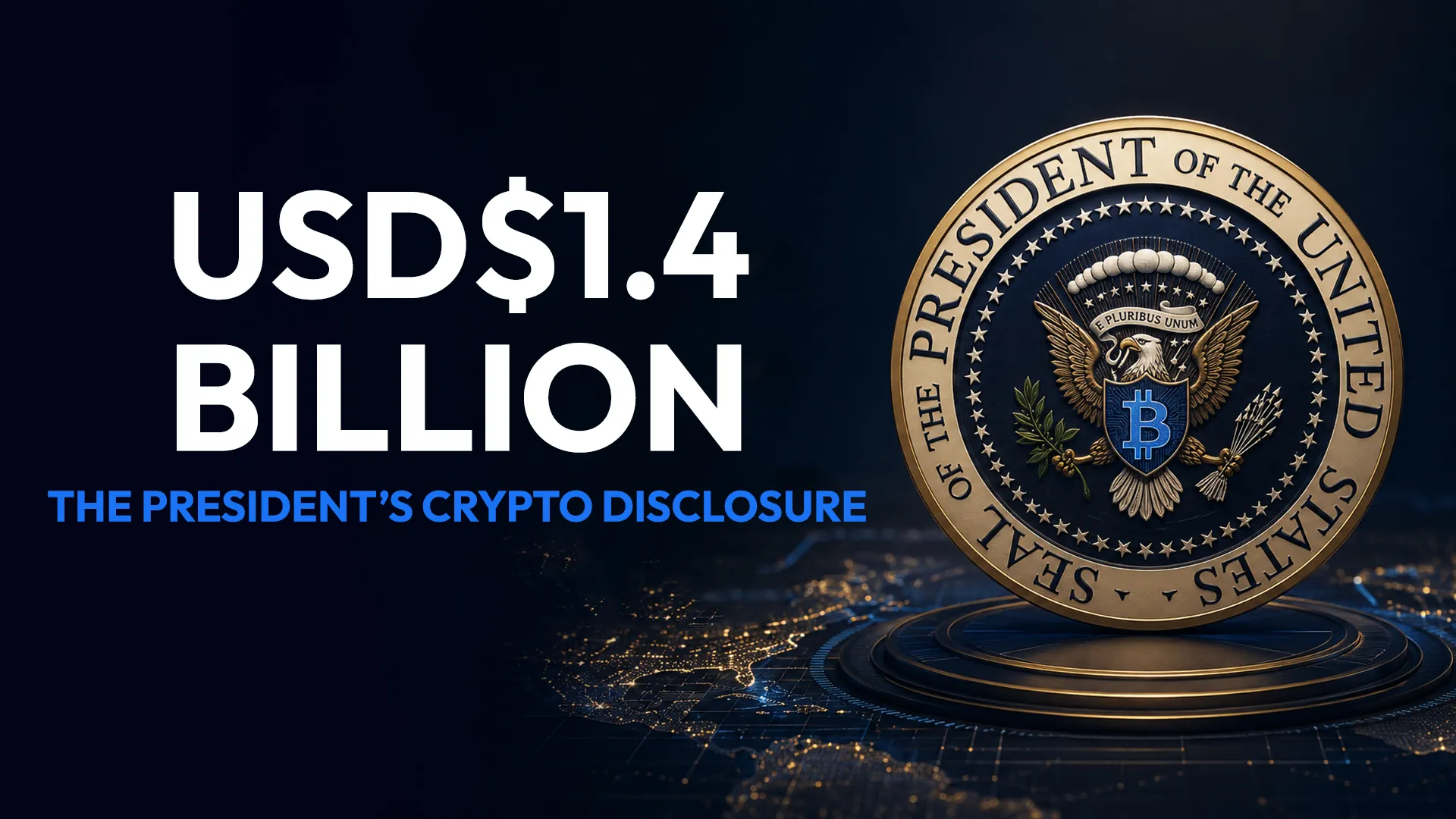
Trump's 2025 financial disclosure, all 927 pages of it, confirmed what had long been suspected but never officially quantified. Crypto has become the dominant source of the president's personal income, surpassing his golf clubs, his hotels, and every other business he has built his name on. The disclosure, filed with the US Office of Government Ethics and released on June 30, shows Trump earned more than US$635 million (AU$920.75 million) from a licensing agreement with Celebration Coins, the company behind the $TRUMP meme coin he launched three days before his inauguration. He reported more than US$526 million (AU$763.52 million) from World Liberty Financial token sales, the cryptocurrency venture co-founded with his sons Eric and Donald Jr., and a further US$65 million (AU$94.35 million) from equity sales in the firm that controls it. Total crypto-related income for the year: more than US$1.4 billion (AU$2.03 billion).
For context, Trump's Mar-a-Lago club generated US$77 million (AU$111.77 million) in resort revenue last year. Trump National Doral generated US$122 million (AU$177.09 million). The real estate empire that made him famous generated a fraction of what his crypto ventures returned in a single year. The $TRUMP meme coin, which briefly reached a peak value of US$74.24 on the day of its launch, was trading around US$1.67 at the time of filing, a decline of more than 97% from its high. The licensing agreement that generated US$635 million (AU$921.75 million) in royalties for Trump did so regardless of what happened to the price. The people who bought the token absorbed the loss. Trump collected the fee.
The White House rejected conflict of interest concerns, with a spokesperson stating that Trump had proudly made the United States the crypto capital of the world and that neither the president nor his family had engaged in conflicts of interest. A Reuters investigation published last month estimated the Trump family had generated at least US$2.3 billion (AU$3.34 billion) from crypto ventures since returning to the White House, a figure the official disclosure now partially corroborates with public record numbers. The policy and the profit sit in the same filing. That is not an allegation. It is a fact that every serious participant in this industry needs to hold clearly in mind when evaluating the regulatory environment that has emerged around it.
Circle's Worst Day: The Open USD Shock
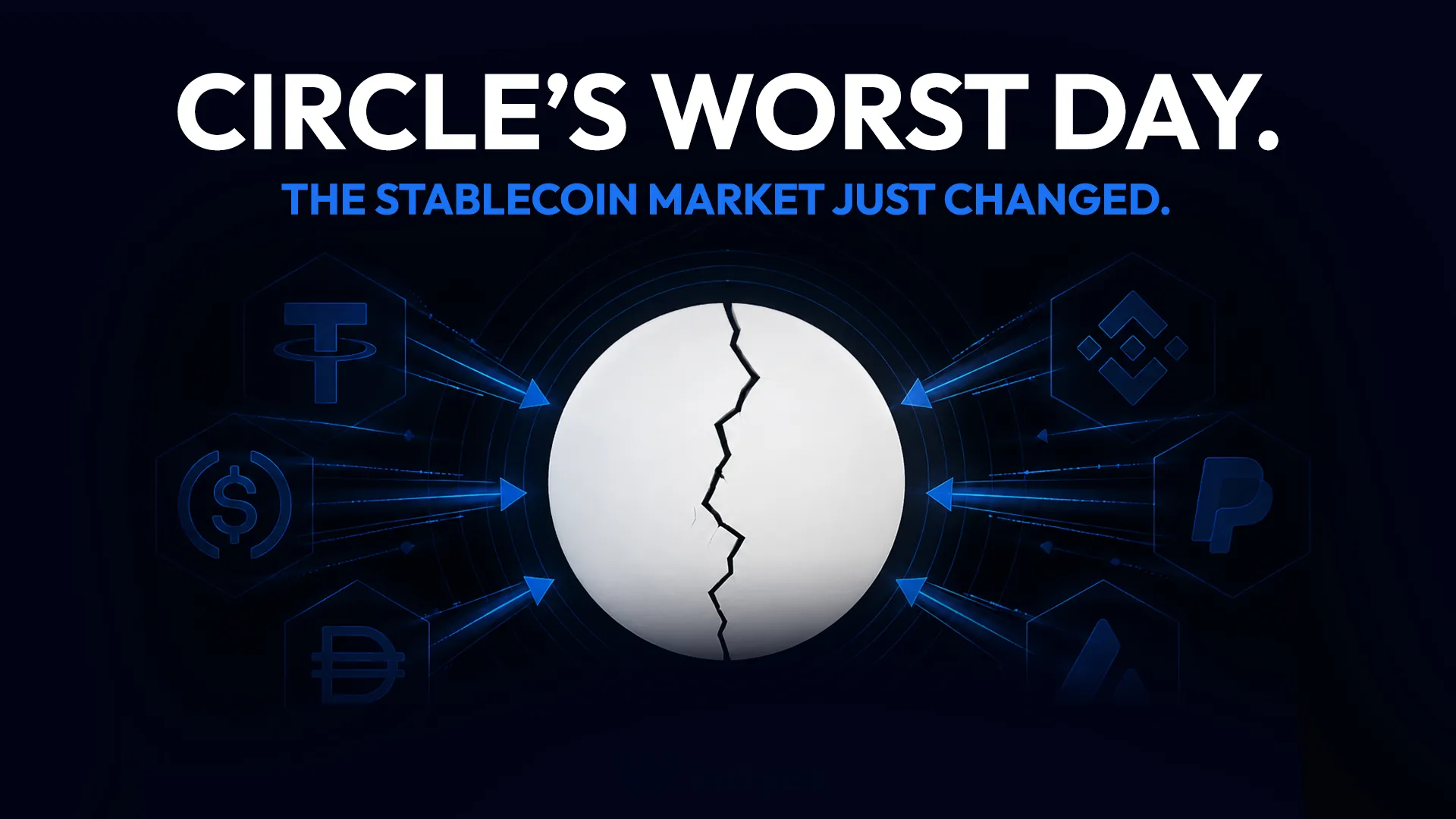
On June 30, a consortium called Open Standard went public with more than 140 founding partners and a stablecoin called Open USD, designed from the ground up to challenge the economics that have made Circle's USDC one of the most profitable products in crypto. The names on the partner list read like a directory of global financial infrastructure: Stripe, Coinbase, Mastercard, Visa, BlackRock, American Express, US Bank, BBVA, and Standard Chartered among them. Circle's stock fell more than 17% in a single session, closing at its lowest level since late February and down more than 55% from its May peak. The market did not need time to process the implications. It priced them immediately.
The mechanism that rattled investors is not complicated. USDC currently has approximately US$73 billion (AU$105.96 billion) in circulation. Circle earns revenue by investing the reserves backing those tokens in short-term US Treasuries and retaining most of the interest generated. That model has been enormously profitable as interest rates have stayed elevated. Open USD proposes to dismantle it. Under the consortium's structure, reserve income flows back to the participating businesses, the exchanges, payment processors, wallets, and banks that distribute the stablecoin, rather than to the issuer. The logic for any distribution partner is straightforward: why route volume to a product that keeps the yield when you could route it to one that pays you a share of it? Coinbase's participation is the sharpest edge of that question. The company currently receives hundreds of millions of dollars annually from its USDC revenue-sharing agreement with Circle, a deal reportedly up for renewal in August. Walking away from that arrangement to back a competitor is not a small bet.
The honest assessment is that the 17% single-session drop may have been an overreaction. Analysts at William Blair maintained their outperform rating on Circle and described competitive fears as overblown. The comparison case is instructive: Paxos launched its own consortium-backed stablecoin, the Global Dollar Network, in late 2024 with strong institutional backing. It has grown to approximately US$3 billion (AU$4.35 billion) in circulation, a meaningful number that nonetheless sits far below USDC's US$73 billion (AU$105.96 billion) base. Building a network is harder than assembling partners, and the Open USD consortium has not yet disclosed which blockchain it will deploy on, how revenue distribution mechanics will work in practice, or when the stablecoin will actually launch. What it has done is put Circle on notice that the distribution layer it built its dominance on is now being recruited to compete against it. That is a structural shift worth watching carefully, regardless of where Circle's stock settles.
MetaMask Launches Money Account

MetaMask, the self-custodial crypto wallet developed by Consensys and used by millions of people worldwide, launched Money Account this week on the Monad blockchain, and the product is worth paying attention to because it represents something more significant than a new feature. It is the most credible attempt yet to collapse the distance between a crypto wallet and a functional everyday bank account into a single self-custodial interface.
The product works like this. Users convert supported stablecoins, including USDC, USDT, and DAI, into mUSD, MetaMask's own dollar-pegged stablecoin, at a one-to-one rate with no conversion fees. From the moment funds land in the account, they begin earning up to 4% variable annual yield through DeFi lending protocols, starting with Morpho and with Aave integration to follow. No staking, no lock-up periods, no minimum balance, no manual fund management. The same balance connects directly to the MetaMask Card, accepted at hundreds of millions of Mastercard merchants globally, with eligible spending earning up to 3% cashback in mUSD deposited back into the account. The same balance also links to MetaMask's full trading suite, including token swaps, perpetual futures, tokenised stocks, and prediction markets, without requiring users to move funds between platforms.
The launch lands at a meaningful moment. The global stablecoin market has grown beyond US$320 billion (AU$464.50 billion), and the vast majority of those holdings sit idle, earning nothing, disconnected from everyday financial activity. MetaMask bets that users who already trust the wallet for asset storage are ready to trust it for broader financial activity, and that removing the friction between earning, spending, and trading is the unlock that makes that possible. The regulatory headwind is real: yield-bearing stablecoins sit at the centre of an ongoing debate in Washington about who can offer stablecoin rewards under the GENIUS Act and the Clarity Act. MetaMask is not available in the UK and certain restricted jurisdictions at launch. For Australian users in eligible jurisdictions, the product represents one of the clearest expressions yet of what self-custodial finance looks like when it stops asking people to choose between control and convenience.
Taiwan Sets the Bar
Taiwan passed a sweeping Virtual Asset Service Act this week that raises the regulatory standard for crypto exchanges operating in the country to a level that few jurisdictions outside the European Union have matched. The legislation, which is awaiting presidential signature before taking effect, requires all crypto exchanges to obtain a licence from the Financial Supervisory Commission before operating, mandates that stablecoin issuers maintain 100% asset reserves at all times, and introduces criminal penalties of up to ten years' imprisonment for market manipulation, insider trading, and fraudulent conduct involving virtual assets. The bill passed with broad cross-party support, reflecting a political consensus that the era of self-regulation in crypto is over.
The details matter. Taiwan's approach goes beyond simple registration requirements. Licensed exchanges will be subject to ongoing capital adequacy requirements, regular audits, segregation of customer and company funds, and mandatory disclosures around conflicts of interest. The 100% reserve mandate for stablecoins is particularly significant: it is one of the strictest reserve requirements anywhere in the world, and it directly addresses the systemic risk that under-reserved stablecoins pose to users and broader market stability. The prison sentences for manipulation are not symbolic. Taiwan has a functioning judicial system with a track record of enforcement, and the penalties are calibrated to deter the kind of wash trading and coordinated price manipulation that has historically plagued smaller crypto markets.
For Australian users, Taiwan's legislation is relevant for two reasons. It adds to a growing body of serious crypto regulation across the Asia-Pacific region, alongside Australia's own Travel Rule implementation and Singapore's expanded licensing framework, that is collectively raising the compliance baseline for every platform operating in the region. And it demonstrates that comprehensive crypto regulation does not require years of gridlock or political compromise to pass when there is genuine political will to get it done. The Clarity Act in the US has been stalled for months. Taiwan moved from draft legislation to parliamentary passage in a matter of weeks. The contrast is instructive, and the direction of travel across this region is worth noting for anyone who believes that regulatory clarity is eventually coming to every major market.
Binance and CZ Sued for USD$200 Million in the UK
Nearly 1,700 British investors filed a claim in London's High Court this week against Binance, its founder Changpeng Zhao, and two related entities, seeking at least £150 million (US$199.23 million / AU$289.21 million) in damages. The claim, brought by law firm KP Law, alleges that Binance marketed and sold complex crypto derivatives, including leveraged tokens, futures contracts, and options, to UK retail investors from late 2019 without ever obtaining authorisation from the Financial Conduct Authority. Some claimants say they lost tens of thousands of pounds when those leveraged bets turned against them. The legal argument is pointed: if Binance was not licensed to sell these products to UK retail customers, the contracts may not have been enforceable to begin with, and the losses that followed were not a risk the customers properly consented to absorb.
The timing compounds the pressure on Binance in ways that are difficult to separate from each other. On July 1, Binance lost access to European Union customers after its MiCA licence application in Greece was withdrawn, reportedly days before it was set to be formally rejected. Without a MiCA licence, Binance cannot legally serve EU users under the new regulatory framework, and the exchange has told customers across France, Italy, Poland, and Spain to withdraw their funds while it seeks authorisation through a different EU member state. Competitors did not wait. Coinbase moved quickly with a Luxembourg MiCA hub, and OKX founder Star Xu used the week to publicly highlight Binance's compliance record on social media. The exchange that once operated as though regulatory requirements were optional is now fighting on multiple fronts simultaneously.
The UK case is worth distinguishing from CZ's US legal history, which resulted in a US$4.3 billion (AU$6.24 billion) settlement, a four-month prison sentence, and an eventual presidential pardon from Trump in October 2025. CZ is named personally in the UK claim, but a US pardon carries no weight in a London courtroom. The defendants in this case include Cayman Islands-registered Binance Holdings, UAE-based Nest Exchange, Zhao himself, and unnamed operators of the Binance trading platform. The jurisdictional structure could make any eventual judgment difficult to enforce, a practical complication the claimants' lawyers will have anticipated. Binance has said it will defend itself and remains committed to operating in accordance with applicable law. What this week made clear is that the legal bill from the exchange's pre-compliance era is still arriving, years after the conduct in question and regardless of what happened in American courts.
Founder's Corner
There is a version of this week's news that reads as chaos. A president who made more from a meme coin than from his entire real estate empire. A stablecoin consortium that sent one of the industry's most valuable companies down 17% in a single session. An exchange facing lawsuits on two continents while losing its European licence. A wallet product that wants to replace your bank account.
The version I find more useful is the one that reads as acceleration. The industry is moving faster than it ever has, in every direction simultaneously, and the gap between the platforms and products that will matter in five years and the ones that will not is becoming clearer every week. Open USD is not just a threat to Circle. It is a signal that the distribution layer of the stablecoin market is being reorganised by the most powerful players in global finance, and that the economics of digital dollars are entering a new phase. MetaMask's Money Account is not just a new feature. It is the clearest sign yet that self-custodial finance is ready to compete with traditional banking on convenience, not just on ideology.
The Trump disclosure is the story I want to sit with longest, not because of the politics but because of what it illustrates about where this industry is in its maturation. When the president of the United States generates more income from crypto than from everything else he owns, crypto is no longer a fringe asset class. It is a centre of gravity for capital, policy, and political power simultaneously. That creates opportunity, and it creates risk, and being honest about both is the only way to navigate it well. At Wayex, regulated and compliant from day one, that is the standard we hold ourselves to.
Lastly, we implemented the Travel Rule as of July 1st. This, I believe, is quite a big change in the industry and something that many crypto natives will not like, as it removes the ability to move funds freely and with some form of identity privacy is now removed. However, on the flip side, we will see a significant reduction in scam activity, which I see overall as a positive. I think the Travel Rule still has a long way to go before it's implemented correctly across all platforms, but time will tell if this change is for the better.
Richard Voice, Co-Founder, Wayex
Things That Made Us Laugh This Week