Bitcoin is doing something it has not done since 2012. Gains in July, August and September have put it on track for a three-month winning streak that has occurred only once before, with US$16 billion (AU$22.4 billion) in quarterly options expiring this week and US$5.5 billion (AU$7.7 billion) in ETF inflows since August supporting the rally.
The exchange that invented the instrument behind much of today’s crypto derivatives market, BitMEX, closed permanently this week after 11 years. Tron quietly settles between US$150 billion and US$190 billion (AU$210 billion to AU$266 billion) in stablecoins every week, yet receives relatively little attention. Solana is testing an upgrade that could make transactions irreversible in 150 milliseconds. The Trump administration is considering a stablecoin strategy tied to America’s US$40 trillion (AU$56 trillion) debt. And Australia’s 40-year economic blueprint named AI as a defining force, mentioned crypto exactly zero times, and landed on the same day unemployment reached its highest post-COVID level.
Let’s get into it.
Bitcoin’s Three-Month Streak and the US$16 Billion Options Expiry
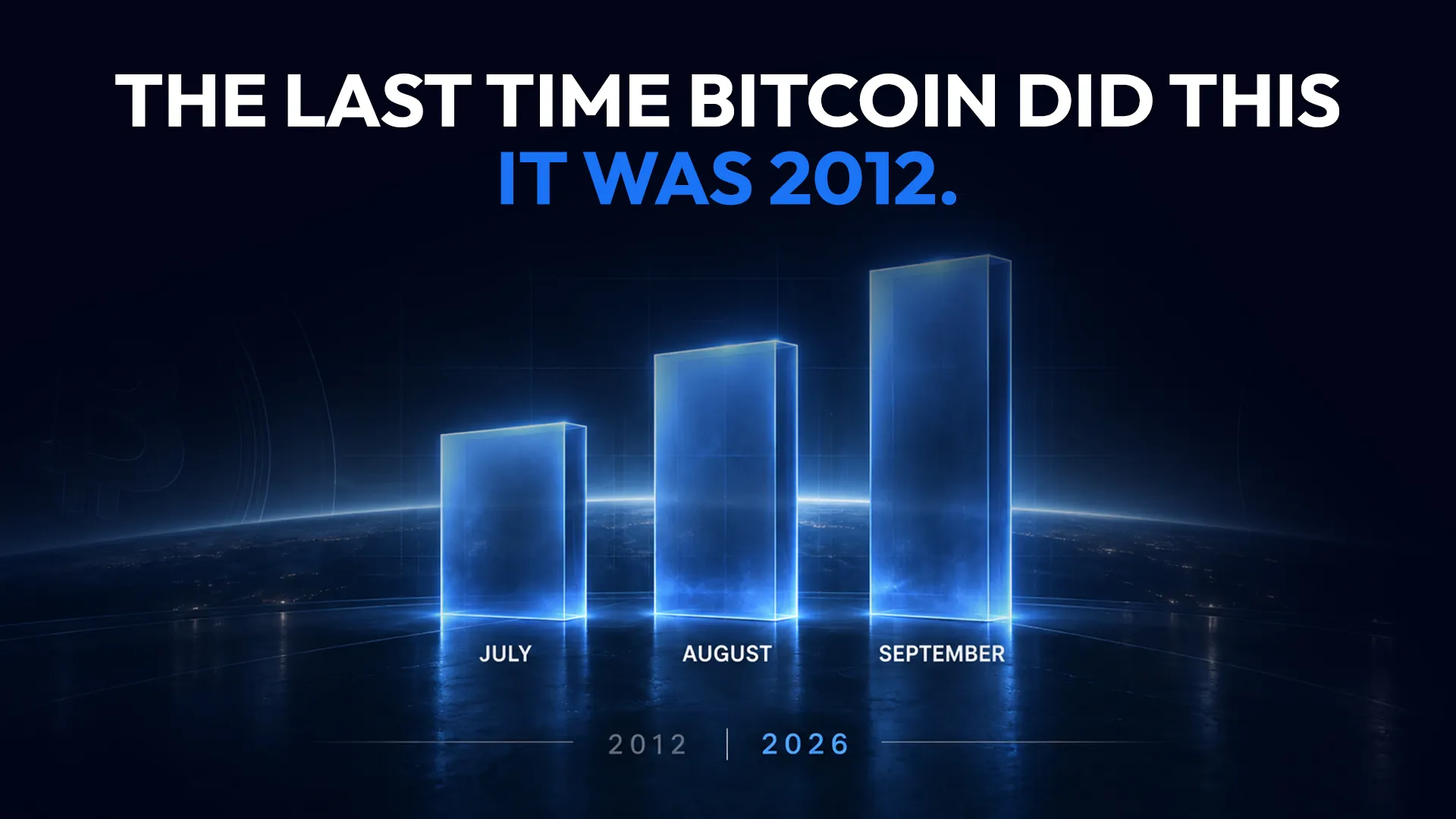
Bitcoin has posted gains in July, August and September, putting it on track for a three-month winning streak that has occurred only once before in its history. The previous instance was in 2012, when Bitcoin gained 41%, 6.4% and 24.4% across those same three months before falling 9.7% in October and then beginning a 165-day rally that carried the price more than 2,000% from its lows.
The comparison is interesting, but it comes with an obvious limitation: the sample size is one, and the Bitcoin market of 2026 looks nothing like the market of 2012. Back then, Bitcoin traded near US$10 (AU$14), institutional participation was almost non-existent, and there were no spot ETFs or mature derivatives markets. Today, Bitcoin sits inside a multi-trillion-dollar asset class with deep liquidity, institutional access and sophisticated trading strategies operating across dozens of venues.
That makes the 2,000% rally that followed in 2012 a poor guide to what happens next. What the pattern does offer is some context for where Bitcoin sits within its four-year cycle, with several cycle models pointing to a potentially stronger phase beginning around October or November.
The options market adds another layer. Around US$16 billion (AU$22.4 billion) in quarterly Bitcoin options expire this week, the largest quarterly settlement of the year, with analysts describing the market as heavily weighted toward calls. A call option gives its buyer the right to purchase Bitcoin at a set price before a certain date, so a call-heavy market generally reflects stronger positioning for higher prices.
The so-called “maximum pain” level sits around US$80,000 (AU$112,000). This is the price where the largest number of options would expire worthless, creating the greatest combined loss for option buyers. Bitcoin is trading above that level at around US$84,000 to US$87,000 (AU$117,600 to AU$121,800).
At the same time, US spot Bitcoin ETFs have attracted about US$5.5 billion (AU$7.7 billion) in net inflows since August, their strongest sustained run since October 2025. Whether those buyers remain after the current positioning unwinds will tell us more about the strength of the rally than any historical calendar pattern.
The macro pressure has not disappeared either. The Fed has raised rates to 3.75%–4.0% and signalled another increase this year. Whether ETF and spot demand can remain strong as those conditions tighten will matter far more than what Bitcoin happened to do in 2012.
BitMEX Is Gone. Here’s What It Leaves Behind.

BitMEX permanently closed trading on September 23 after 11 years, ending the run of an exchange that shaped the modern crypto derivatives market more than almost any other platform.
Founded in 2014 by Arthur Hayes, Ben Delo and Samuel Reed, BitMEX pioneered the perpetual swap, a derivatives contract with no expiry date that allows traders to maintain leveraged positions on crypto prices. The instrument went on to become one of the dominant products in crypto trading.
At its peak, BitMEX processed billions of dollars in daily volume and ranked among the world’s most visited crypto exchanges. The sophisticated derivatives market that exists today owes part of its structure and trading culture to what BitMEX built.
Its decline is just as instructive as its rise. US regulators fined BitMEX US$100 million (AU$140 million) for violating bank secrecy laws, while its three founders were convicted of federal charges before receiving presidential pardons from Trump in 2025. The exchange also spent its final months facing a US$495 million (AU$693 million) lawsuit from the Celsius bankruptcy estate over liquidations during the March 2020 COVID crash.
BitMEX never built the compliance infrastructure needed to adapt to the regulatory environment that followed its early success. The Celsius estate also alleges that BitMEX profited from liquidations it triggered, although those claims remain allegations and have not been decided by a court.
Withdrawals remain open, but trading is over. BitMEX leaves behind a derivatives market it helped create, a compliance cautionary tale it eventually became, and a reminder that building a successful financial product is different from building an institution that can survive.
The Hidden Network Settling US$150 Billion a Week

Tron is one of the most widely used blockchains in the world and one of the least discussed in mainstream crypto conversation. Founded in 2018 by Justin Sun and originally launched as a content distribution project, Tron has spent the past several years becoming a major settlement network for Tether’s USDT, the world’s largest stablecoin by circulation.
The network now processes between US$150 billion and US$190 billion (AU$210 billion to AU$266 billion) in stablecoin transfers every week, with transaction counts approaching 100 million and average fees of about seven cents. Those figures put Tron alongside some of the world’s largest payment networks in raw settlement volume, although the comparison requires context. Visa records transactions in real time but generally settles them later, while Tron records and settles a blockchain transaction within the same process.
Tron’s dominance in USDT settlement is largely practical rather than ideological. Across emerging markets in Southeast Asia, Africa and Latin America, low fees and fast settlement can matter more than advanced blockchain features. Tron offers a relatively cheap way to move digital dollars across borders, which has helped it capture a large share of global USDT activity.
Josh Olszewicz of Canary Capital described Tron this week as global payment infrastructure rather than a blockchain competing primarily on DeFi innovation. That is a useful way to frame it. Tron is not trying to become Ethereum. Its strongest use case is moving dollars quickly and cheaply at global scale.
The investment case for TRX, Tron’s native token, is tied to how the network works. Transactions consume resources known as bandwidth and energy. Users can either spend TRX for transactions, which burns tokens and reduces supply, or stake TRX to receive an allowance of those resources. In theory, greater transaction activity creates more demand for staking and burning, although TRX’s price still depends on broader market conditions as well as network use.
Regulation also matters. The GENIUS Act established a federal framework for payment stablecoins in July 2025, directly affecting a network where stablecoins make up a large share of activity. Clearer rules could support further settlement growth on Tron, but restrictions on which stablecoins can operate would create the opposite effect. The opportunity is real, but so are its dependencies.
Solana Just Got Closer to Being Instant
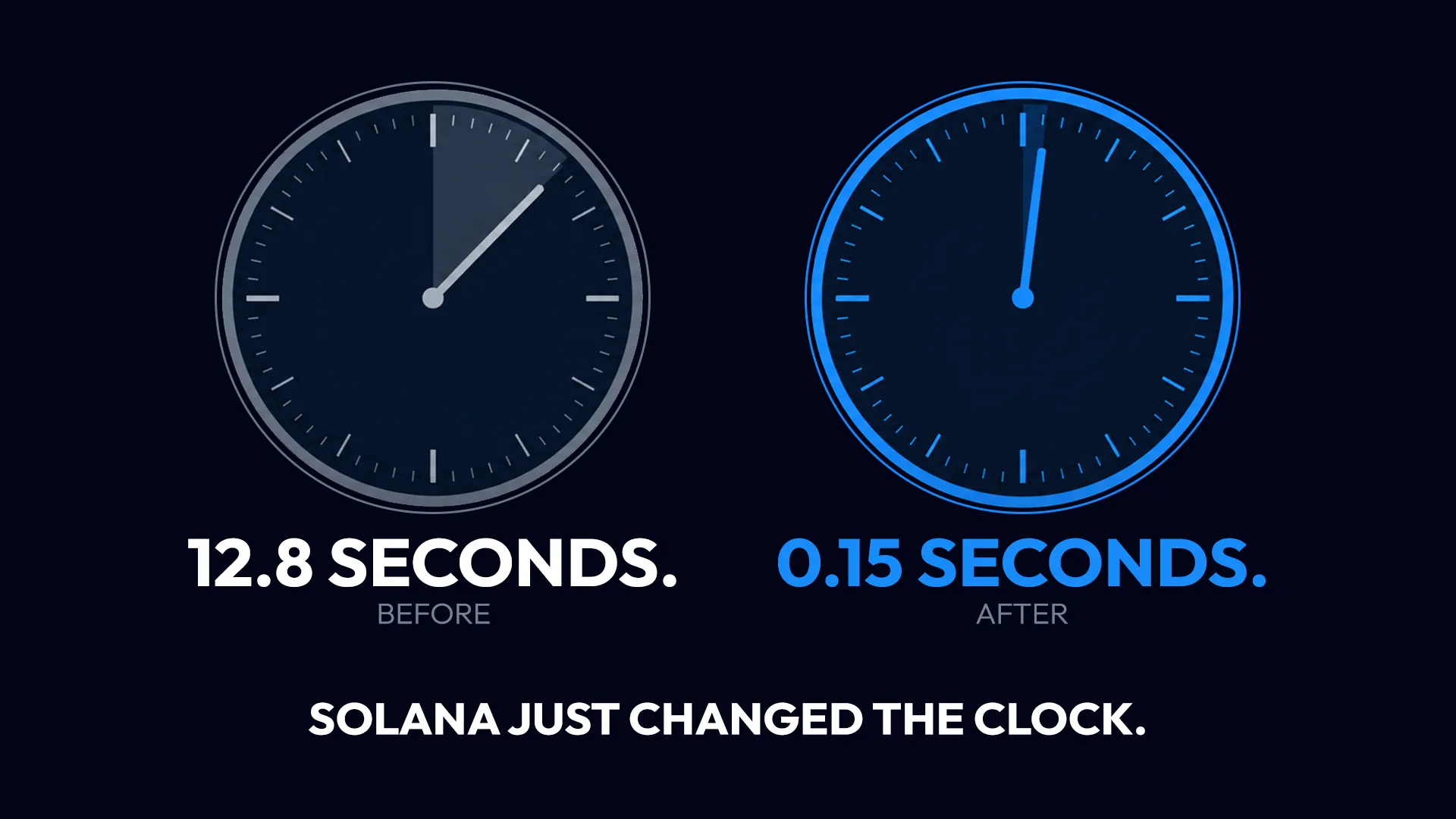
Solana began testing a major consensus upgrade this week that could cut transaction finality from about 12.8 seconds to 150 milliseconds, a reduction of more than 98%.
The upgrade, called Alpenglow, has moved from a smaller dedicated test network onto Solana’s public testnet. This allows a broader group of developers and validators to test the system without putting real funds at risk.
The distinction between testing and launching matters. Alpenglow is not live on Solana’s mainnet, and the September 28 date appearing in Anza’s development schedule is a tentative target for enabling certain features rather than a confirmed launch. What is clear is that the upgrade has progressed far enough for broader public testing.
To understand why this matters, it helps to understand finality. When you send crypto, the transaction does not become permanently settled the moment you press send. Validators must agree that the transaction is valid and belongs in the blockchain’s permanent record. The point where it can no longer be reversed is known as finality.
On Solana today, finality takes about 12.8 seconds. Exchanges may wait for it before crediting deposits, bridges may wait before releasing assets onto another blockchain, and merchants need it to know a payment cannot be reversed.
Twelve seconds is already fast compared with many blockchains. One hundred and fifty milliseconds, roughly the time it takes to blink, would put Solana in a very different category.
Alpenglow aims to achieve this by replacing Solana’s current consensus system, TowerBFT, with a new voting protocol called Votor. Rather than requiring validators to build up votes across a long sequence before finalising a block, Votor allows them to communicate more directly and reach agreement in one or two voting rounds.
For users, little should change. Wallets and applications would continue working much as they do now because the change happens at the infrastructure level.
If Alpenglow reaches mainnet and performs as designed, it could make Solana more competitive for applications where near-instant settlement matters, including payments, trading and tokenised assets. Those are also some of the areas attracting the strongest institutional interest in blockchain infrastructure.
Trump’s Stablecoin Plan for America’s US$40 Trillion Debt
The Trump administration is considering a coordinated push to expand US dollar stablecoins internationally, according to a Bloomberg report published this week. The goal would be to create more overseas demand for US Treasury securities and help Washington finance its US$40 trillion (AU$56 trillion) national debt more cheaply.
The logic is relatively straightforward. The United States finances its debt by selling Treasury securities to investors, who receive interest in return. The dollar’s role as the world’s reserve currency has historically created strong international demand for those securities.
Stablecoins could create another source of that demand. If dollar stablecoin issuers are required to hold US Treasuries as reserves, wider stablecoin adoption means issuers need to buy more government debt. In theory, more demand for Treasuries could help reduce the government’s borrowing costs.
The proposal remains under consideration rather than confirmed policy. Bloomberg cited people familiar with the administration’s thinking rather than an official announcement, which is an important distinction.
The broader idea, however, has been developing for some time. Treasury Secretary Scott Bessent has spoken publicly about stablecoins as a way to extend the dollar’s global role, while the GENIUS Act already requires payment stablecoin issuers to hold approved reserve assets, including short-term Treasuries.
The question appears to be whether the US can push that model further through trade agreements, regulatory coordination and wider promotion of dollar stablecoins overseas.
There is also a more sceptical way to view the idea. Using stablecoins to improve payments is one thing; using them as part of a strategy for financing government debt is another. A stablecoin designed primarily for everyday payments may not always align with a system designed to maximise Treasury demand.
Competition is another factor. Private stablecoin projects and bank-backed initiatives are already fighting for global distribution, and any government-supported push would enter a market with established players.
For Australian users, the practical impact is simpler. If the US succeeds in expanding dollar stablecoins globally, USDT and USDC could become even more important within Australian crypto markets, increasing the need for platforms to have strong compliance systems around how those assets are handled.
Crypto Breadth vs S&P Breadth
One of the more interesting market comparisons this week came from CoinDesk’s Noelle Acheson, who pointed out that the S&P 500 and crypto are both rallying, but the participation underneath those rallies looks very different.
The S&P 500 has what analysts call a breadth problem. Breadth measures how many assets are taking part in a market move. Strong breadth means most stocks are rising together, while weak breadth means a small group of large companies is carrying the wider index.
The current S&P 500 rally falls closer to the second category, with a narrow group of mega-cap technology companies doing much of the work while many other stocks lag behind. That can make a rally more vulnerable because a small number of companies are responsible for a large share of the gains.
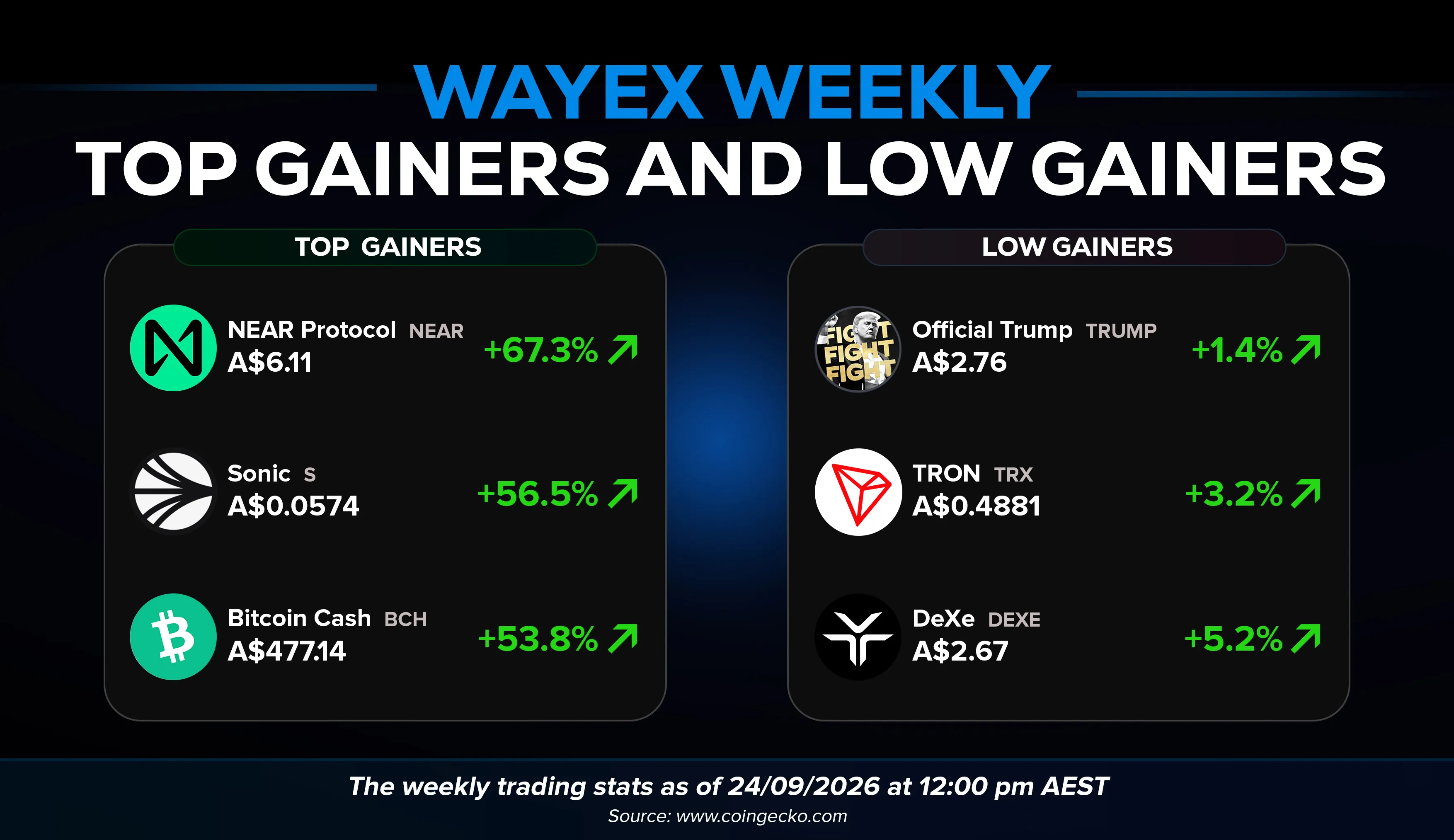
Crypto is showing a different pattern. Bitcoin is up about 10.9% for September, but XRP, Solana, Ethereum and a broader range of altcoins have also posted meaningful gains.
XRP is trading around US$1.61 (AU$2.25), while SOL has risen 65% from its September low and ETH is up more than 20% from its recent lows. Privacy coins, which were largely left behind in earlier rallies, have also strengthened.
The median coin among the top 200 remains about 58% below its all-time high, showing how deep the previous correction was. But participation in the current recovery is widening rather than narrowing.
That matters because a broad rally suggests investors are allocating across the asset class rather than concentrating on one asset or narrative. It does not guarantee the rally will continue, but it provides a stronger base than a market being carried by one or two names.
For Australian crypto holders with positions across several assets, that broader participation may be more useful to watch than Bitcoin’s three-month streak alone. The next question is whether it survives the volatility that could follow this week’s options expiry and the tighter macro conditions ahead.
Australia’s 40-Year Plan
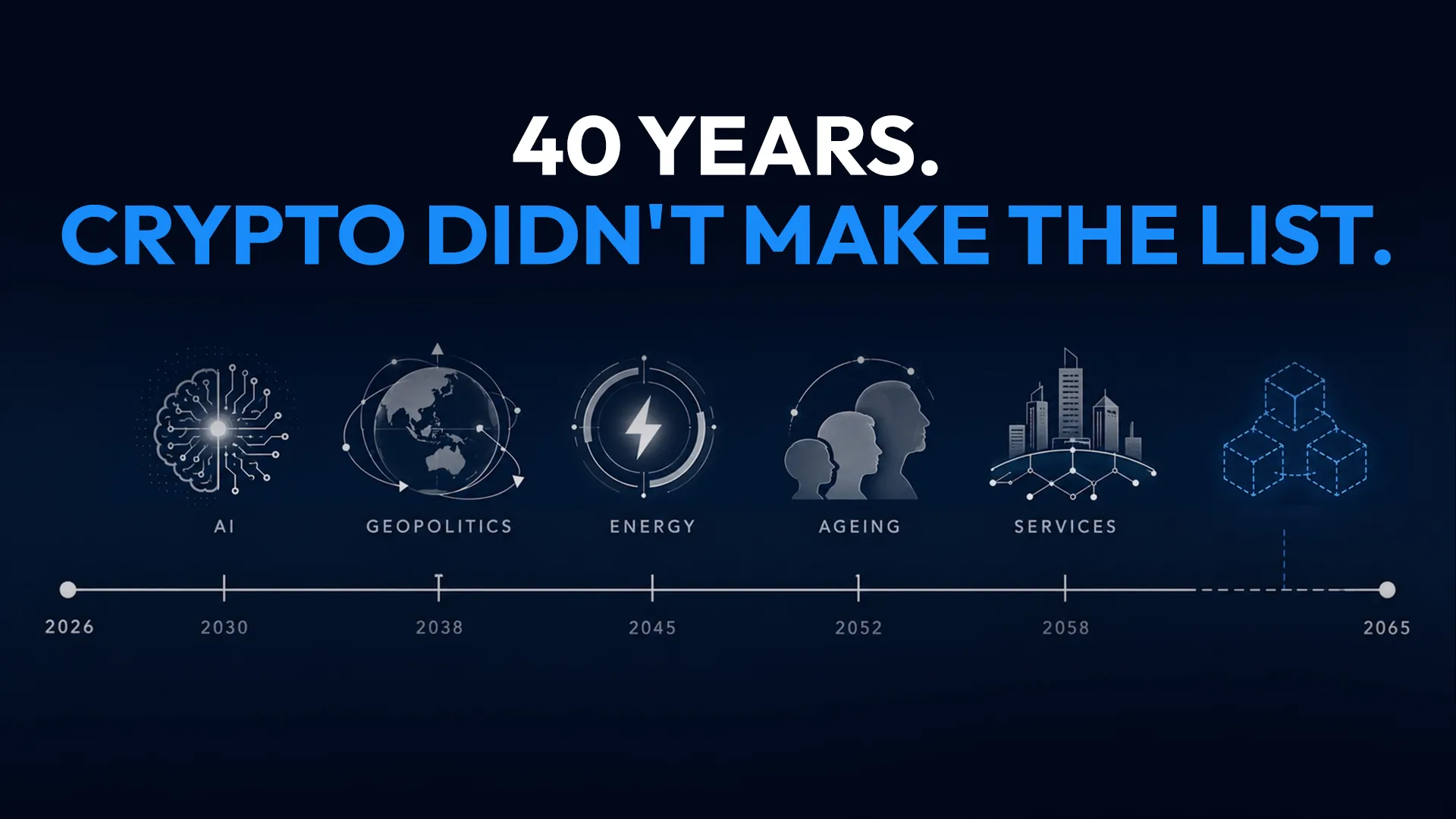
Australia’s Treasury released its seventh Intergenerational Report on September 21, setting out the country’s economic and budget outlook through 2065–66 and identifying the major forces expected to shape the next four decades.
The report names artificial intelligence as one of five defining forces, alongside geopolitical fragmentation, the energy transition, population ageing and the shift toward a services economy. Treasurer Jim Chalmers described AI as the most dramatic technological change since the previous report in 2023.
The report examines increasingly capable AI systems, their effect on jobs and skills, and their potential to lift productivity. The Productivity Commission estimates AI could increase productivity by more than 2.3% over the next decade.
Crypto, blockchain and stablecoins do not appear in the document.
That omission is notable because other parts of the Australian government are already moving on digital finance. Parliament has passed laws bringing crypto platforms under financial services licensing from April 2027, while the Reserve Bank of Australia has been exploring tokenised money and digital currency infrastructure through Project Acacia.
Treasury also released a Financial Innovation Strategy on September 3 that connects the growth of AI agents with demand for payment infrastructure that is real-time, interoperable and programmable. Those are also characteristics commonly associated with blockchain-based financial infrastructure.
John O’Loghlen, National Director of Coinbase Australia, argued that the Intergenerational Report missed the financial infrastructure AI agents may need as they become more autonomous.
The report also arrived as Australia’s unemployment rate reached 4.6% in August, its highest post-COVID level, up from 4.5% in July. ABS data showed 722,900 Australians unemployed, while youth unemployment rose 0.4 percentage points to 10.8%.
RBA Governor Michele Bullock said earlier this week that unemployment somewhere between 4.5% and 5% could remove enough pressure from the labour market to help ease inflation. All four major Australian banks are now pricing in a rate increase at the RBA’s September 29 meeting.
For Australian crypto holders, that creates a mixed backdrop. Monetary conditions are tightening while the government is planning for a future shaped heavily by AI, even as its broader economic blueprint gives little attention to the digital financial infrastructure already being developed.
The government is clearly thinking about AI’s role in Australia’s future. The role crypto, blockchain and tokenised finance will play alongside it remains less defined. With a new licensing framework arriving in April 2027 and tokenisation work already underway at the RBA, that gap between policy action and long-term strategy is worth watching.
Founder’s Corner
This week had an unusual energy to it. Bitcoin is doing something it has not done since 2012, and most people are not quite sure what to make of it. The honest answer is that nobody should be too certain either way.
A three-month winning streak based on one historical precedent, followed by US$16 billion in options expiring and a Fed that has signalled another rate hike, is not a setup that rewards overconfidence. What it does reward is clarity about why you own what you own and what conditions would change that view.
The BitMEX closure is the story I keep returning to this week, not because of nostalgia but because of what it illustrates. BitMEX pioneered the perpetual swap, processed billions in daily volume at its peak and helped shape the derivatives market the industry now operates within. It also failed to build the compliance infrastructure needed to survive the regulatory environment that followed.
The exchange that helped shape crypto derivatives trading could not survive the era of crypto derivatives regulation.
At Wayex, that lesson is not abstract. We made the decision to put compliance first before it was commercially obvious that we had to, because we believed it was the only way to build something that lasts. BitMEX is a powerful example of what can happen when that foundation is missing.
The Australia section is the one I find most thought-provoking this week as a founder. The Intergenerational Report maps the next 40 years of the Australian economy, names AI as a defining force and does not mention crypto, blockchain or stablecoins once.
Yet the same Treasury released a Financial Innovation Strategy just 18 days earlier that connects AI agents with the need for real-time, interoperable and programmable payment infrastructure. The gap between those two documents reflects where the policy conversation has arrived and where it still has further to go.
Our AFSL approval and the licensing framework arriving in April 2027 are signs that the conversation is moving. By the time the next Intergenerational Report arrives, I suspect the role of digital financial infrastructure will be much harder to leave out.
Richard Voice Co-Founder, Wayex
Things That Made Us Laugh This Week