Bitcoin closed September around US$83,500 (AU$120,240) and has continued to trade around that level into October. Corporate treasuries are buying again, while US Bitcoin ETFs attracted US$2.4 billion (AU$3.46 billion) in a single week, pushing 2026 net flows into positive territory for the first time. Open USD went live on September 30 with more than US$1 billion (AU$1.44 billion) in committed liquidity and a model designed to compete with Tether and Circle. Britain approved its first Bitcoin-backed sterling preferred share, while new figures revealed the crypto industry spent US$8 million (AU$11.5 million) lobbying for the Clarity Act before its 49–50 Senate defeat. Australia also joined an international warning about WaterPlum, a North Korean hacking group accused of posing as tech recruiters and targeting developers across more than 100 countries. It was a week that moved from genuine market momentum to one of the year’s most important stablecoin launches, with a security threat worth taking seriously for anyone working in tech or crypto. Let’s get into it.
Bitcoin Pushes Toward US$90,000. Here’s What’s Actually Driving It.
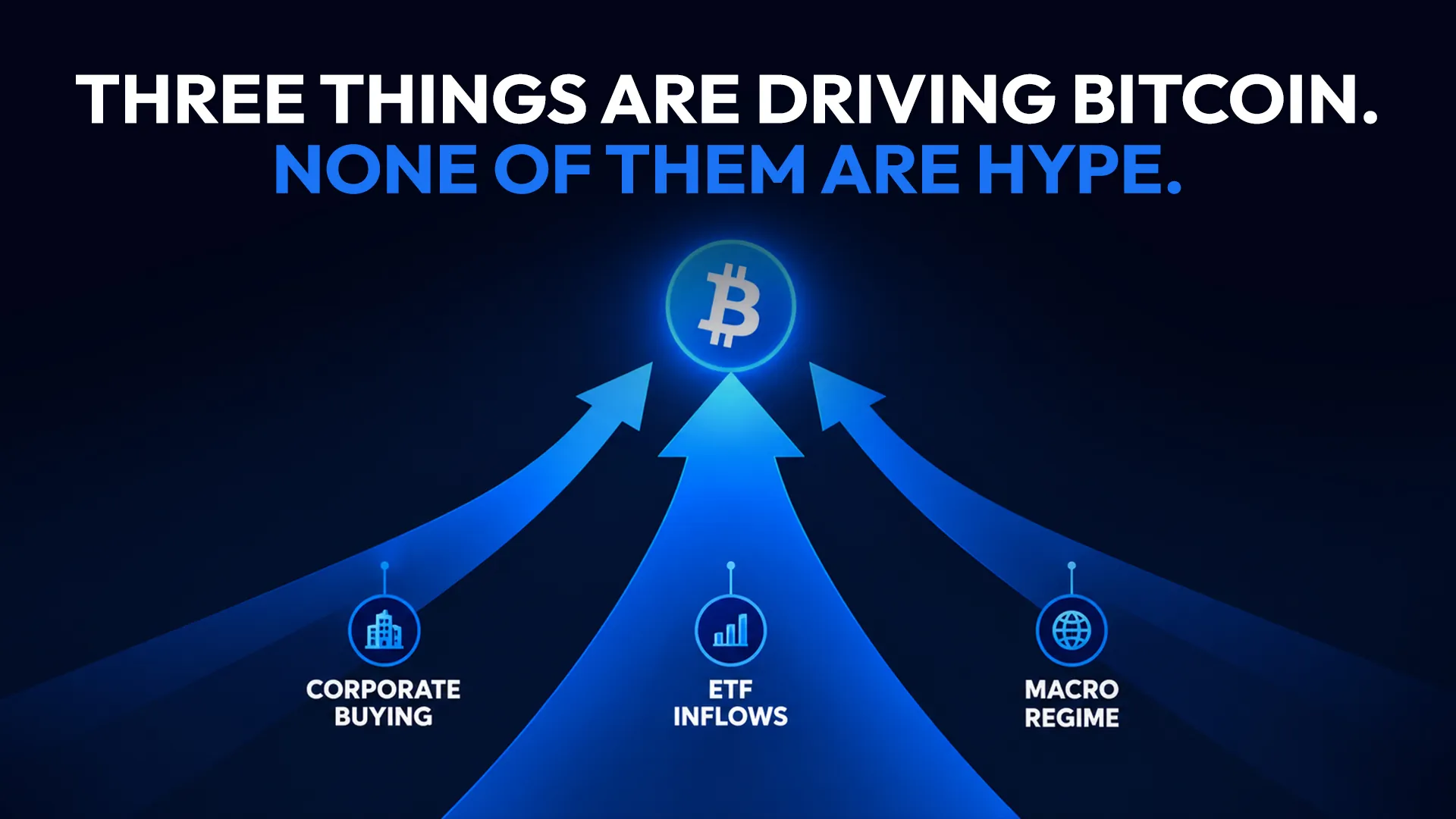
Bitcoin closed September at approximately US$83,500 (AU$120,240) and has continued trading around that level into October. Three forces are supporting the move, creating a different backdrop from the short-squeeze-driven rally that dominated August. Looking at each one separately gives us a clearer picture of what is driving the market.
The first is corporate treasury buying. Strategy added 1,665 BTC in the final week of September, bringing its total holdings to 847,666 BTC, worth approximately US$70.8 billion (AU$101.9 billion) at current prices. STRC, Strategy’s preferred stock, also returned to its US$100 (AU$144) par value this week after trading below it during the American summer. Analysts, including Eric Jackson of SRX Global, believe this could reopen the company’s capital-raising mechanism for the first time since May. When STRC trades above par, Strategy can issue new shares and use the proceeds to buy more Bitcoin.
Strive Asset Management, the fifth-largest publicly traded Bitcoin treasury firm, added another 1,107 BTC, taking its holdings to 27,462 BTC. On the Ethereum side, Bitmine added 17,362 ETH, bringing its total to approximately 6 million ETH. That takes Bitmine above 5% of Ethereum’s circulating supply, with its staking operation projected to generate around US$330 million (AU$475.2 million) in annual revenue.
The second force is ETF demand. US spot Bitcoin ETFs attracted approximately US$2.4 billion (AU$3.46 billion) in net inflows during the week ending September 25, their strongest weekly result since October 2025. Those inflows also pushed cumulative 2026 flows into positive territory at approximately US$934 million (AU$1.34 billion), after they had been down as much as US$5.8 billion (AU$8.35 billion) earlier in the year.
Demand is also spreading beyond Bitcoin. Ether ETFs attracted US$689.9 million (AU$993.5 million) during the same week, their strongest result since late August, while Solana ETFs recorded their largest single-day inflow since launching in October 2025. That breadth matters because it suggests investors are allocating across the market rather than concentrating solely on Bitcoin.
The third force is the broader economic environment. Eric Jackson, Global Head of Asset Management at SRX Global, argued in a Coinage interview this week that global liquidity and macro conditions matter more to Bitcoin than its four-year cycle. His firm’s model turned cautious on May 26 when Bitcoin was near US$77,000 (AU$110,880), ahead of the correction, before turning positive again in August as Bitcoin traded near US$62,000 (AU$89,280).
Jackson’s US$100,000 (AU$144,000) year-end target depends on those conditions continuing, particularly global liquidity and the 10-year US Treasury yield. Tom Lee of Fundstrat has made a similar institutional argument, saying he believes investors remain underweight crypto and could increase exposure through the final months of 2026.
Whether those forecasts prove accurate depends on forces well beyond any individual model. What is clearer is that corporate buying, ETF inflows and improving macro signals are all supporting the market at the same time, giving the current move a broader base than August’s short squeeze alone.
Open USD Goes Live. The Stablecoin Race Just Changed.

Open USD launched on September 30, moving from announcement to live product while much of the market’s attention remained fixed on Bitcoin. Issued by Open Standard, the stablecoin launched across Ethereum, Solana, Coinbase’s Base network and Stripe-backed Tempo, with Coinbase, Mastercard, Shopify, Stripe and Visa as founding partners.
The five companies have each taken an equal initial equity stake in Open Standard and together committed more than US$1 billion (AU$1.44 billion) to support OUSD liquidity over the coming months. That support can come through holding OUSD on their balance sheets, providing on-chain liquidity or market-making, depending on how each company plans to use the stablecoin.
The model being built by Open Standard CEO Zach Abrams is worth understanding because it differs from both USDT and USDC. Tether keeps most of the interest earned on the reserves backing USDT, while Circle shares some USDC reserve revenue with distribution partners such as Coinbase. Open Standard is taking a different approach.
The company plans to distribute most of its equity over time to founding partners and other participants based on how much they help OUSD grow. Rather than rewarding partners mainly for how much money they invest, Open Standard will measure the supply and transaction activity they generate. Partners that meet minimum thresholds can earn equity based on their contribution to OUSD’s actual use.
Abrams summed up the idea simply: other stablecoin businesses are focused on building funds, while Open Standard wants to build money.
The partner network has already grown from more than 140 companies when the project was announced in June to more than 200 today, with Japan’s SBI Holdings, Swiss bank UBS and fintech Jeeves among the latest additions.
Open USD enters a stablecoin market worth more than US$300 billion (AU$432 billion), still dominated by USDT with approximately US$143 billion (AU$205.9 billion) in circulation and USDC with roughly US$74 billion (AU$106.6 billion).
Dan Romero, chief business officer at Tempo, has outlined a path to around US$1 billion (AU$1.44 billion) of OUSD on Tempo within months and more than US$10 billion (AU$14.4 billion) during 2027. Whether adoption reaches those levels remains to be seen, but the distribution behind the project makes Open USD difficult to ignore.
Abrams has said stablecoins are most successful when they disappear into the background and become part of everyday banking. Open USD is a serious attempt to build that version of a stablecoin, backed by companies with the distribution to put it in front of millions of users.
Britain Gets Its First Bitcoin-Backed Preferred Share
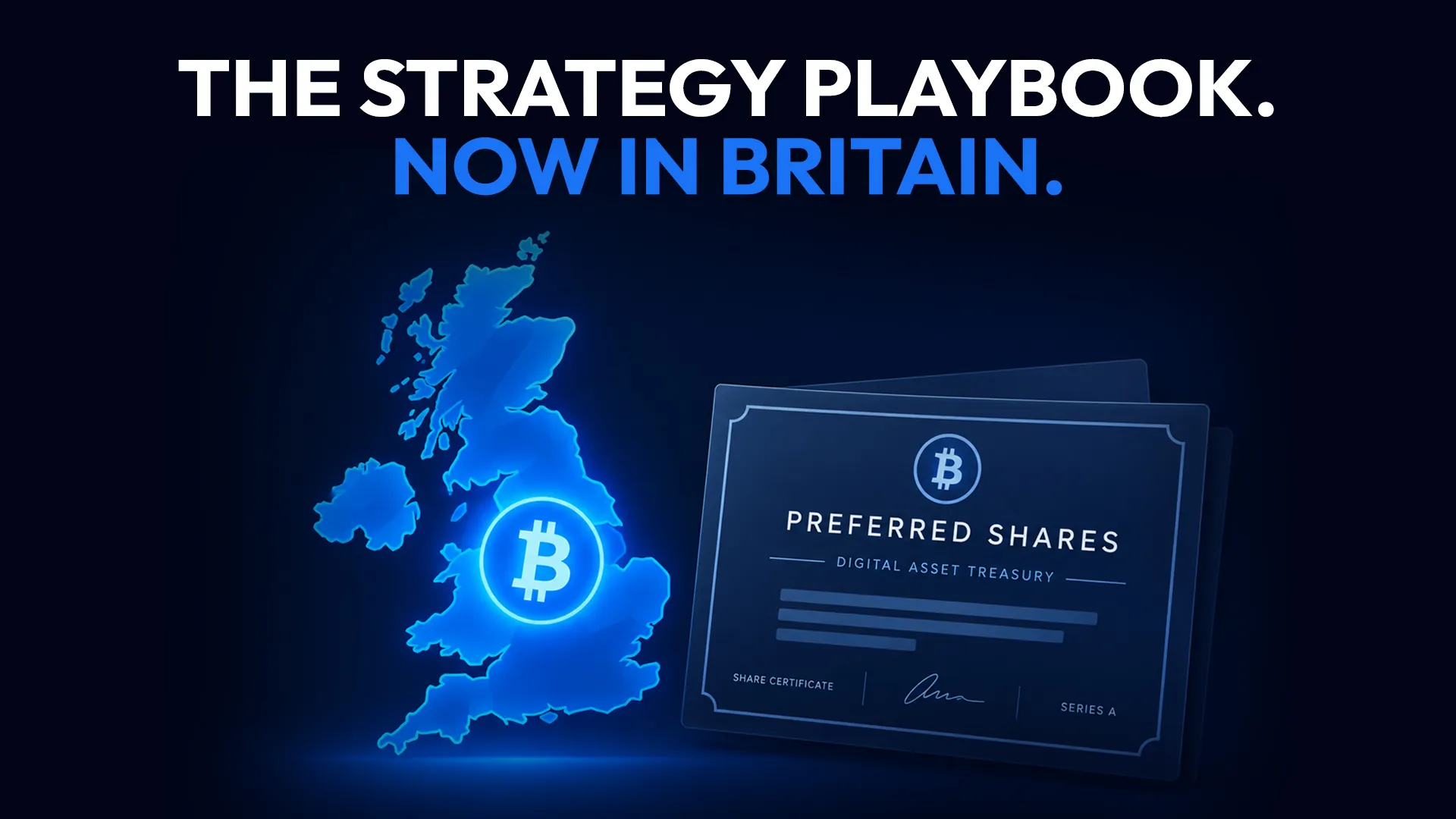
The Smarter Web Company, a Bristol-based technology and media group and the largest public Bitcoin treasury holder in the United Kingdom, received Financial Conduct Authority approval this week for MORE, a new perpetual preferred share listed on the London Stock Exchange Main Market.
The company holds 2,712 BTC and has launched an initial public offering targeting between £15 million and £25 million (AU$28.6 million to AU$47.7 million). The proceeds will support both its Bitcoin treasury and its operating businesses.
Chief Executive Andrew Webley described MORE as the first sterling-denominated perpetual preferred share listed on the LSE Main Market by a UK-incorporated commercial company pursuing a Bitcoin treasury strategy. That distinction matters. It is not Britain’s first Bitcoin investment product, as Bitcoin ETPs already exist, but within this specific category it appears to be a first.
Preferred shares sit between debt and ordinary shares in a company’s capital structure. Holders receive their fixed dividend before ordinary shareholders receive distributions, while a perpetual preferred share has no fixed maturity date. In this case, MORE gives investors exposure to The Smarter Web Company’s Bitcoin treasury strategy without requiring them to hold Bitcoin directly.
The FCA’s approval of the prospectus means the product has met the regulator’s disclosure requirements, creating a regulated route for investors who want exposure to a corporate Bitcoin treasury through a sterling-denominated security.
The broader story is the Strategy playbook spreading beyond the United States. Strategy helped normalise the corporate Bitcoin treasury model, and companies including Strive have since developed their own versions. The Smarter Web Company is now applying a similar approach within the UK’s regulatory framework and investor market.
Shareholders approved the resolutions needed for the offering with 99.86% support. The next question is whether investor demand matches the company’s ambitions.
The US$8 Million Clarity Act Lesson

The crypto industry spent more than US$13 million (AU$18.7 million) on lobbying during the first half of 2026, with approximately US$8 million (AU$11.5 million) linked to efforts to push the Digital Asset Market Clarity Act through the US Senate.
The bill failed 49–50 on September 15.
The figures are worth looking at, not as a criticism of the industry’s political strategy, but as an account of the scale of the effort and what it produced.
Coinbase led the lobbying push with approximately US$2.2 million (AU$3.17 million) in spending linked to the Clarity Act. Kraken spent close to US$1 million (AU$1.44 million), while Digital Currency Group, Jump Crypto and Paradigm were also among the major spenders.
Beyond their own teams, crypto companies and industry groups hired at least 42 outside lobbying firms. Checkmate Government Relations received approximately US$1.8 million (AU$2.59 million) in crypto-related fees, much of it from Binance, while the Blockchain Association held more than 380 meetings with congressional staff and federal officials.
The effort was extensive, coordinated and expensive, but it did not produce a law.
That does not mean it produced nothing. The Clarity Act progressed further through Congress than previous crypto market structure efforts, helped build policy knowledge across congressional offices and produced a bipartisan ethics compromise that the White House accepted at least in part.
The SEC and CFTC have also signalled they will use their existing powers to address parts of the regulatory gap the legislation was designed to close.
The Blockchain Association has described the work as laying the foundation for another attempt, while Coinbase summed up its position more simply: Washington is a long game.
The US$8 million did not deliver the legislation the industry wanted. Whether it built enough support and policy knowledge to improve the next attempt is the more useful question.
North Korean Hackers Are Using Fake Job Interviews to Steal Crypto
Australia’s Australian Signals Directorate joined security agencies in Japan, Germany and the United States this week in warning about a North Korean state-sponsored hacking group known as WaterPlum.
The group has allegedly posed as technology recruiters to steal cryptocurrency, credentials and sensitive data from developers and IT professionals across more than 100 countries. Between December 2025 and July 2026, authorities say the campaign infected more than 30,000 devices and compromised funds or credentials linked to more than 7,000 crypto wallets, with approximately US$10.7 million (AU$15.4 million) transferred to North Korea.
The attack is more sophisticated than a typical recruitment scam because the job interview itself becomes the way into the victim’s computer.
WaterPlum operatives create convincing recruiter profiles on job boards, freelance marketplaces and professional networks. They target software developers, web designers and blockchain specialists, often building a professional relationship over several days or weeks before inviting the candidate to complete a technical interview.
The candidate may receive a coding test or be asked to fix a simulated error during a video call. Malicious code is hidden inside the files they are asked to download and run. Once installed, the software gives the attackers ongoing access to the device, credentials and connected crypto wallets.
In other cases, candidates are asked to install specific video-conferencing software to fix an apparent technical issue, only for that software to deliver the malware.
Once inside, attackers can move funds from connected wallets, steal documents and identity information, and potentially use those identities to support North Korean IT workers seeking legitimate employment elsewhere.
Australia’s involvement in the advisory is important because Australian residents and organisations have been affected, while technology companies that hire internationally or use freelance development platforms face a direct risk from these campaigns.
The warning signs are practical. Recruiters who can’t be independently verified, unusual technical problems during interviews, requests to download unfamiliar software or code, and resumes that fall apart under closer questioning should all raise concerns.
At Wayex, we work with verified team members and regulated partners. If you work in technology or crypto and receive an unsolicited recruitment approach you cannot independently verify, treat it with the same scepticism you would apply to an unsolicited financial opportunity.
The interview itself could be the attack.
Could Bitcoin Hit US$100,000 by Year End?
Eric Jackson, Global Head of Asset Management at SRX Global, argued this week that Bitcoin could reach US$100,000 (AU$144,000) before the end of 2026.
Jackson’s argument is based on a quantitative model that tracks global liquidity, interest rates and relationships between different asset classes to determine whether Bitcoin is trading in a bullish, mixed or stressed environment.
His model was shaken on May 26 when Bitcoin was near US$77,000 (AU$110,880), ahead of the correction that eventually took the price as low as US$58,000 (AU$83,520). It shifted back toward a more positive outlook in August, when Bitcoin traded around US$62,000 (AU$89,280), before moving back above US$70,000 (AU$100,800).
The more useful part of Jackson’s argument is not the US$100,000 target itself, but what he believes drives Bitcoin’s price.
His research suggests the four-year halving cycle is unreliable as a timing tool and that global liquidity matters more. When capital can move freely into risk assets, Bitcoin tends to benefit. When financial conditions tighten, it often feels the pressure quickly.
Jackson pays particular attention to the 10-year US Treasury yield and global liquidity. He also argues that markets breaking out after long corrections do not usually reverse immediately, which he sees as another signal supporting the current recovery.
There are important risks to that view. Jackson has acknowledged that worsening macro conditions could derail the rally, particularly if the Fed raises rates again. The 10-year Treasury yield has also climbed above 5.29%, a level that can put pressure on risk assets.
Other institutional forecasts vary widely. Mark Yusko has reiterated a US$250,000 (AU$360,000) target for the current cycle, while Standard Chartered’s Geoff Kendrick maintains a US$500,000 (AU$720,000) target for 2030.
That range alone is a useful reminder that no single price target should be treated as a consensus.
What is more concrete is what is happening today: corporate Bitcoin buying has returned, ETF inflows have strengthened and several macro indicators have improved. Whether those conditions survive the Fed’s next meeting and whatever comes next geopolitically will determine how much further the current move can run.
At Wayex, we do not make price predictions. We make sure the platform is ready when you are.
Founder’s Corner
This week had a quality worth naming. It was not the dramatic weight of a legislative failure or a market crash, but the quieter feeling of an industry that has found its footing and is building with purpose.
Bitcoin approaching US$90,000 (AU$129,600) on the back of corporate treasury buying, ETF inflows and improving macro conditions is a different kind of move from August’s short squeeze. There appears to be more structural support underneath it, although whether that holds through October and the Fed’s next meeting is something nobody can answer with certainty.
What is clearer is that the institutions allocating capital to this market today are doing so with more information, infrastructure and regulatory oversight than at any previous point in Bitcoin’s history.
Open USD going live is the story I want to sit with longest this week. Not because of the US$1 billion (AU$1.44 billion) in committed liquidity or the names on the founding partner list, although both matter, but because of what the project is trying to become.
The stablecoins that succeed over the next decade may be the ones that stop feeling like crypto products and become financial infrastructure embedded so deeply into everyday commerce that most people never think about the technology underneath them. Open USD is one of the most serious attempts yet to build that model, and its founding partners give it a distribution network capable of testing the idea at scale.
The North Korean hacking advisory is the story I want every Wayex user to read carefully, particularly anyone working in technology or crypto. The attack does not depend on the victim being careless or inexperienced. It depends on a convincing job opportunity, a professional conversation and a coding test that appears legitimate.
That combination can reach careful, experienced people who assume they would recognise a scam before falling for one.
At Wayex, we verify who we work with and hold our team to strict security standards. If you receive an unsolicited recruitment approach that you can’t independently verify, treat it the same way you would an unsolicited financial opportunity: with scepticism first and questions second.
Richard Voice Co-Founder, Wayex
Things That Made Us Laugh This Week