Goldman Sachs did not build a Bitcoin ETF this week. It bought one, spending US$2.25 billion (AU$3.19 billion) to acquire the market leader rather than compete with it. That tells you everything about where the world's largest investment bank thinks this market is going. Inflation cooled to 3.4%, and Bitcoin moved 0.33%, because the relief was already priced in weeks ago. The Coldcard story took an unexpected turn: while attackers stole roughly US$130 million (AU$184.6 million), more than US$15 billion (AU$21.3 billion) in Bitcoin moved to safety in response. The Bank of England tested stablecoins alongside a potential digital pound, Russia drew its retail crypto whitelist, and AUSTRAC pulled 96 crypto ATMs offline across Australian cities. If you used one of them, read this week's edition carefully. Let's get into it.
Goldman Sachs Has Entered the Chat

Goldman Sachs agreed to acquire NEOS Investments, the manager of BTCI, a US$1.1 billion (AU$1.56 billion) covered-call Bitcoin ETF yielding approximately 27%, in a cash and equity deal valuing NEOS at up to US$2.25 billion (AU$3.19 billion), with closing expected in early 2027 pending regulatory approval. The acquisition is the clearest signal yet that the Bitcoin ETF market has matured past the point where even the world's most prominent investment bank would consider building from scratch rather than buying the best available product off the shelf.
The deal's logic is worth understanding because it reveals something about where the competitive dynamics in Bitcoin ETFs are actually heading. Goldman filed its own covered-call Bitcoin ETF with the SEC in April 2026, a structurally similar product to BTCI, and never launched it. Bloomberg ETF analyst Eric Balchunas was blunt about what Wednesday's acquisition explains: Goldman chose to leapfrog BlackRock's rival BITA fund rather than enter as a me-too competitor. BTCI launched in October 2024 and crossed US$1 billion (AU$1.42 billion) in assets in under two years, generating monthly distributions through a strategy that holds spot Bitcoin ETPs and sells call options against them. The fund charges a 0.99% expense ratio and has fallen roughly 43% over the past year as Bitcoin's price has declined, though investors continue to receive the yield regardless. Distributions may in part represent a return of capital, a distinction income investors should understand clearly before treating the 27% yield as straightforward income.
The broader picture is more significant than any individual fund. Goldman's acquisition brings its total ETF assets above US$130 billion (AU$184.6 billion), positioning it eighth among active ETF managers globally. The derivative income ETF category has grown to roughly US$180 billion (AU$255.6 billion) industry-wide, compounding at more than 70% annually since 2021. Goldman is not entering a niche. It is buying into one of the fastest-growing segments in the entire ETF market, with Bitcoin as the anchor asset. For Australian crypto holders watching the institutional adoption curve, the message from Goldman this week is the same one Morgan Stanley sent last month, and Vanguard sent the month before: the deliberation is over. The question now is market share.
Inflation Cooled, Bitcoin Just Shrugged
US inflation rose just 0.1% in July, slowing the annual rate to 3.4%, exactly in line with economists' forecasts. The Bureau of Labour Statistics reported that shelter costs accounted for roughly two-thirds of the monthly increase while energy prices fell 1.5% as petrol got cheaper. Strip out food and energy, and core inflation rose 0.2% for the month and 2.5% over the year, the gauge the Federal Reserve watches most closely. Bitcoin's reaction was a 0.33% gain of approximately US$209 (AU$297), moving from around US$63,541 to US$63,750 (AU$90,535). Total crypto market cap nudged less than 1%. Both charts showed the same thing: a market that shrugged.
The reason the shrug was the correct response is worth understanding rather than dismissing. Markets do not move on data that lands where they expected it to land. The inflation relief trade had already been put on the books. Bitcoin ETFs drew approximately US$854 million (AU$1.21 billion) in net inflows over five consecutive sessions last week as rate-hike bets faded and investors positioned ahead of the print. By the time the CPI number arrived, the trade was already running. A soft print that confirms the consensus does not rewrite the Fed's plans, because the door to easing was never close to opening. At 3.4%, inflation still sits well above the Fed's 2% target, and Chair Kevin Warsh has shown no inclination to signal relief prematurely.
The technical picture adds context to the macro story. Bitcoin is currently pinned between approximately US$62,000 (AU$88,040) support and US$67,000 (AU$95,140) resistance, trading below both its 50-day and 200-day moving averages, a configuration that analysts describe as structurally weak. Its 50-day average sits below its 200-day average, a bearish signal that has persisted since the correction from last year's all-time high. The market already got one macro excuse to rally last week when a weak jobs report pointed toward a more dovish Fed, and it did not take it. The CPI print offered another excuse and produced the same result. What Bitcoin is waiting for is not a data point. It is a structural shift in the liquidity environment. Until that arrives, the shrug is the honest response.
What the Coldcard Hack Actually Taught Us
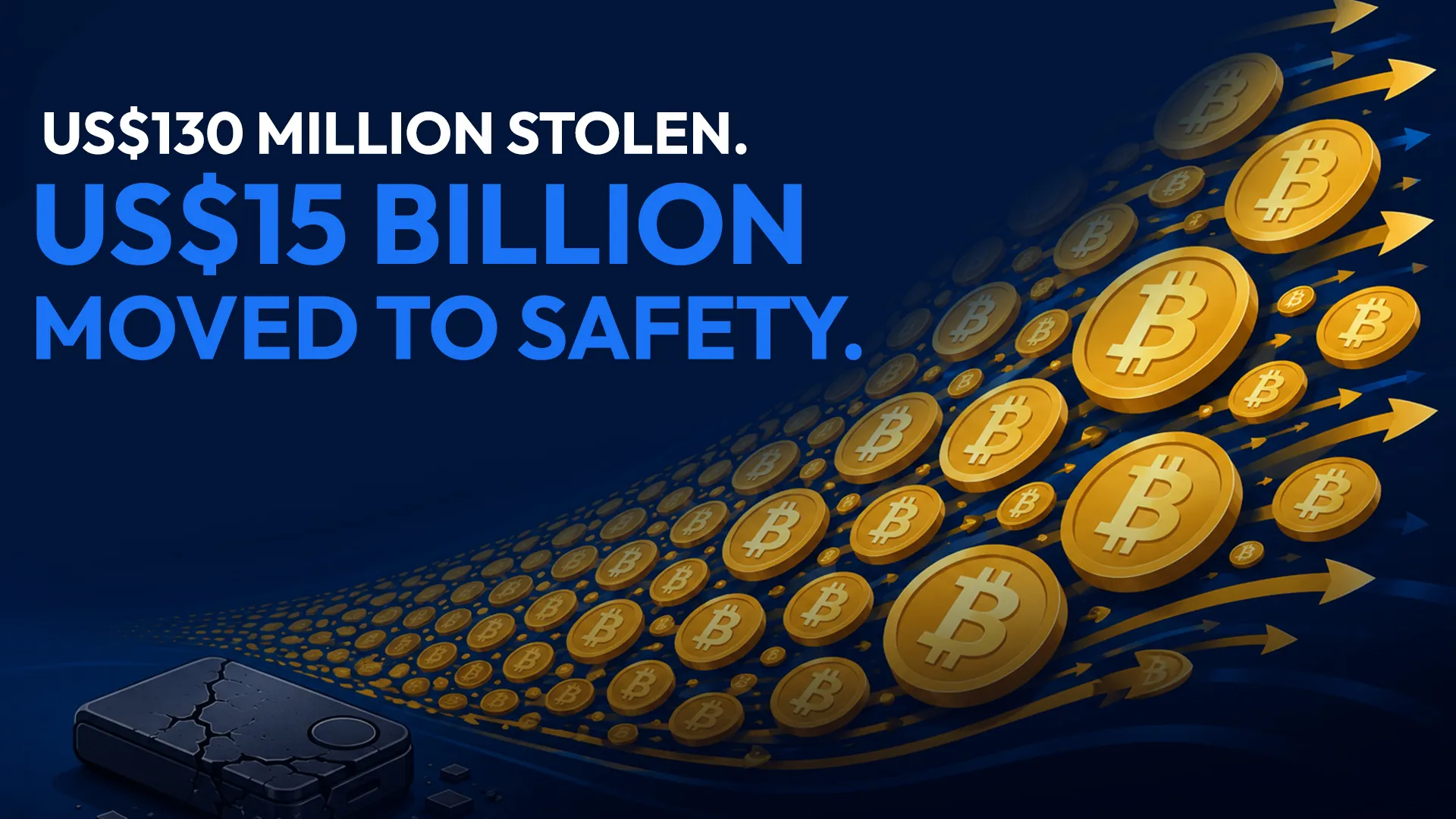
The numbers that emerged this week from the Coldcard exploit tell a more interesting story than the initial breach did. Casa CEO Nick Neuman, drawing on on-chain data from analyst James Check of Checkonchain, published a breakdown that reframes what happened across the two weeks since the firmware vulnerability was first exploited. Approximately 2,100 BTC worth around US$130 million (AU$184.6 million) was stolen across more than 5,200 affected addresses. In the same period, 233,000 BTC worth approximately US$15 billion (AU$21.3 billion) moved out of long-term holder wallets into safety. That is more than 100 times the amount stolen, moving in the opposite direction, as holders across hardware wallet brands used the exploit as a wake-up call to migrate their holdings to more secure setups.
The mechanics of the response are worth understanding. Some Coldcard users migrated to multisig wallets, configurations that require multiple independent keys to approve any transaction, meaning no single compromised device can drain everything. Others on entirely different hardware, Ledger and Trezor users who faced no direct vulnerability moved assets anyway after watching what happened to their peers. Glassnode data confirms the scale: long-term holder supply dropped from nearly 15 million BTC to approximately 14.7 million BTC, marking the largest weekly decline since December 2024, while Bitcoin traded roughly 50% below its all-time high of US$126,000 (AU$178,920). Coinkite has urged anyone who generated a seed on firmware versions 4.0.1 through 4.1.9, covering March 2021 to July 2026, to treat those wallets as compromised and migrate immediately.
Neuman's argument is the more durable takeaway from this story. When a centralised exchange gets breached, everything goes at once. A single point of failure produces a single catastrophic outcome. Here, the attacker had to crack addresses individually, earning a trickle at a time while the rest of the network had time to observe, respond, and protect itself. More than 100 times the stolen amount moved to safety before the attack had run its course. That is not a story about self-custody failing. It is a story about a distributed system doing exactly what distributed systems are designed to do: absorbing a localised failure without systemic collapse. The lesson is not to abandon hardware wallets. It is to understand their vulnerabilities, keep firmware updated, and treat any security event in the ecosystem as a reason to review your own setup regardless of which hardware you use.
The Bank of England Is Testing Stablecoins
The Bank of England moved its digital pound exploration into Phase 2 this week, announcing that its Digital Pound Lab will test whether public stablecoin infrastructure and central bank money can operate together in a single payment flow for trade finance. In collaboration with NOBO Finance, data and analytics firm Dun & Bradstreet, and Polygon Labs, the experiment will explore two specific use cases that directly reflect how cross-border commerce works for small and medium-sized businesses. The first is to build a portable, reusable credit profile for SMEs that combines wallet transaction data, open-finance information, and business intelligence verified through smart contracts. The second is invoice factoring backed by electronic bills of lading, in which an exporter receives an advance payment via stablecoin technology, while a UK importer makes final settlement in a potential digital pound.
The experiment involves no real customers or money and does not signal any decision to issue a digital pound. What it does signal is that the Bank of England is now seriously testing the practical question that central banks globally have been circling for years: not whether digital money should exist, but whether different forms of it can coexist and interoperate in a single payment flow without forcing every participant onto a single infrastructure. Marc Boiron, CEO of Polygon Labs, put the thesis plainly: for digital money to actually move the world's trade, its different forms need to work together, public and private, central bank money and stablecoins. The Digital Pound Lab experiment is designed to find out whether that works in practice for trade finance, a sector where settlement delays currently freeze working capital for small businesses for days at a time.
The Australian angle is worth noting. The Reserve Bank of Australia has been running its own Project Acacia, exploring tokenised money and digital currency infrastructure for wholesale markets, and the findings from the Bank of England's Phase 2 experiment will feed into a global body of evidence about what interoperable digital money infrastructure looks like in practice. The trade finance problems the BOE is testing, such as delayed settlement, fragmented verification, and manual checks that slow cross-border commerce, are not unique to the UK. It is a problem Australian exporters and importers face every day. The experiments happening now in London are directly relevant to what gets built in Australia next.
Russia Opens the Door. XRP Is Not Invited.
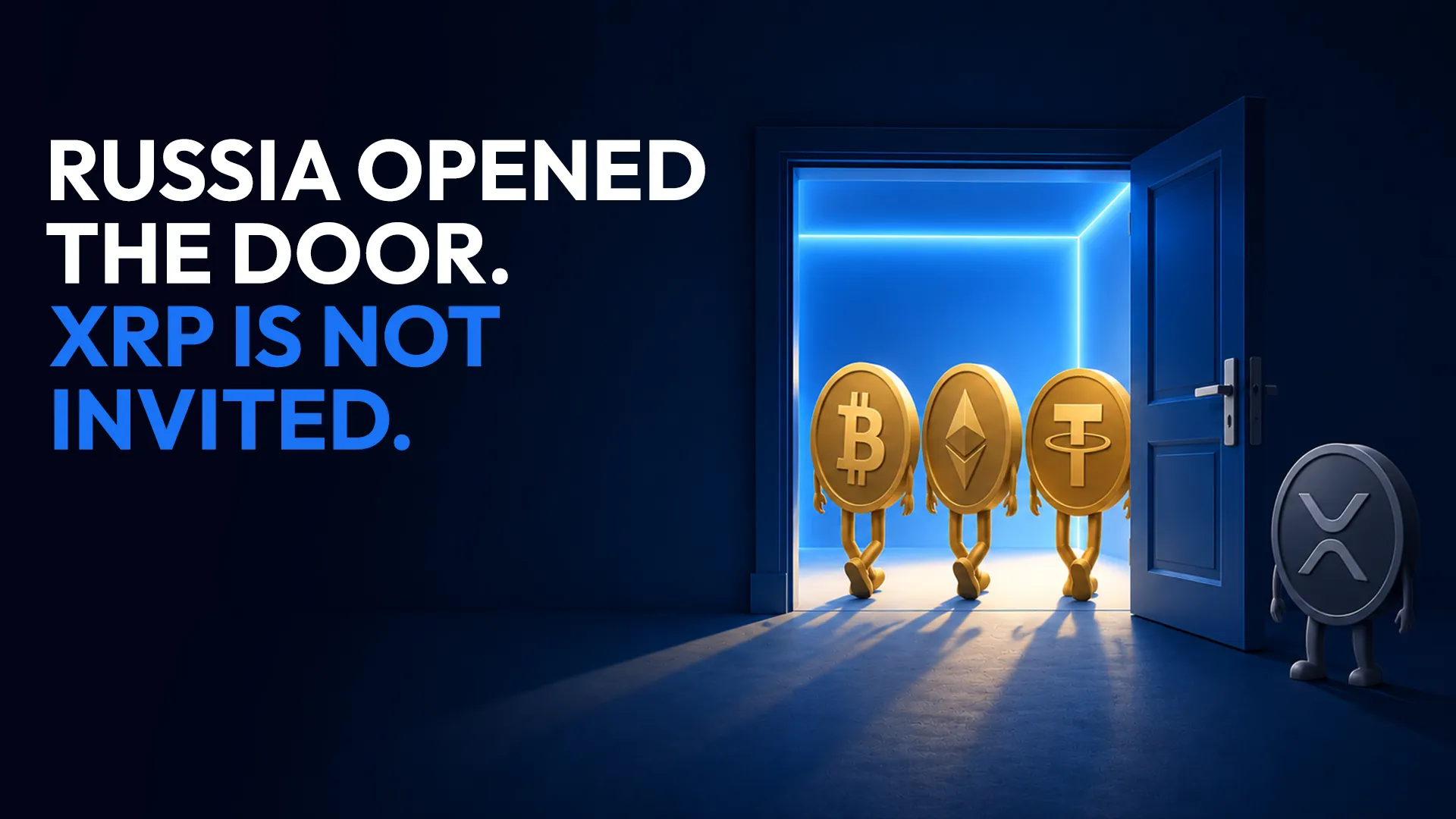
The Bank of Russia published a draft directive on August 11 naming Bitcoin, Ethereum, and Tether's USDT as the only cryptocurrencies non-qualified investors can purchase through licensed brokers, exchanges, and managers under the country's new digital asset framework. The framework, which builds on Federal Law No. 282-FZ signed by President Putin on August 4, takes effect September 1 and caps retail purchases at 300,000 rubles, approximately AU$5,160, per year per intermediary. Qualified investors face no such restrictions and may trade whatever the market offers. All investors, regardless of status, must pass a risk assessment test before participating. The whitelist represents Russia's first formal framework for letting ordinary citizens access crypto markets through regulated domestic channels.
The criteria the Bank of Russia used to build its whitelist are specific and worth understanding. Three metrics guided the assessment: market capitalisation, daily trading volume, and five years of price history on international platforms. Bitcoin, Ethereum, and USDT met all three requirements. XRP did not make the initial list despite having the market capitalisation and trading volume that would suggest it qualifies. The Bank of Russia has not stated the reason for XRP's exclusion explicitly, but analysts point to the regulatory history that followed Ripple's years-long legal dispute with the US Securities and Exchange Commission, which caused XRP to be delisted and relisted on multiple exchanges, creating a track record that regulators may view as inconsistent with the stability criteria the whitelist implies. XRP has been integrated into Russia's institutional offerings, including the Moscow Exchange's XRP index, but retail access remains off the table for now.
The broader significance of the framework is worth separating from the XRP question. Russia has more than 17 million crypto holders, one of the largest retail crypto populations in the world, who have been operating in a largely unregulated environment. The new framework does not open the floodgates. It draws a very deliberate line around three assets, caps the amount retail investors can deploy, and requires intermediaries to conduct risk assessments before any transaction. It is a cautious, heavily supervised entry point rather than a broad liberalisation. The draft remains open for feedback for two weeks before it is finalised. Whether XRP or any other asset makes the list in a subsequent stage will depend on whether the Bank of Russia chooses to expand it, which is a decision the market will be watching closely.
AUSTRAC Shuts Down 96 Crypto ATMs
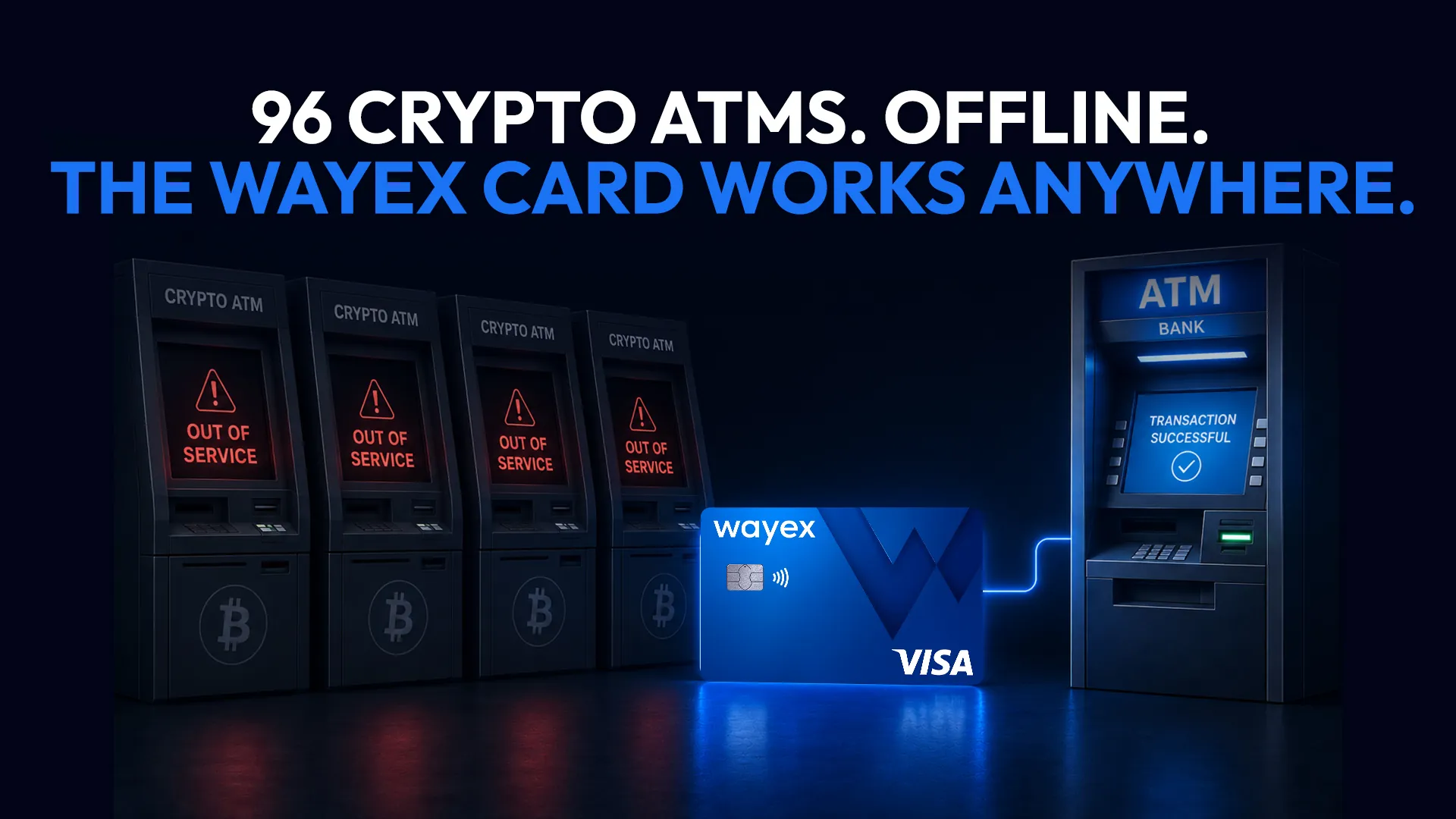
AUSTRAC suspended the registration of Cryptolink Pty Ltd as a virtual asset service provider for three months from August 9, forcing the company to take all 96 of its cryptocurrency ATMs offline across Sydney, Melbourne, Perth, Adelaide, and Brisbane. The suspension follows an enforceable undertaking Cryptolink entered into with AUSTRAC in October 2025 after the regulator's Cryptocurrency Taskforce identified alleged breaches of Australia's anti-money laundering laws, including late threshold transaction reporting and weaknesses in the company's AML/CTF risk assessments. Cryptolink initially satisfied the terms of that undertaking, then failed to submit required threshold transaction reports and did not respond to a subsequent AUSTRAC information request. AUSTRAC CEO Brendan Thomas described the failures as making the business too high risk to continue operating at this time.
The suspension will run until early November 2026, at which point Cryptolink's status will be reviewed based on its ability to demonstrate effective risk management and compliance with reporting requirements. Nothing in AUSTRAC's announcement suggests customer funds have been frozen or seized. The machines simply cannot process transactions while the suspension is in force. For the thousands of Australians who used Cryptolink's network as their primary way to convert cash to crypto, the practical question is immediate: where do you go instead? Australia has more crypto ATMs than any other country in the Asia-Pacific region, but the Cryptolink suspension removes a significant portion of that network from service overnight.
The AUSTRAC action is not an isolated event. Bitcoin Depot, the largest crypto ATM operator in the United States, filed for Chapter 11 bankruptcy in May 2026 after tougher compliance rules made its business model unsustainable. The pattern is consistent with what we have covered in this newsletter for months: the crypto industry is consolidating around platforms that built their compliance infrastructure before they were forced to, and the businesses that treated regulation as optional are now discovering what optional actually means. The Wayex card works at any standard ATM in Australia, without requiring a specialised crypto ATM machine, without cash handling risks, and within a fully AUSTRAC-regulated framework. You do not need a crypto ATM to access your crypto. You need a platform that is built to last. That is exactly what Wayex is.
Founder's Corner
This week had a clarity to it that some weeks do not. Goldman Sachs spent US$2.25 billion (AU$3.19 billion) to enter the Bitcoin ETF market, not by building something new but by acquiring the best existing product rather than competing with it. That is not the behaviour of an institution hedging its bets. That is the behaviour of an institution that has made a decision and is moving decisively. Morgan Stanley last month. Vanguard the month before. Goldman this week. The deliberation among the world's largest financial institutions about whether Bitcoin belongs in serious portfolios is over. The conversation has moved to execution.
The AUSTRAC story is the one closest to home and the one I want to sit with. Ninety-six crypto ATMs across Australian cities went offline this week because a regulated operator failed, twice, to meet its most basic compliance obligations. The machines are not going back online until November at the earliest. For the people who relied on them, that is an immediate and practical problem. At Wayex, the Wayex card works at most ATMs across Australia, without the cash handling risks and compliance vulnerabilities that crypto ATM networks carry. That is not a feature we built in response to this week's news. It is how we have always believed crypto access should work: through regulated, secure, mainstream infrastructure rather than specialised machines operating at the margins of the compliance framework.
The Coldcard story reframed itself this week in a way worth acknowledging. More than US$15 billion (AU$21.3 billion) in Bitcoin moved to safety in the two weeks after the breach, more than 100 times what was stolen. The distributed nature of self-custody, the thing that makes it feel risky to critics, is also what made the network resilient when one part of it failed. That is worth remembering the next time someone uses a single security incident to dismiss the entire concept of decentralised asset ownership. The question is never whether the system is perfect. It is whether it is more resilient than the alternative.
Richard Voice, Co-Founder, Wayex
Things That Made Us Laugh This Week