Hot US inflation set the tone this week. October's Consumer Price Index rose 0.4%, above the 0.3% economists expected, while Federal Reserve Governor Christopher Waller signalled his support for another interest rate increase in December. Markets responded by pricing in a 96% probability of a hike, and Bitcoin fell below US$74,000 (AU$107,300) as US spot Bitcoin ETFs continued to record outflows.
Institutional investment in blockchain infrastructure continued despite the market weakness. The New York Stock Exchange selected Avalanche to settle transactions on its proposed 24/7 tokenised stock market, subject to regulatory approval, while 21 financial institutions committed US$270 million (AU$392 million) to a new stablecoin venture targeting a 2027 launch.
Elsewhere, investigators uncovered a new laundering technique linked to the US$6.3 billion Binance hack, a federal judge questioned the CFTC's approval of stock perpetual futures, and Australia's proposed capital gains tax changes prompted renewed debate about whether crypto investors should consider moving overseas.
Let's get into it.
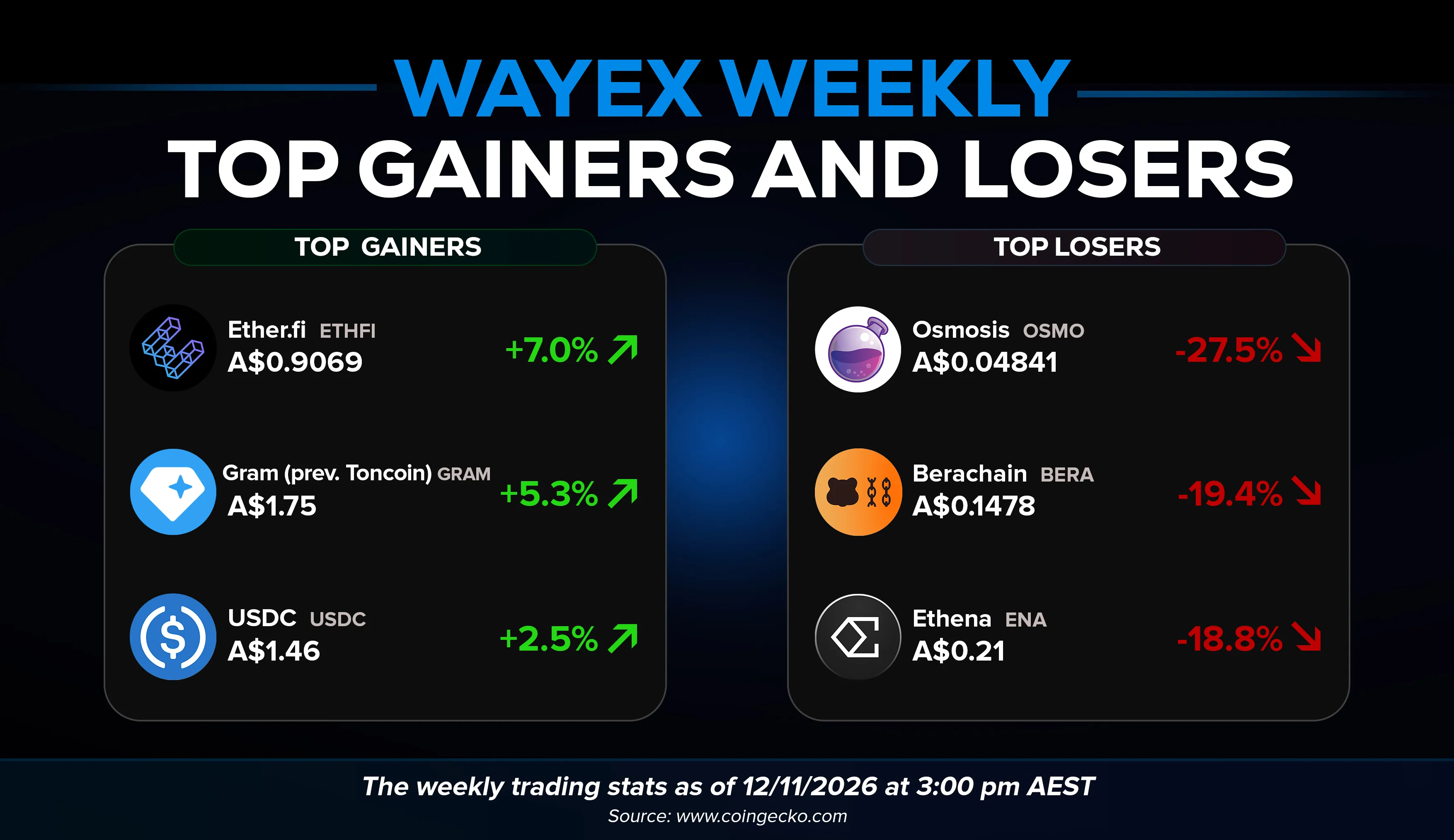
Bitcoin Falls Below US$74K After Hot Inflation. Fed Hike Odds Hit 96%.
US consumer prices rose 0.4% in October, exceeding economists' expectations of 0.3%, according to Bureau of Labor Statistics data released on Tuesday. The Consumer Price Index (CPI) measures changes in the cost of everyday goods and services and plays an important role in shaping the Federal Reserve's interest rate decisions. For cryptocurrency markets, higher inflation can mean interest rates remain elevated for longer, reducing demand for riskier assets such as Bitcoin.
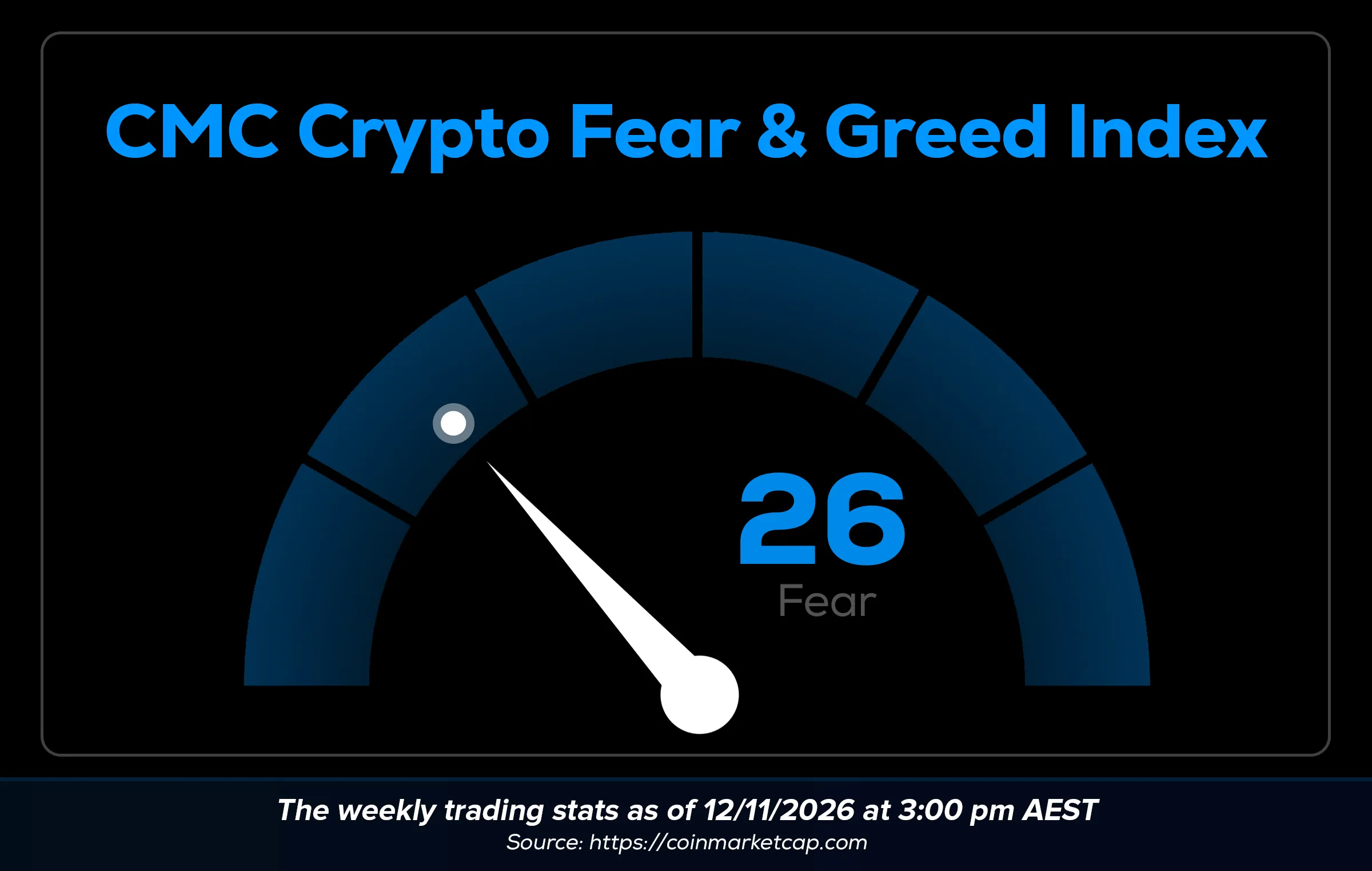
Bitcoin had recovered to US$80,000 (AU$116,000) following the US midterm elections before retreating towards US$76,000 (AU$110,200) last week. The latest inflation figures added to the selling pressure, pushing Bitcoin down another 3% to approximately US$73,657 (AU$106,800). Other major cryptocurrencies recorded steeper declines, with Ethereum falling more than 8% over the week to US$2,060 (AU$2,990), XRP dropping 15.8% to US$1.05 (AU$1.52), and Solana declining 8% to US$83.30 (AU$120.80). Market sentiment also weakened, with the Crypto Fear & Greed Index falling to 26, its lowest reading since July and close to the Extreme Fear category.
The inflation report followed a speech by Federal Reserve Governor Christopher Waller at a London conference, where he indicated that he would support a December interest rate increase even if October's inflation data showed improvement. Waller described September's figures as disappointing, pointing to a 0.5% monthly increase and a 3.7% annual rise in the Fed's preferred inflation measure, the Personal Consumption Expenditures (PCE) index. He also warned that substantially higher inflation could require a stronger policy response.
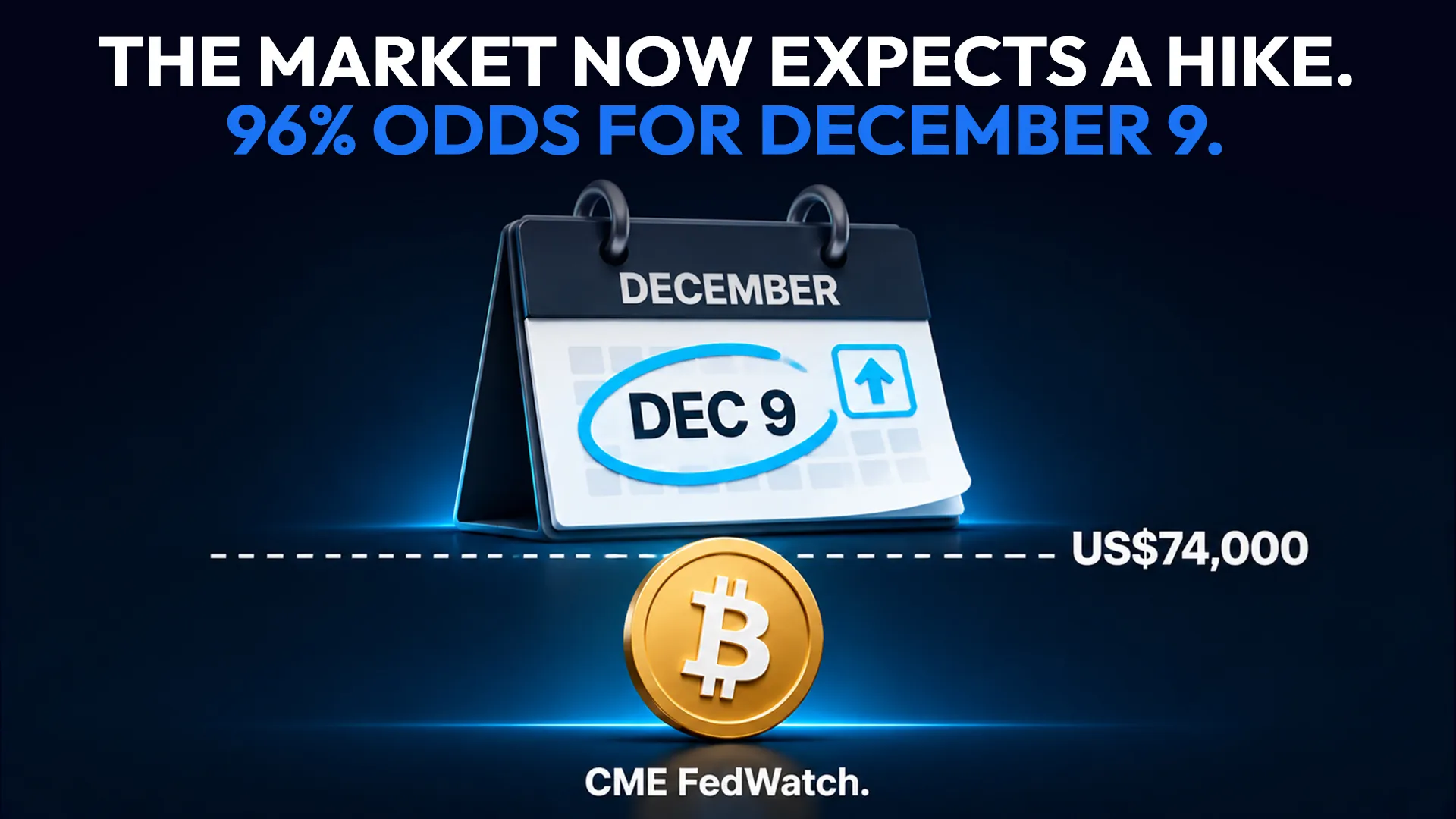
Following Waller's remarks, CME FedWatch data showed the probability of a December rate increase climbing from 76.3% to 96.3%, according to Cointelegraph. A 25-basis-point increase at the December 9 meeting would lift the Fed's target range from 3.75%–4.00% to 4.00%–4.25%. Higher interest rates generally weigh on cryptocurrencies because cash and bonds become more attractive, while borrowing costs increase and investors become more cautious about risk.
Bitcoin ETF flows reflected that shift in sentiment. BlackRock's IBIT recorded seven consecutive trading sessions of outflows totalling US$1.66 billion (AU$2.41 billion) since October 30, including US$213 million (AU$309 million) on Monday. Across all US spot Bitcoin ETFs, Monday's net outflow reached US$201 million (AU$291 million), partly offset by US$22 million entering Morgan Stanley's fund. Another US$95 million (AU$138 million) left the market on Tuesday, marking four consecutive days of withdrawals and bringing November's total to approximately US$1.58 billion (AU$2.29 billion).
The broader figures are also significant. US spot Bitcoin ETFs have now recorded approximately US$1.1 billion (AU$1.6 billion) in net outflows for 2026, compared with roughly US$25 billion (AU$36 billion) in net inflows by early November in both 2024 and 2025. The selling has continued despite Coinbase's national trust bank charter taking effect on Friday, a development that trader Kevin Boeve suggested would previously have generated a much stronger market response.
Analysts are now watching US$73,000 (AU$105,900) as an important support level. Matt Mena of 21Shares believes a sustained break below that price could send Bitcoin towards US$69,000 (AU$100,100), while holding support alongside a recovery in equities could allow a rebound towards US$78,000 (AU$113,100). He also sees US$85,000 (AU$123,300) as a possibility before year-end. Analyst VirtualBacon offered a similar downside assessment, suggesting that a meaningful close below US$73,000 could bring US$68,000–US$69,000 into focus.
These remain forecasts rather than reliable price targets. The Federal Reserve's December 9 decision is the next major event for markets, while ETF flows over the coming weeks should help indicate whether the recent selling pressure is easing.
The Binance Hack, Two Weeks On

Two weeks after the largest cryptocurrency theft on record, investigators are continuing to trace the funds stolen from Binance, including an unusual laundering technique involving newly created meme tokens.
Blockchain analytics firm Elliptic reported on November 9 that the attackers created six meme tokens on the NEAR blockchain between November 5 and 7. Each token cost approximately 25 NEAR, or US$90 (AU$131), to launch and was paired with NEAR in a separate liquidity pool. The tokens featured images ranging from Elon Musk beneath an "Elon 2028 President" banner to cartoon animals and a flaming gold badge. Elliptic stressed that there was no suggestion Musk had any connection to the tokens.
The technique uses the structure of decentralised trading pools to make stolen funds harder to follow. One group of wallets deposits stolen NEAR into a liquidity pool to purchase a newly created token. A separate group then sells the token into the same pool and withdraws the NEAR. Because the funds move through a trading pool rather than directly between the wallets, the transaction trail becomes more difficult to establish.
Elliptic found that wallets linked to the operation accounted for every sale across all six tokens and purchased every unit of five of them. Five of the six token creators also received funding from a wallet that had been selling an earlier token shortly before the new launches. Approximately 117,000 NEAR, worth US$430,000 (AU$623,500), moved through the pools before trading stopped on November 8, when four creators withdrew their remaining liquidity.
The approach has appeared in previous North Korea-linked laundering operations. Elliptic identified a similar technique following the US$1.5 billion Bybit hack in 2025, when attackers used a newly created token on Tron to move at least US$24 million (AU$34.8 million) through a stablecoin trading pool. Investigators also detected another Tron-based token associated with the Binance theft on November 2.
Elliptic founder Tom Robinson explained that the attackers combine several inexpensive laundering methods, each adding complexity and delaying investigators. The firm has advised compliance teams to examine funds emerging from liquidity pools rather than assuming those assets are legitimate, particularly when pools involve newly created tokens and a small group of connected wallets.
The amount moved through the NEAR meme tokens remains small compared with the overall theft. Binance estimates that approximately US$6.34 billion (AU$9.2 billion) in assets was affected, with US$2.85 billion (AU$4.1 billion) frozen or intercepted by November 3. Elliptic also identified another 11.8 million NEAR, worth US$43.7 million (AU$63.4 million), that had not moved when it published its findings.
Despite the scale of the attack, analysts have so far seen limited evidence of wider financial contagion. Martin Lee of DWF Labs told Cointelegraph that Binance's commitment to covering customer losses from its own balance sheet appeared to prevent the incident from spreading through the market. Investors also shifted their attention towards the US midterm elections rather than continuing to focus on the exchange.
Exchange flow data supports the view that the immediate pressure has eased. DefiLlama reported Binance net outflows of US$458 million (AU$664 million) in the 24 hours to Monday, compared with US$6.1 billion (AU$8.8 billion) on November 2, the day after withdrawals resumed.
CryptoQuant also found that Bitcoin fell by as much as 5.7% during the first five days following the Binance hack, compared with declines of approximately 13.6% after the Bybit hack in 2025 and 9.9% after the Coincheck hack in 2018. However, the firm noted that at least 14 of the 38 exchange hacks it examined were followed by larger price declines, limiting how much can be concluded from those comparisons.
Lacie Zhang of Bitget Wallet suggested that exchange hacks have historically caused temporary market corrections rather than lasting structural damage. That assessment is consistent with the relatively contained market response so far, although it does not resolve the larger questions surrounding the stolen assets.
Investigators still need to establish how much of the money can be recovered and whether the unmoved NEAR holdings will eventually enter the same laundering networks. The assessment that the hack had caused limited contagion was also made before this week's inflation figures added fresh pressure to cryptocurrency markets.
NYSE Picks Avalanche to Settle a 24/7 Tokenised Stock Market

The New York Stock Exchange has selected the Avalanche blockchain to support settlement on its planned tokenised stock trading platform, marking another step towards integrating blockchain technology into traditional financial markets.
NYSE chief product officer Kevin Tyrrell told The Wall Street Journal that the exchange evaluated several blockchain providers before choosing Avalanche for its speed, transaction capacity and ability to operate within a controlled regulatory environment. The exchange is targeting a fourth-quarter launch, subject to regulatory approval, and intends to support trading, clearing and settlement around the clock.
Ava Labs, the company behind Avalanche, confirmed that its technology will provide the ledger infrastructure for the platform's clearing operations. The trading venue will operate as an alternative trading system managed by a NYSE affiliate. Following the announcement, Avalanche's AVAX token reportedly rose by as much as 10%.
The distinction between trading and settlement is important. According to the Journal, the NYSE will continue matching buy and sell orders through its existing Pillar trading system. Blockchain technology will instead support the processes that follow an agreed trade, including clearing and settlement.
Clearing confirms the details and obligations of a transaction, while settlement completes the exchange of securities and payment. Traditional market infrastructure generally processes these activities within established operating windows. The proposed platform aims to extend those processes to 24 hours a day, seven days a week.
NYSE head of digital issuance Dennis Lee said the venue will support shares issued across different blockchains, with trades recorded and settled on a single ledger. The exchange's original January announcement also committed to providing qualified broker-dealers with equal access to the platform.
The Avalanche project forms part of a broader tokenisation strategy pursued by NYSE owner Intercontinental Exchange (ICE).
In May, NYSE American filed a proposed rule change to allow tokenised Russell 1000 stocks and index funds to trade through its existing order book, with settlement handled by a Depository Trust Company (DTC) tokenisation pilot once the infrastructure is ready. The SEC approved a similar proposal from Nasdaq in March.
ICE is also pursuing tokenised equities through OKXICE, a joint venture with cryptocurrency exchange OKX. That platform plans to use permissioned Uniswap v4 liquidity pools on OKX's X Layer network and has notified the SEC under its September Innovation Exemption framework.
However, that approach has encountered opposition from some listed companies. By October 23, 22 issuers, including Microsoft, Alphabet and Goldman Sachs, had objected to their shares trading through OKXICE. The exemption framework allows companies to prevent their securities from being included on such venues.
The developments follow DTCC's October 28 launch of tokenisation services using the Canton Network and its own private Besu blockchain, which we covered last week.
NYSE Group President Lynn Martin described the exchange's strategy as combining blockchain innovation with the investor protections and regulatory standards of established financial markets.
The proposed Avalanche venue remains subject to approval, and the fourth-quarter launch is a target rather than a confirmed date. The objections raised against OKXICE also show that institutional adoption of tokenised securities will depend on more than technical capability. Regulators, exchanges, brokers and the companies whose shares are being traded will all influence how these markets develop.
21 Banks Commit US$270 Million to Project Faro
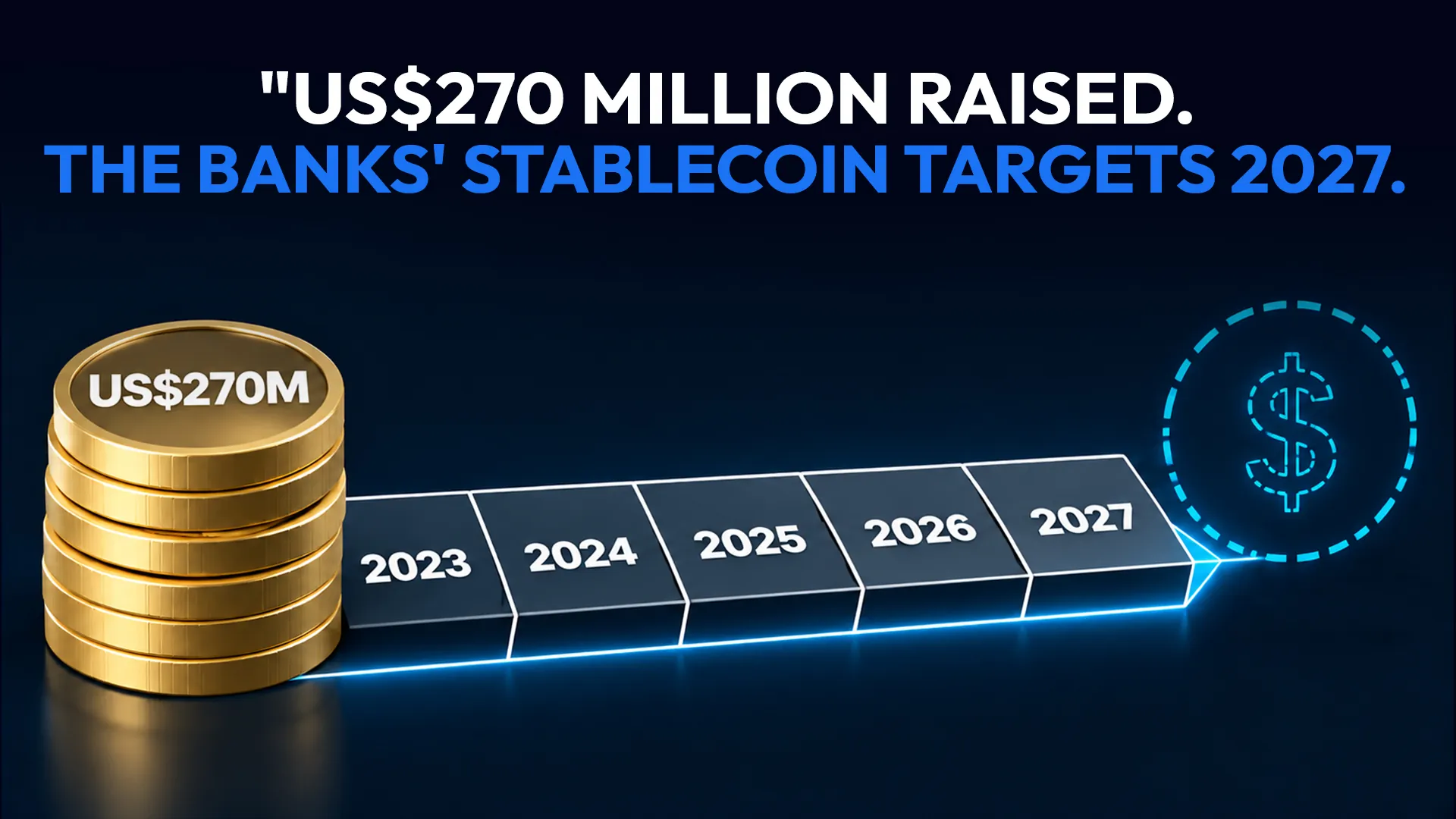
A consortium of 21 financial institutions has committed approximately US$270 million (AU$392 million) to Project Faro, a bank-backed stablecoin initiative first announced in September.
According to Bloomberg reporting cited by Cointelegraph, the funding is intended to cover five years of operations for a new company planning to launch a US dollar stablecoin in the first half of 2027. The venture also intends to develop stablecoins linked to the currencies of all G7 countries, with a euro-denominated token expected to follow the initial dollar launch.
The participating institutions include Citigroup, Goldman Sachs, Banco Santander, Deutsche Bank and BBVA. Bloomberg reported that the new company is expected to be incorporated in the United States, although several operational details remain unconfirmed.
A stablecoin is a digital token designed to maintain a stable value relative to an underlying asset, usually a national currency. By issuing their own stablecoins, banks could use blockchain infrastructure to support payments and settlement while maintaining relationships with existing customers and businesses.
Project Faro is one of several competing initiatives exploring that opportunity.
Open USD, a stablecoin initiative led by Stripe with Visa among its founding partners, is already operating. In Europe, Qivalis is developing a regulated euro stablecoin intended for payments, cross-border settlement and tokenised assets.
Some institutions are participating in more than one project. BBVA is involved in Faro, Open USD and Qivalis, while Rabobank is associated with both Faro and Qivalis. BNP Paribas participated in the early discussions that eventually led to Faro before joining the European consortium.
Qivalis has expanded considerably since its formation, reaching 37 participating banks after adding 25 institutions in May. It also received authorisation from the Dutch central bank as an electronic money institution in October 2026.
The overlapping memberships suggest that banks are exploring several possible approaches rather than committing to a single stablecoin network. That gives institutions exposure to different technical and regulatory models while the market continues to develop.
The established stablecoin issuers remain formidable competitors.
According to DefiLlama data cited by Cointelegraph, Tether's USDT and Circle's USDC account for approximately 85% of a stablecoin market valued at roughly US$290 billion (AU$420.5 billion). As of November 10, USDT had a market capitalisation of approximately US$176.3 billion (AU$255.6 billion), while USDC stood at US$70.4 billion (AU$102.1 billion).
For the bank-backed ventures, the main advantage may be distribution rather than technology alone. Major financial institutions already have large customer bases, established payment networks and long-standing business relationships. Those connections could help them introduce stablecoins to customers without building entirely new distribution channels.
Whether that advantage will be enough to compete with USDT and USDC remains uncertain. Existing stablecoins already benefit from deep liquidity, widespread exchange support and established use across cryptocurrency markets.
Project Faro's funding commitment shows that major banks are prepared to invest in alternative infrastructure, but its planned 2027 launch remains some distance away. The next challenge will be turning those commitments into products that customers and businesses choose to use.
A Judge Questions the CFTC's Stock Perps Approval but Doesn't Stop Trading
A US federal judge has questioned the Commodity Futures Trading Commission's authority to approve perpetual futures linked to individual stocks, although she has declined to suspend the approvals while the legal dispute continues.
As we covered last week, the CFTC announced on November 3 that stock perpetual futures could be offered on regulated US exchanges for the first time. A perpetual future, commonly called a perp, allows traders to take a position on an asset's price without owning it and has no fixed expiry date.
The Capital Markets Alliance Association (CMAA), a newly formed industry group whose members include Cboe and Citadel Securities, challenged the decision in court. The organisation argues that stock perpetual futures should be classified as security-based swaps rather than security futures, placing them primarily under the SEC's authority instead of the CFTC's.
US District Judge Valerie Caproni indicated that the challengers were likely to succeed in arguing that the CFTC had exceeded its statutory authority. She suggested that the contracts appeared to meet the legal definition of swaps rather than futures.
However, the judge denied the group's request for a temporary restraining order because it had not demonstrated an immediate risk of irreparable harm. The approvals therefore remain in effect while the case proceeds.
The dispute centres on how perpetual contracts fit within existing US securities and derivatives laws.
The CMAA argues that the absence of a fixed expiry date means the products should be treated as security-based swaps, which face different registration, reporting and retail trading requirements. The CFTC's supporters argue that a fixed expiry is not necessary for a contract to qualify as a security future.
On Monday, Coinbase, Kalshi and four other companies asked the court to consider a proposed amicus brief supporting the CFTC's interpretation. The group includes Kraken parent Payward, trading firms DRW Holdings and Jump Trading, and cryptocurrency investment firm Paradigm Operations.
Their position is that the law permits perpetual contracts to operate as security futures under joint CFTC and SEC oversight.
The CMAA was due to respond to the CFTC's opposition to a preliminary injunction on Tuesday. That request seeks a more substantial restriction than the temporary restraining order the judge has already denied.
The case also follows a separate lawsuit filed by CME Group in June challenging the CFTC's approval of cryptocurrency perpetual futures. CME raised a similar argument about whether the products should be classified as swaps, while the CFTC moved to dismiss that case in September on the grounds that CME had not demonstrated financial harm.
For now, the stock perpetual futures approvals remain valid, but no exchange has been confirmed to list the contracts and no trading launch date has been announced.
The judge's preliminary assessment favours the challengers' interpretation of the law, while her refusal to suspend the approvals leaves the existing position unchanged. Neither decision resolves the underlying dispute.
The outcome could influence whether US exchanges can offer retail investors perpetual contracts tied to individual stocks and which regulator has primary responsibility for overseeing them.
Should You Leave Australia to Avoid 47% Tax on Crypto Gains?
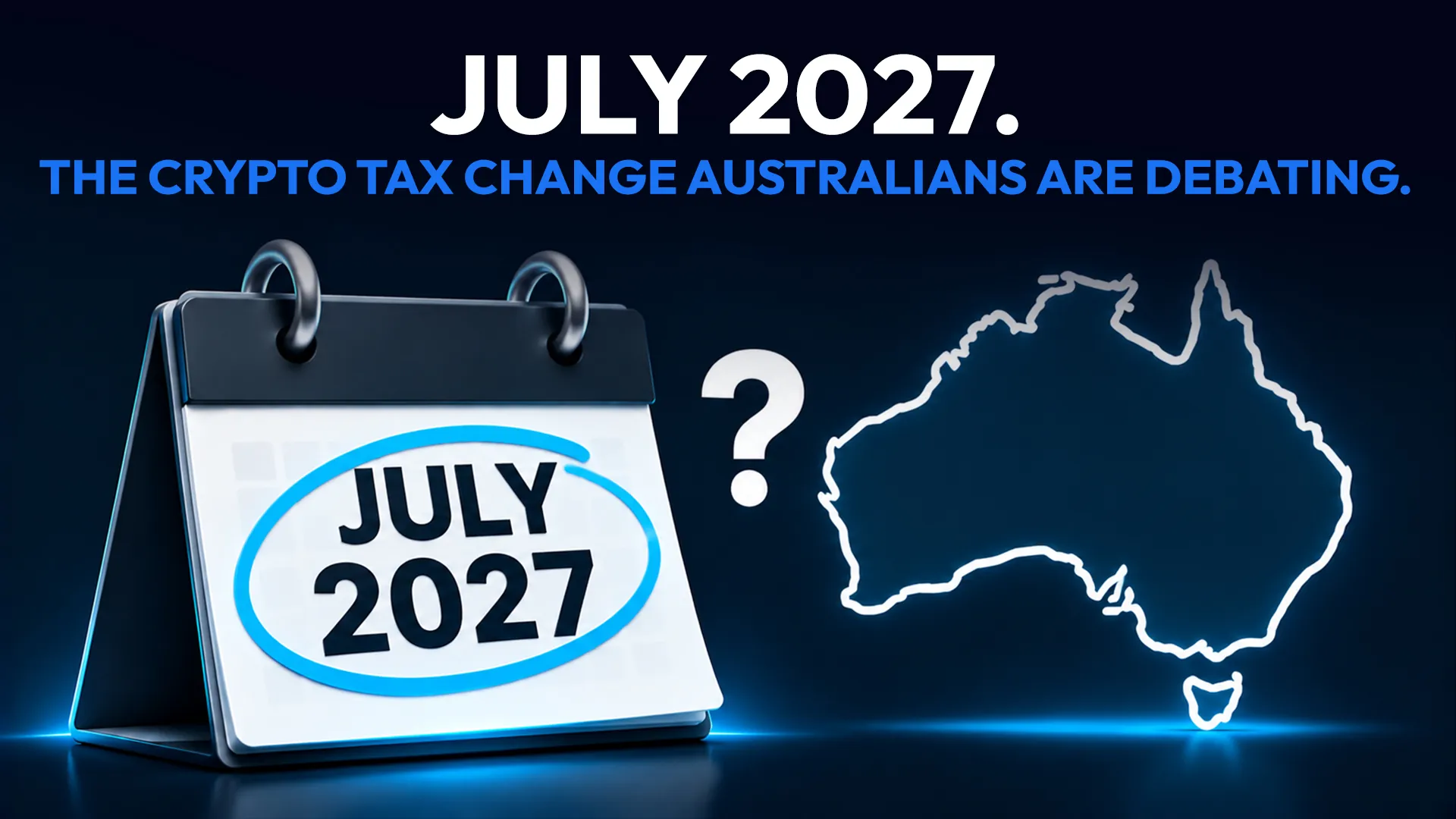
Australia's May 12 Federal Budget announced significant changes to capital gains tax, prompting renewed debate about how cryptocurrency investors should manage their holdings and whether moving overseas could reduce their future tax obligations.
From July 1, 2027, the existing 50% capital gains tax discount for assets held longer than 12 months is set to be replaced by cost base indexation.
Under the current system, eligible investors generally include only half of a long-term capital gain in their taxable income. The proposed approach would instead adjust the original purchase price for inflation, so tax applies to the gain after accounting for changes in purchasing power.
According to summaries from MinterEllison and Baker McKenzie, the changes also include a minimum 30% tax on net capital gains and transitional arrangements for assets held before the new rules take effect.
Gains accrued before July 1, 2027 would retain access to the existing 50% discount, even if the asset is sold later. Gains arising after that date would be assessed under the new indexation rules.
Cointelegraph's feature on the changes suggests that high-income Australians could face a top marginal tax rate of 47% on real long-term cryptocurrency gains. That figure represents the highest personal marginal rate, rather than a flat tax applying to every investor or every dollar of profit.
The article explores how some Australian cryptocurrency investors are responding, including the possibility of relocating to jurisdictions with more favourable tax treatment.
Finder founder Fred Schebesta has reportedly moved to Singapore for tax purposes, while the feature identifies Singapore, Portugal, Malta, the United Arab Emirates and Hong Kong as jurisdictions that may offer favourable treatment for certain long-term cryptocurrency gains.
However, relocating involves more than changing an address.
Ben Simpson, founder of crypto advisory service Collective Shift, said some of his members have already moved overseas but warned that genuinely ending Australian tax residency can require severing substantial personal and financial connections with the country.
Australian tax obligations may also arise when an investor leaves.
Adrian Forza of Crypto Tax Australia explained that departure can trigger a capital gains tax event, potentially creating a substantial liability for investors holding assets that have increased in value.
That means moving overseas to avoid future tax may require investors to pay tax on gains they have already accumulated.
Swyftx CEO Andrea Yuen, who spent 30 years living in Singapore, also cautioned against making major life decisions solely to reduce tax obligations.
The feature suggests that relocation is more practical for younger investors with fewer personal commitments and greater flexibility to move internationally.
Other investors are considering different ownership structures.
Simpson said he trades cryptocurrency through a company, allowing gains to be taxed initially at a corporate rate of 25% rather than his personal marginal rate. That can leave more capital available for reinvestment while the company retains its profits.
However, withdrawing those profits for personal use may create additional tax obligations, potentially bringing the total liability closer to the investor's marginal rate.
Operating a company also introduces costs and administrative responsibilities, including ASIC registration, annual fees and professional accounting services. Some companies may face a 30% tax rate depending on their activities and eligibility.
Forza suggested that company structures may be more suitable for investors earning approximately AU$150,000–AU$200,000 or more, while offering fewer advantages to people who simply intend to hold cryptocurrency over the long term.
The broader Cointelegraph series also examines self-managed superannuation funds and borrowing against Bitcoin as alternative approaches. However, each strategy carries its own costs, risks and legal considerations.
Moving investments from cryptocurrency into shares or ETFs would not necessarily avoid the proposed changes, because the replacement of the CGT discount would also affect other eligible capital assets.
Simpson argued that Bitcoin's long-term growth potential may ultimately outweigh the impact of tax changes, although that remains an investment judgement rather than a guaranteed outcome.
For Australian cryptocurrency holders, the key issue is understanding how the proposed rules could affect existing and future gains before making decisions about selling, restructuring ownership or relocating.
The transitional arrangements may be particularly important for investors who have held assets for several years, while the effect of indexation will depend on inflation and the timing of purchases and sales.
This article provides general information, not personal tax advice. The consequences of the proposed changes will depend on each investor's circumstances, and anyone considering a significant transaction or change in tax residency should speak with a registered tax professional.
Founder's Corner
The market had a difficult week. US inflation came in higher than expected, expectations of a December interest rate increase climbed, and Bitcoin fell below US$74,000 (AU$107,300) while investors continued withdrawing money from spot ETFs. I won't pretend those conditions are comfortable, particularly for people who have entered the market recently. Weeks like this test whether your investment decisions are based on a longer-term view or simply on where prices might move next.
What stood out to me was how much progress continued beneath the market headlines. The New York Stock Exchange selected Avalanche to support settlement on a proposed 24/7 tokenised stock market, while 21 major financial institutions committed US$270 million (AU$392 million) to building a new stablecoin network. These are substantial investments in infrastructure that will take time to develop and depend on regulatory approval, but they are being made while cryptocurrency prices remain under pressure. I find that more meaningful than trying to draw conclusions from a single day's price movements. Established financial institutions are continuing to explore how blockchain technology can improve the systems they already operate, regardless of the immediate market cycle.
Closer to home, Australia's proposed capital gains tax changes deserve serious attention from anyone holding cryptocurrency as a long-term investment. Replacing the existing discount with indexation could change how investors think about holding periods, ownership structures and the timing of future sales. I understand why some people are looking at overseas alternatives, but tax decisions rarely exist in isolation from the rest of someone's life. Before making significant changes, I think it's important to understand the rules, maintain accurate records and seek advice from a qualified professional who understands your circumstances.
The Binance investigation also remains an important reminder that security doesn't stop once a transaction reaches the blockchain. Two weeks after the theft, investigators are still tracing funds through newly created tokens and liquidity pools designed to obscure their movement. The methods are becoming more sophisticated, and businesses entrusted with customer assets need to keep strengthening their systems and processes in response.
On a more positive note, we also have some exciting news from Wayex this week. We've launched a refreshed look and feel across both the Wayex app and our web platform. Our team has put a lot of work into the update, and I'm pleased to see it in the hands of our customers. If you haven't logged in recently, I'd encourage you to open the app or visit the website and explore the new experience. We'd also love to hear what you think. Your feedback helps us understand what's working well and where we can make improvements as we continue developing the platform.
At Wayex, our focus remains on building a platform Australians can rely on through changing markets, new regulations and emerging security threats. That means continuing to invest in compliance, security and responsible operations while making the everyday experience of using Wayex better. Markets will have difficult weeks, and the rules will continue to evolve, but our commitment to improving the platform and earning your trust remains the same.
Richard Voice Co-Founder, Wayex
Things That Made Us Laugh This Week