A public feud between two crypto CEOs this week spiralled into a question every crypto card user should be asking: when you deposit funds with a card provider, do you still own them? Meanwhile, Trump called himself a big crypto guy on live television; Strategy kept selling Bitcoin to fund its preferred stock dividends; the stablecoin market had its worst monthly contraction since TerraUSD; and Vanguard, the last major institutional holdout on crypto, posted a job listing for a head of digital assets. A strange week: simultaneously under pressure and accelerating in every direction that matters. Let's get into it.
The KAST vs ether.fi War Nobody Expected

What started as a public comparison of crypto card fees escalated this week into one of the more consequential disputes the industry has seen in some time, and the stakes extend well beyond the two companies involved. KAST CEO Raagulan Pathy and ether.fi CEO Mike Silagadze spent five days trading increasingly pointed posts about each other's products, but it was what the argument uncovered about KAST's terms of service that made the story worth paying attention to. A close reading of KAST's terms revealed that every customer deposit was classified as a sale of the underlying asset to the company. Under that structure, the customer was no longer the legal owner of the funds after depositing them. KAST was.
The legal implications are not theoretical. When a company holds your assets under a sale structure rather than a custody structure, you become an unsecured creditor in the event of insolvency. You are not getting your funds back first. You are joining a queue. It is the same structure that caused enormous harm to customers of Celsius, BlockFi, and Voyager when those platforms failed, and it is a structure that regulators in Australia and increasingly across major jurisdictions have been specifically targeting with new custody rules precisely because of how badly customers were treated when those platforms collapsed. KAST updated its terms of service following public pressure, adding language that clarifies a right of redemption, but the underlying legal architecture of the product remains the same. The right of redemption is only as useful as the company's ability to honour it.
KAST has pushed back on the characterisation of its terms and maintains that customer funds are protected. The dispute is ongoing, and some of the specific legal questions it raises have not been definitively resolved. What it has done is surface a conversation that the industry has been avoiding. Crypto card products are proliferating rapidly, and not all of them are built on the same custody model. Before you deposit funds with any crypto card provider, the most important question to ask is not what the rewards rate is. It is what happens to your money if the company cannot pay its bills. At Wayex, our global stablecoin card/wallet does not charge hidden fees; we do not classify your deposit as a sale, and we do not make you a creditor when you should be a customer. That is not a competitive advantage we invented. It is the baseline standard that every regulated platform should meet, and the reason it matters is exactly what the KAST dispute made visible this week.
"I'm a Big Crypto Guy": What Trump Actually Said and What It Actually Means
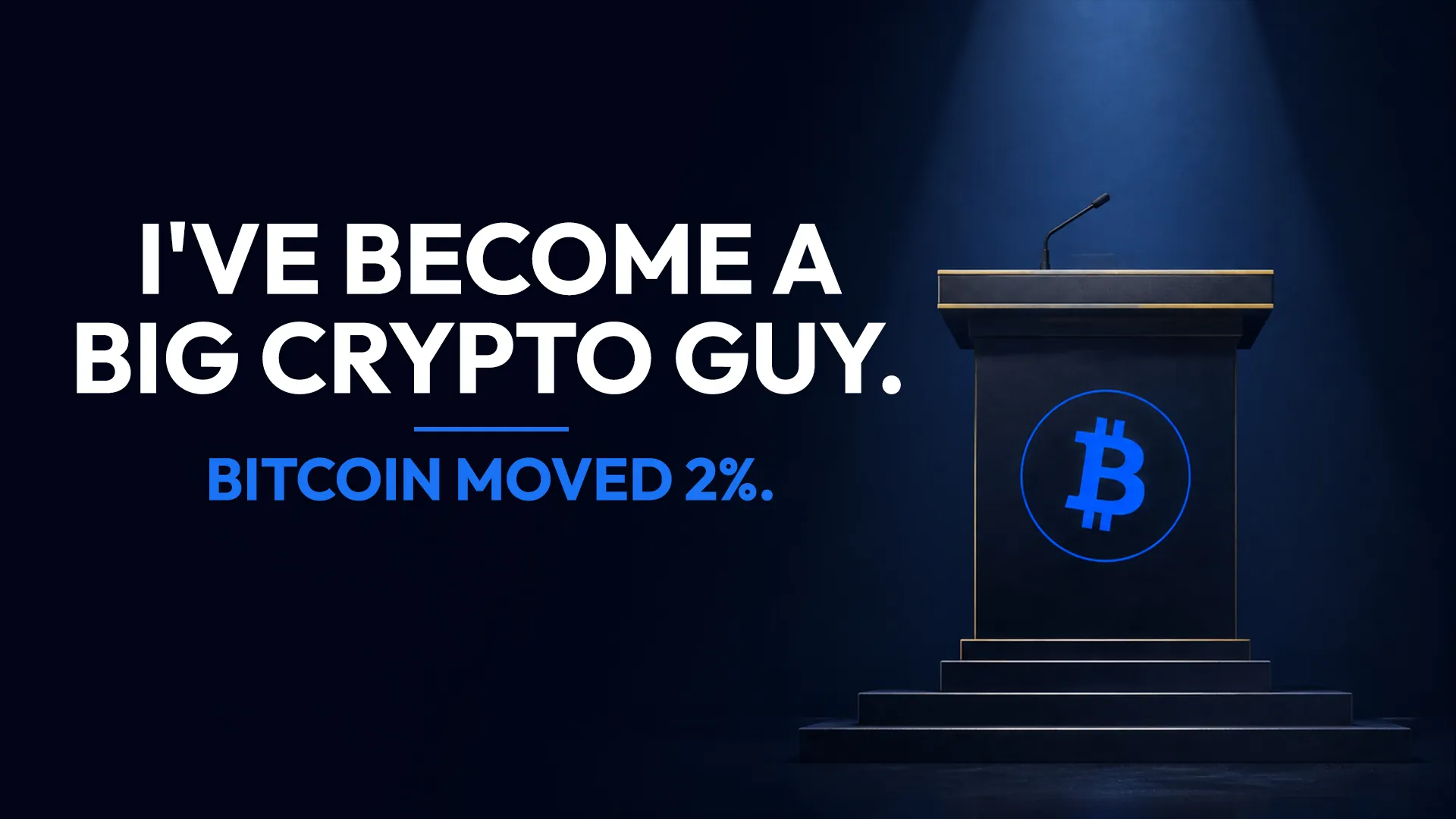
On July 6, while launching Trump Accounts from the Oval Office, President Trump was asked by a reporter whether Bitcoin might be added to the new government-seeded children's savings program. His answer was characteristically loose but unmistakably directional. "I've become a big crypto guy only for one reason: if we don't have it, China is going to have it." Bitcoin, which had fallen nearly 2% earlier in the session after Strategy disclosed it had sold US$216 million (AU$311 million) worth of BTC, reversed course within hours and closed up 1.8% at around US$63,854 (AU$91,950). A presidential soundbite moved the market by approximately 4 percentage points in an afternoon.
The substance behind the comment is worth separating from the sentiment. Trump Accounts, which went live over the July 4 holiday weekend under the One Big Beautiful Bill Act, provide a US$1,000 (AU$1,441) federal seed deposit for every American child born between 2025 and 2028, with families able to contribute up to US$5,000 (AU$7,209) per year until the child turns 18. The program is currently restricted to US equity index funds with fees under 0.1% by statute. Adding Bitcoin would require new legislation, not a presidential preference. When Trump said "something could happen," he was describing a political aspiration, not an administrative pathway. Based on the timelines of his previous crypto commitments, the Strategic Bitcoin Reserve took seven months from campaign promise to executive order; Bitcoin in children's accounts looks like a 2027 story at the earliest and a congressional fight regardless.
What is worth taking seriously is the reasoning Trump offered rather than the promise. His explicit framing was competitive rather than ideological: America needs crypto because China wants it, and ceding that ground is not something he is willing to do. That is a geopolitical argument for crypto adoption, not a financial one, and it is the argument most likely to survive the next election cycle regardless of who wins it. When the world's most powerful government frames crypto as a strategic asset in its competition with China, the long-term policy tailwind for the industry is more durable than any individual promise made at a press conference. Watch what gets legislated. The comment itself will be forgotten by next week. The direction it points toward will not.
Saylor's Number: The Metric That Explains Strategy's Entire Bitcoin Bet
Michael Saylor revealed this week the single metric he uses to evaluate whether Strategy's Bitcoin treasury model is working: the BTC Breakeven ARR, or annual return rate. The logic is as follows. Strategy holds 843,775 Bitcoin, currently worth approximately US$52.1 billion (AU$75 billion). If Bitcoin appreciates at more than 3.3% per year, the capital gains generated by that reserve are sufficient to fund the company's preferred stock dividends indefinitely, without ever needing to sell the underlying Bitcoin. Saylor's argument is that this makes Strategy's model self-sustaining at any Bitcoin growth rate above that threshold, and that given Bitcoin's historical performance, 3.3% annual growth is a conservative floor rather than an ambitious target.
The model is elegant in the way that leveraged financial structures often are before they are stress-tested. The numbers worth holding alongside Saylor's optimism are these: Strategy's preferred equity outstanding has grown to more than US$13.5 billion (AU$19.4 billion), and dividend obligations in the first quarter of 2026 alone reached US$229.5 million (AU$330.5 million). The company has now sold Bitcoin twice this year, first in June and again in early July, using the proceeds explicitly to fund those preferred stock distributions and replenish its USD reserve. Barclays analyst Ajay Rajadhyaksha noted this week that Strategy's entire investment thesis was built on a public promise never to sell, and that when they sold, even a relatively small amount, it was a significant hit to sentiment regardless of the financial rationale behind it.
The honest read on Saylor's metric is that it is genuinely useful as a long-term framework and genuinely incomplete as a short-term risk assessment. The BTC Breakeven ARR tells you what Bitcoin needs to do for the model to work over time. It does not tell you what happens to preferred stockholders if Bitcoin spends two years below the breakeven threshold, or what happens to common shareholders if the dividend obligations force continued BTC sales into a falling market. Cantor analyst Ramsey El-Assal described Strategy as needing to balance three constituencies simultaneously: preferred stockholders, common stockholders, and Bitcoin investors. Protecting one of those groups may hurt the other two. The BTC Breakeven ARR does not resolve that tension. It is exactly what the metric was designed to obscure.
The Stablecoin Market's Worst Month Since TerraUSD
CoinDesk Research's June STAR report landed this week with a headline that cut through the noise: the stablecoin market cap fell US$7.7 billion (AU$11.1 billion) in June to US$312 billion (AU$449.3 billion), the largest single-month contraction since TerraUSD collapsed in May 2022. Three separate stablecoins depegged during the month for unrelated reasons, and the Open USD consortium announcement at the end of June added uncertainty about the sector's competitive structure going forward. On the surface, it looks like a story about stablecoin fragility. The full picture is more nuanced and in some ways more interesting.
The capital did not leave crypto. It rotated. Tokenised equity volumes surged 145% in June to a record US$3.86 billion (AU$5.56 billion), driven almost entirely by trading activity around the SpaceX IPO on Hyperliquid and other platforms. Investors who might previously have parked funds in stablecoins while waiting for opportunities moved them directly into tokenised SpaceX exposure instead. The stablecoin market contracted because a more compelling short-term destination for that capital emerged, not because confidence in the broader ecosystem eroded. That distinction matters when interpreting what the contraction actually signals about market health.
The three depeg events are worth understanding individually rather than lumping together. Each one had a different cause and a different resolution, and none of them reached the systemic contagion that made the TerraUSD collapse so destructive. The comparison to May 2022 in terms of scale is accurate. The comparison in terms of mechanism is not, and conflating the two does the reader a disservice. What the June data does genuinely signal is that the stablecoin market is entering a more competitive and more complex phase. Open USD has not launched yet. MetaMask's mUSD is growing. RLUSD is expanding into new corridors. The era of two stablecoins, USDT and USDC, dividing the market between them is ending, and the transition period will be messy. June was the first month that messiness showed up clearly in the aggregate numbers.
Vanguard Wants a Head of Digital Assets

Vanguard, the US$10 trillion (AU$14.4 trillion) asset manager that spent years telling its clients that cryptocurrency was incompatible with long-term investing, posted a job listing this week for a head of digital assets. The role will oversee the firm's strategy across tokenisation, stablecoins, blockchain infrastructure, and digital asset custody. The listing is not a press release. It is a hiring decision, which makes it more meaningful than almost anything a financial institution can say publicly about its intentions. Vanguard is building something. The question is what, and how far it intends to go.
The context matters. Vanguard was the most prominent institutional holdout during the Bitcoin ETF race of 2024, declining to list spot Bitcoin ETFs on its brokerage platform while BlackRock, Fidelity, Franklin Templeton, and virtually every other major asset manager moved quickly to offer them. The firm's then-CEO Tim Buckley said publicly that crypto had no role in long-term portfolios and that Vanguard had no plans to change that position. Buckley has since been replaced. The new leadership team has been quietly signalling a review of the firm's digital asset stance for several months. The job listing is the clearest public confirmation yet that the review has concluded and a new direction has been chosen. Vanguard, managing US$10 trillion in assets, does not post a head of digital assets role without board-level conviction that the strategy is changing.
The practical implications for the crypto market are significant. Vanguard's client base skews toward long-term retail and institutional investors, precisely the demographic that has been most cautious about crypto exposure. When Vanguard moves, it carries a permission structure that few other institutions can replicate. Its clients trust it specifically because it has historically been conservative and deliberate. A Vanguard-branded digital asset product, whether a tokenised fund, a stablecoin offering, or eventually a Bitcoin ETF listing, will reach investors who have been waiting for exactly this kind of institutional signal before committing capital. The last major holdout is no longer holding out. That is not a small development.
Iran Flares Up Again. The Market Moved 1.24%.
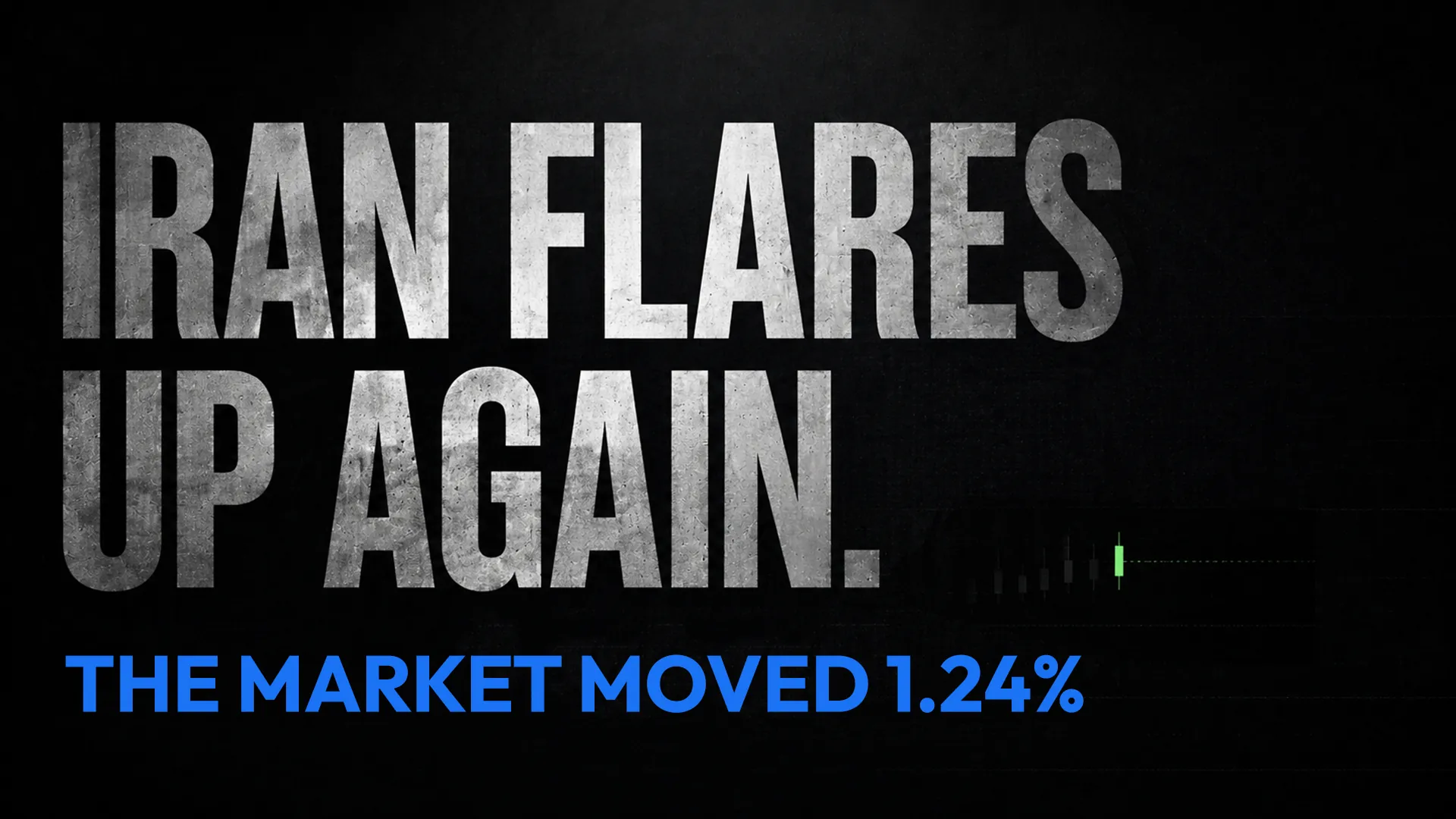
US forces struck more than 80 Iranian targets on July 7 after Iranian vessels attacked ships in the Strait of Hormuz, testing the ceasefire agreement that had been announced less than four weeks earlier. The total crypto market fell 1.24% on the news. Bitcoin dipped briefly before recovering. The Strait of Hormuz, through which roughly 20% of the world's seaborne oil supply passes, was back in the headlines for the same reasons it had been in February, March, April, May, and June. The market, which had spent the first half of the year treating every Middle East escalation as a five-alarm crisis, barely flinched.
The muted reaction is itself the story. In February, when the conflict first escalated, a single headline about Strait disruption could move Bitcoin 5% in an hour. By July, the same category of news is producing a 1.24% aggregate market move that reverses before the trading session closes. The mechanism behind this desensitisation is not complicated. Markets price risk based on novelty and uncertainty. The Iran conflict has now cycled through multiple escalations, multiple ceasefires, multiple broken truces, and multiple rounds of US military action. Traders who were burned by positioning aggressively on peace headlines in April and then watching the ceasefire collapse within weeks are not making the same mistake again. The geopolitical risk premium that was embedded in Bitcoin's price earlier this year has been largely priced out, not because the risk has disappeared but because the market has concluded it knows roughly what the range of outcomes looks like.
For Australian crypto holders, the practical takeaway is straightforward. Geopolitical noise is real, but it is also mean-reverting. The events that create lasting structural change to crypto's trajectory are regulatory shifts, institutional adoption decisions, and changes to the macro liquidity environment. Military action in the Strait of Hormuz is dramatic. It is not, based on the evidence of the past five months, a reliable signal for how to think about your crypto exposure over any meaningful time horizon. The market figured that out this week. The 1.24% move is the proof.
Founder's Corner
This week had a quieter energy than the ones before it, which made it easier to hear the signals underneath the noise. Trump called himself a big crypto guy, and the market moved 2%. Iran escalated, and the market moved 1.24%. A month ago, either of those headlines would have moved things significantly more. The market is getting better at separating signal from noise, and that is a sign of maturation worth acknowledging.
The KAST story is the one I want every Wayex user to read carefully. Not because of the drama between the two CEOs, but because of the question it raises. Here's the thing about cashback and points programs: they're a pricing strategy dressed up as a perk. Someone has to fund that 3%. It comes from somewhere, usually from a fee schedule that's harder to find than the marketing page, or from a tier structure that only pays out if you're spending enough to justify a $1,000 or $10,000 annual membership. The reward is real for the minority who clear the bar. For everyone else, it's a number they'll never actually see.
At Wayex, we made a different call early on: skip the theatre and just price it right the first time. No cashback. No points. No tiers to climb. One FX rate, the same for every user, is published where anyone can read it, and if we were to introduce these perks, we would structure them differently from how these other players are doing it.
We are focusing on making Wayex Global the go-to platform for stablecoin cards; we want to be competitive in the best ways possible. We do not want to overcomplicate things for our end user, and we want it to be the choice of everyday people, not just crypto natives. It's simple. Easy on/off ramping, earn and spend.
Richard Voice, Co-Founder, Wayex
Things That Made Us Laugh This Week