A Coldcard firmware exploit drained more than US$114 million (AU$161.9 million) in Bitcoin from over 5,200 self-custody wallets this week, and the analysts who cover this market drew an immediate conclusion: the case for regulated custody just got a live demonstration. Jim Cramer announced he is selling all his Bitcoin over quantum computing fears, and the crypto community celebrated so loudly it briefly drowned out the actual substance of what the IBM CEO told him. Ethereum researchers published the most consequential proposed change to the network's monetary policy since the Merge. Circle reported USDC volume up 151% and revenue up 7%, which tells two very different stories about the same business. Strategy quietly rebuilt its financial foundation while Bitcoin stabilised above US$60,000 (AU$85,200). And Binance filed a US$470 million (AU$667 million) lawsuit in Hong Kong against a payments firm it alleges stole nearly half a million of its customers. Let's get into it.
The Coldcard Hack and the Case for Regulated Custody
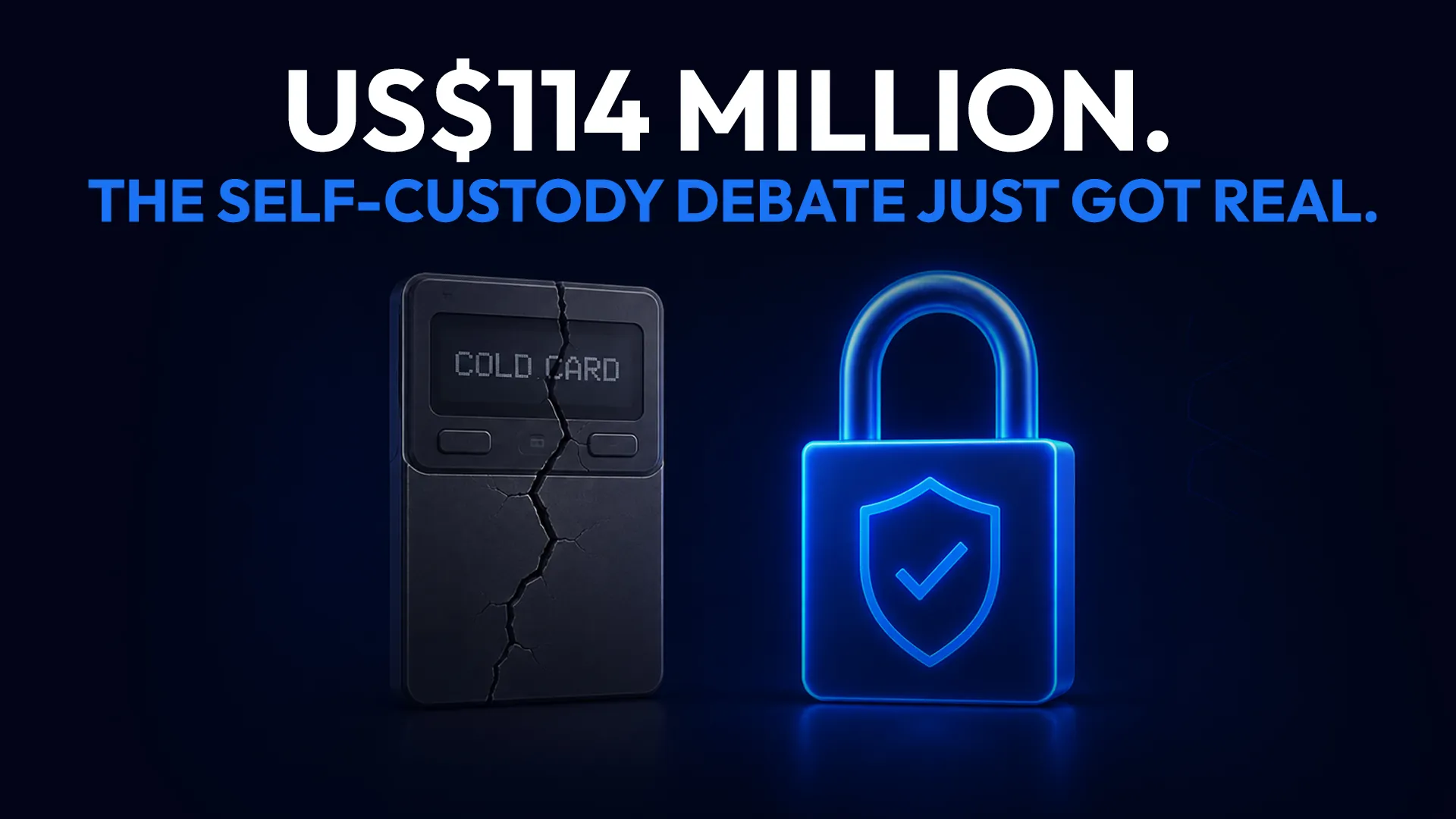
A firmware exploit in Coldcard hardware wallets has drained at least 1,816 BTC worth approximately US$114 million (AU$161.9 million) from more than 5,200 addresses since July 30, and the reaction from Wall Street analysts was notable for how quickly it moved from the technical to the structural. Investment bank Cantor said the breach may reinforce the appeal of publicly traded crypto firms linked to institutional adoption, arguing that token flows to custodians and exchanges will increase following the hack and that firms including Coinbase, Robinhood, Gemini, and BitGo stand to benefit from increased customer inflows. FRNT Financial echoed that read, saying the exploit exposed a key tradeoff in self-custody that the industry has long discussed in theory and is now confronting in practice.
The tradeoff is worth stating clearly. Self-custody gives holders direct control over their assets, removing the counterparty risk of relying on an exchange or custodian. What it does not remove is the trust requirement. Every self-custody setup still requires trust in the hardware and software used to generate and manage private keys. The Coldcard exploit did not happen because users failed to follow best practices. FRNT noted that many affected users had done exactly what the industry recommends. The exploit happened because the wallet's firmware had a flaw, and that flaw was discovered and weaponised before users could protect themselves. The distinction matters. This is not a story about user error. It is a story about the limits of any system that places the full burden of security on the individual.
The industry's honest response to this is not to abandon self-custody as a concept. Cold wallet providers will improve their products as a result of this breach, and the long-term case for direct ownership of assets remains real and legitimate. What the Coldcard hack does is add necessary complexity to a conversation that has sometimes been too binary. Not every user has the technical knowledge, the operational discipline, or the risk tolerance to manage private keys safely across years and through market cycles. For those users, regulated platforms with institutional-grade custody infrastructure exist for exactly this reason. At Wayex, the security of customer assets is not a product feature that gets added at launch. It is the foundation the platform was built on, and the events of this week are a reminder of why that distinction matters.
Circle's USDC: Volume Up 151%, Revenue Up 7%. What Does That Mean?
Circle reported its second-quarter results this week, and the headline numbers tell two very different stories about the same business. USDC on-chain transaction volume reached US$14.8 trillion (AU$21 trillion) during the quarter, up 151% from a year earlier, reflecting the extraordinary growth in stablecoin usage across payments, DeFi, and cross-border commerce. Total revenue and reserve income rose just 7% to US$701 million (AU$995 million). Those two numbers sitting side by side are not a contradiction. They are an explanation of how Circle's business actually works, and understanding the gap between them is worth the effort.
The mechanics are specific. Circle earns revenue primarily by investing the reserves backing USDC in short-term US Treasuries and retaining most of the interest generated. It does not receive a fee tied to every USDC transfer recorded on a public blockchain. When USDC volume surges 151%, that number measures how many times individual tokens moved across blockchains during the quarter, not how many new dollars entered circulation. A single USDC can contribute to the volume figure each time it changes hands. The revenue that matters to Circle's model is the interest earned on the average USDC in circulation, which grew 25% to US$76.5 billion (AU$108.6 billion), and the reserve return rate, which fell 66 basis points to 3.5% as interest rates declined. The result: reserve income grew just 5% to US$668 million (AU$948.6 million). Circle beat earnings estimates but missed revenue consensus of US$717.5 million (AU$1.02 billion), and its stock fell nearly 4% in early trading before recovering.
The structural pressure on Circle's model is coming from multiple directions simultaneously. Distribution costs paid to Coinbase and Binance consumed US$412 million (AU$585 million) of the quarter's revenue, leaving Circle with US$289 million (AU$410 million) in revenue less distribution costs, a 41% margin that improved slightly from a year ago but remains constrained by the company's dependence on paid distribution partners. The Open USD consortium launched in June is now recruiting those same distribution partners to back a competing stablecoin that shares reserve income with them rather than retaining it for the issuer. Circle is betting that its Arc blockchain network, launching September 16, will create recurring revenue streams beyond reserve interest that reduce this dependence. That bet is yet to be proven. What this quarter's results confirm is that Circle can grow its volume dramatically without growing its revenue proportionally, and that the business model needs to evolve to keep pace with the network it built.
Strategy Rebuilds Its Foundation
Strategy's preferred stock STRC has staged a meaningful recovery over the past six weeks, rising more than 30% from its late-June low of around US$71 (AU$100.61) to trade near US$94 (AU$133.20), and the mechanics behind that recovery are worth understanding because they reveal something important about how Michael Saylor is managing the company's obligations in a flat-to-down Bitcoin market. The rebound was not driven by a Bitcoin price recovery. It was driven by a deliberate set of actions Strategy took to demonstrate it could meet its dividend commitments without depending on Bitcoin appreciation to do so.
The company sold 5,226 BTC across three separate transactions for approximately US$321 million (AU$456 million), reducing its holdings from 847,363 BTC to approximately 842,137 BTC. The sales were explicitly framed as proof of concept: demonstrating that Bitcoin in the treasury can be liquidated to fund obligations when needed, rather than treated as an untouchable reserve that only accumulates. Strategy also repurchased US$106 million (AU$150.5 million) of STRC as it works to return the preferred stock toward its US$100 (AU$141.70) stated par value, and increased its US dollar cash reserve by US$250 million (AU$355 million) during the week, bringing the total to US$4 billion (AU$5.68 billion). That reserve now provides approximately 2.3 years of coverage for dividend obligations across all of Strategy's preferred securities. STRC's annualised dividend rate was maintained at 12%.
The timeline Strategy is working toward is specific. The company noted in its second quarter earnings call that after STRC's initial public offering, it took 70 trading days for the security to reach par after trading at US$90 (AU$127.53) in July 2025. Applying the same timeframe from when STRC fell outside its targeted range in late May, Strategy is eyeing September 8 as a potential date for STRC to return to US$100 (AU$141.70) par value. Whether markets cooperate is a separate question. What this week confirmed is that the company is actively managing toward that outcome rather than waiting for Bitcoin to solve the problem on its behalf. For anyone watching Strategy as a proxy for Bitcoin corporate treasury adoption, the shift in approach is worth noting. The model that was built on never selling is now demonstrating that controlled, purposeful selling is part of the toolkit when market conditions require it.
Jim Cramer Is Selling His Bitcoin. The Crypto Community Is Delighted.

On a recent episode of Mad Money, CNBC host Jim Cramer announced he plans to sell all of his Bitcoin holdings following an interview with IBM Chairman and CEO Arvind Krishna. Krishna had told Cramer he should get paranoid about quantum computing's ability to challenge modern cryptography within three to four years, citing IBM's advances toward commercially useful quantum machines. Cramer did not wait three to four years. Within hours of the interview airing, he declared his intention to exit his Bitcoin position entirely, citing the quantum threat as his reason. Bitcoin traded near US$63,764 (AU$90,545) at the time, up slightly on the day. The crypto community's reaction was immediate, enthusiastic, and almost entirely celebratory.
The inverse Cramer trade, the idea that the reliably contrarian move is whatever Cramer did not say, is one of crypto Twitter's (X) most enduring running jokes. Tuttle Capital launched an Inverse Cramer Tracker ETF in 2023 to formalise the premise, though both it and a companion Long Cramer fund eventually closed, the long version dying first. The joke has survived the fund. Within minutes of Cramer's Bitcoin exit announcement, traders flooded social media celebrating it as a bullish signal. No one has independently confirmed the size of Cramer's Bitcoin holdings or whether he has sold any of it. Bitcoin's blockchain is publicly visible, but wallet ownership cannot be verified unless an address is publicly linked to a person, meaning the market is responding to a television statement with no on-chain confirmation attached.
The IBM CEO's warning is worth taking more seriously than the Cramer angle might suggest. Google published a paper in March 2026 estimating that breaking Bitcoin's cryptography could require fewer than 500,000 physical qubits, roughly 20 times fewer than earlier projections. Current quantum devices operate at hundreds to low thousands of physical qubits, meaning the gap between today's capability and a meaningful quantum threat remains significant. Blockstream CEO Adam Back has said Bitcoin faces no meaningful quantum threat for at least 20 to 40 years. Bernstein analysts put the timeline at three to five years. The honest answer is that nobody knows precisely when quantum computing reaches the threshold that matters for Bitcoin security, and Ethereum's Lean Ethereum roadmap, which we covered last month, treats quantum resistance as its most urgent priority. The industry is not ignoring the question. What it is not doing is selling because Jim Cramer said to.
Ethereum Proposes Its Most Ambitious Monetary Policy Change Since the Merge

Six Ethereum researchers, including Ethereum Foundation contributor Justin Drake, published a draft proposal this week that would fundamentally reshape how validator rewards are distributed on the network. The proposal, known as EIP-8361 or the Tapered Issuance Burn, would progressively burn an increasing share of validator consensus rewards as the total amount of staked ETH rises, reaching zero net issuance once approximately 60.25 million ETH, roughly half the current total supply, is staked. At current staking levels of around 33% of supply, the proposal would reduce annual staking yields from approximately 2.6% to 1.2% from day one, with an 18-month transition period built in to soften the immediate impact.
The reasoning behind the proposal is worth understanding before evaluating the debate it has triggered. Ethereum's staking participation has grown substantially since the Merge, and researchers are increasingly concerned that unchecked growth creates two related problems. The first is centralisation: as staking rewards remain attractive, more ETH flows toward large exchanges and liquid staking providers like Lido and Rocket Pool, concentrating a growing share of the network's validator set among a small number of dominant operators. The second is dilution: non-staking ETH holders are continuously diluted by the issuance that rewards stakers, and that dilution becomes more pronounced the higher staking participation rises. The Tapered Issuance Burn is designed to address both by making additional stake progressively less profitable, allowing the market to find its own equilibrium below the 50% staking threshold.
The DeFi community's reaction has been sharp and divided. Aave founder Stani Kulechov, whose protocol is one of Ethereum's most important DeFi applications, said the proposal does not achieve the outcome it tries to achieve and is actually hurtful for Ethereum, arguing that moving toward zero rewards would make ETH borrowing strategies largely unviable and kill yield use cases for the asset. ether.fi CEO Mike Silagadze was blunter, arguing the proposal will halt any new ETH getting staked and could push tens of billions of dollars of ETH back into circulation. Supporters counter that reduced issuance would benefit ETH holders through lower dilution and that the concentration problem the proposal addresses is a genuine long-term threat to network decentralisation. The proposal arrived days before the August 6 deadline for inclusion in Hegotá, Ethereum's next planned upgrade, and is widely expected to be pushed to a later fork given the level of unresolved debate. What it represents, regardless of when it is adopted, is Ethereum engaging seriously with questions about its monetary policy that the network has avoided confronting directly until now.
Binance Sues RedotPay for US$470 Million
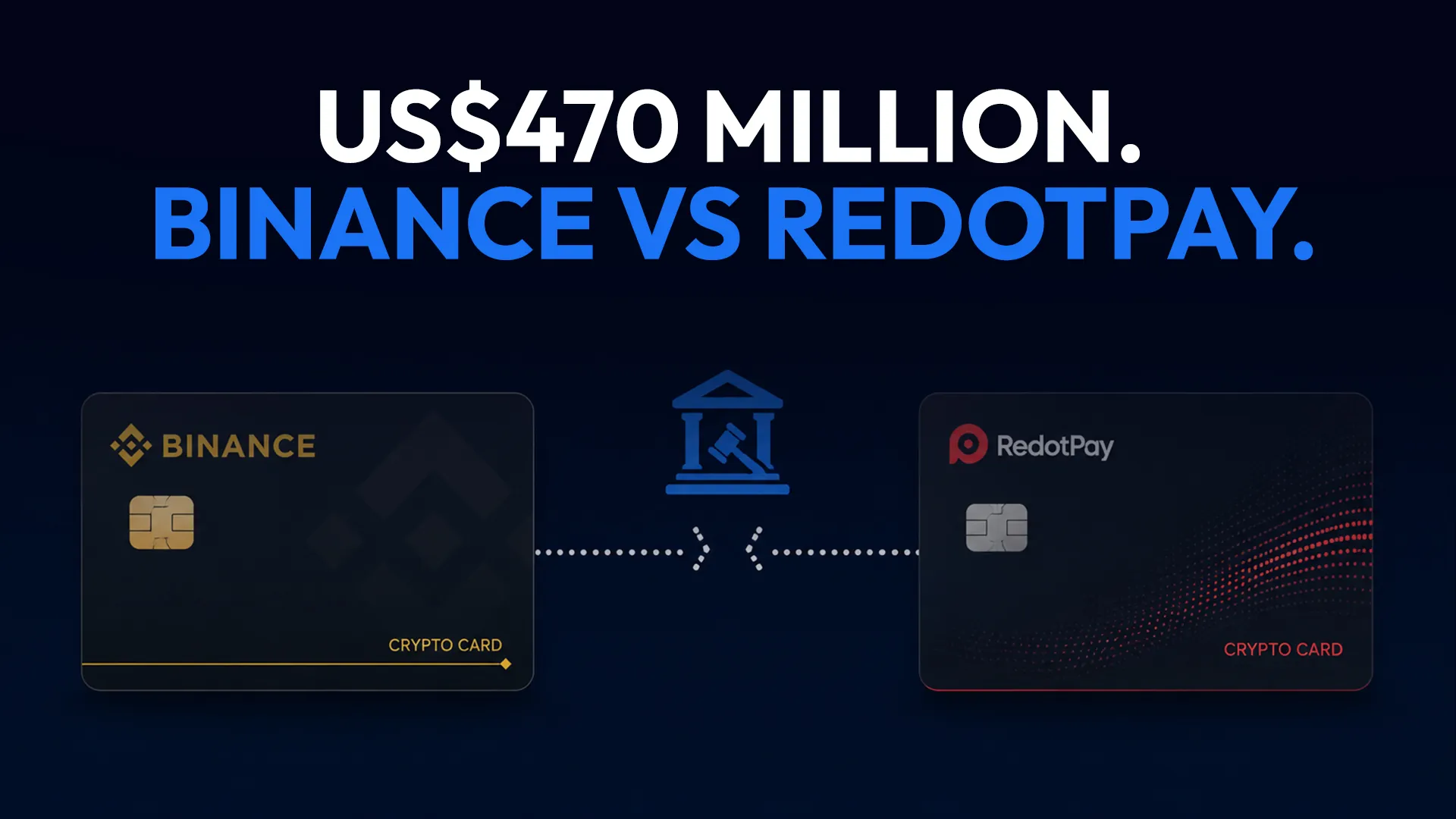
Binance filed a lawsuit in Hong Kong this week against RedotPay and its co-founders, alleging the Hong Kong-based stablecoin payments company diverted approximately 470,000 Binance customers to its own platform and caused nearly US$473 million (AU$672 million) in losses to the exchange. A separate Binance affiliate has filed concurrent proceedings in Singapore, with a hearing scheduled this week. RedotPay, which describes itself as the world's largest stablecoin payment card issuer and is planning a US$1 billion (AU$1.42 billion) IPO in the United States at a potential US$4 billion (AU$5.68 billion) valuation, rejected the claims as unfounded and said it will defend itself vigorously.
The alleged mechanism is specific and worth understanding. Binance and RedotPay entered a commercial partnership in November 2023 that allowed RedotPay to access Binance's user base and make Binance Pay services available across its network. That arrangement ended within six months after Binance alleged its funds were being used to top up RedotPay's own prepaid cards in violation of the agreement. A second agreement followed in March 2025, explicitly requiring Binance funds to be kept separate from RedotPay card top-ups, while permitting RedotPay customers to use Binance Pay for currency conversion, in-app transfers, and RedotPay-branded goods. Binance ended that second agreement in April 2026 as part of what it described as a merchant partner review. The lawsuit alleges that RedotPay violated the terms of the second agreement in the same way it violated the first, systematically diverting Binance customer funds and relationships to build its own competing product.
The timing of the lawsuit is notable. RedotPay is in the process of preparing for a major US public listing and has positioned itself as one of the most significant players in the emerging stablecoin card market. An allegation of this scale, involving nearly half a million diverted customers and close to half a billion dollars in claimed losses, arriving in the middle of that IPO preparation, is a significant complication regardless of how the underlying legal dispute resolves. The case connects directly to a theme this newsletter has covered in recent editions: the crypto card market is growing rapidly, the partnerships that underpin it carry meaningful legal risk, and the line between legitimate competition and contractual violation is being drawn in courtrooms as well as boardrooms. RedotPay has rejected all of the allegations. The proceedings are ongoing, and no findings have been made.
Founder's Corner
This week had a thread running through it that is worth naming directly. The Coldcard hack, the Binance and RedotPay dispute, the Circle earnings story, and the Strategy recovery all connect back to the same underlying question: what does it actually mean to trust a platform with your assets, and what happens when that trust is misplaced, or the infrastructure underneath it fails?
The Coldcard story is the one I keep coming back to. Not because hardware wallets are bad; they are a legitimate and important part of the ecosystem, but because it demonstrated something that is easy to lose sight of in the self-custody conversation. Holding your own keys does not eliminate trust. It transfers it from a custodian to the hardware and software you use to manage those keys. When the firmware has a flaw, the trust fails regardless of how disciplined the user was. That is not an argument against self-custody. It is an argument for being clear-eyed about what you are actually trusting and why. At Wayex, we hold customer funds with institutional-grade security infrastructure, fully segregated from company funds, under Australian regulatory oversight. That is not a pitch. It is the standard we believe every platform should be held to, and weeks like this one are a reminder of why that standard exists.
The Circle numbers tell a different version of the same story. Volume up 151%, revenue up 7%. The gap between those two numbers is not a failure of Circle's technology. It is a reflection of a business model that is under pressure from multiple directions simultaneously, including the very distribution partners it depends on to grow. The companies that will matter in stablecoins over the next five years are the ones that can build recurring revenue beyond reserve interest. Circle's Arc network launching in September is the bet. The Ethereum staking proposal is a different kind of bet, on whether the network can self-correct its economics before concentration becomes a structural problem. Both are serious, consequential questions. Both are being asked at exactly the right time.
Richard Voice, Co-Founder, Wayex
Things That Made Us Laugh