Bitcoin is trading between US$81,500 and US$84,000 (AU$117,360 to AU$120,960) after September's inflation figures came in hotter than expected, raising the prospect of another US interest rate hike. Michael Saylor believes the bear market is finished and Bitcoin is heading above US$100,000 (AU$144,000), although prediction markets remain far less confident.
Elsewhere, Ledger confirmed an unauthorised hardware implant in a wallet sold through Southeast Asian reseller CryptoBilis, with reported losses reaching US$93.4 million (AU$134.5 million). South Korea launched its first Bitcoin-backed corporate bank loans, while an AI agent uncovered an 11-year-old XRP Ledger vulnerability that could have allowed attackers to create XRP from nothing.
Metaplanet is raising US$329 million (AU$473.8 million) to restructure its debt, Australia's IREN is reportedly working on a major AI cloud deal with Anthropic, and ASIC wants to extend retail CFD protections for another decade, including products settled in digital assets.
Let's get into it.
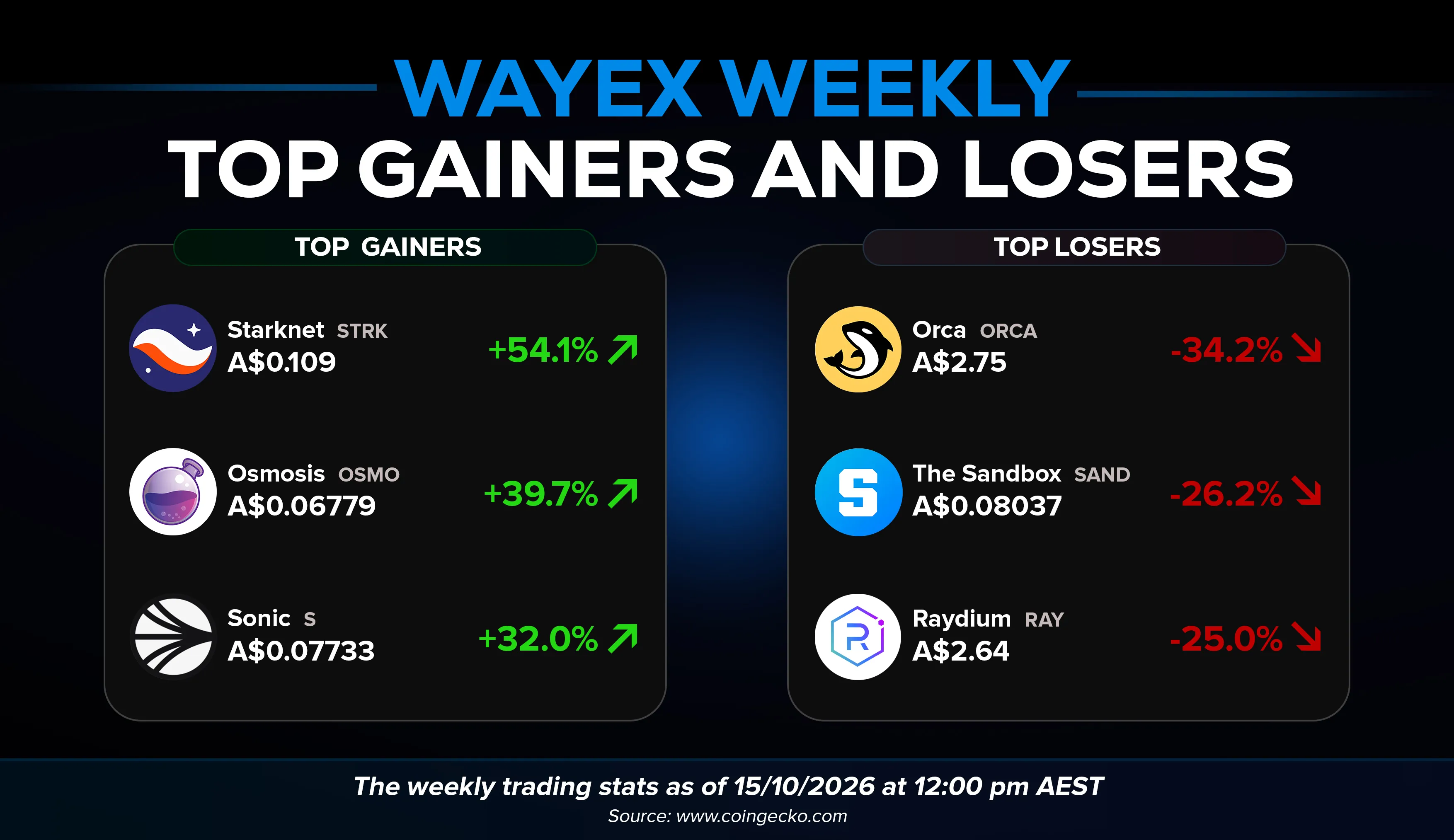
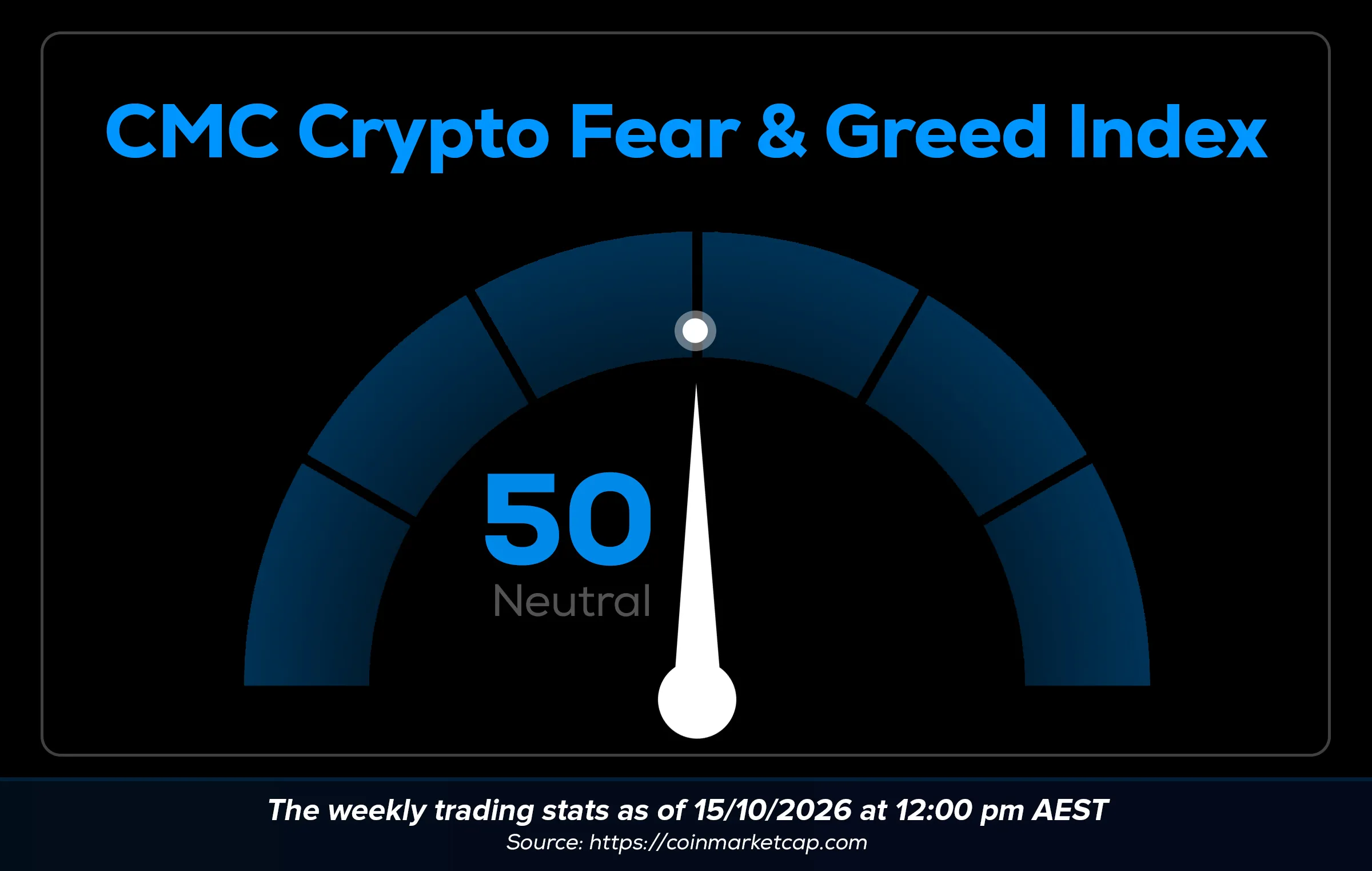
Bitcoin, Hot CPI, and Saylor's Bold Call

September's US Consumer Price Index rose 3.7% year-on-year, above economists' expectations of 3.6% and August's 3.4% reading. The higher figure suggests inflation is proving harder to contain, increasing the likelihood that the Federal Reserve will consider another interest rate hike.
Higher interest rates tend to make cash and bonds more attractive than riskier investments, putting pressure on assets such as Bitcoin. Following the announcement, Bitcoin fell from around US$84,000 (AU$120,960) into the low US$81,000s (AU$116,640). Ethereum declined 3.3%, XRP fell 2.9%, and Solana lost 2.4%.
Despite the market weakness, corporate Bitcoin buying continued. Strive Asset Management purchased approximately US$280 million (AU$403.2 million) worth of Bitcoin, its largest acquisition in months, bringing its holdings above 27,000 BTC.
Strategy also added 250 BTC, taking its total holdings to 848,250 BTC, worth approximately US$70.7 billion (AU$101.8 billion). The company maintained a US$4.88 billion (AU$7.03 billion) cash reserve, giving it flexibility to manage its finances while continuing its Bitcoin strategy.
Both purchases came during a period of price weakness, suggesting the companies remain focused on long-term accumulation rather than responding to short-term market momentum.
The week's biggest statement came from Michael Saylor, who appeared on Bloomberg Television on October 13 and declared that Bitcoin's bear market had ended when prices bottomed near US$60,000 (AU$86,400) earlier this year.
Saylor believes Bitcoin has entered a new bull market and expects it to trade above US$100,000 (AU$144,000). He pointed to improving regulatory clarity, greater institutional access, expanding bank adoption and the broader economic environment as reasons for his confidence.
Prediction markets offer a more cautious view. Polymarket currently assigns Bitcoin a 27% chance of reaching US$100,000 before 2027, with the price sitting near US$83,416 (AU$120,119) as this edition goes to press.
Saylor's conviction is clear, but the market still faces uncertainty around inflation, interest rates and institutional demand. Whether Bitcoin can move higher will depend on how those conditions develop over the coming months.
Ledger's Hardware Implant Problem Is Getting Worse
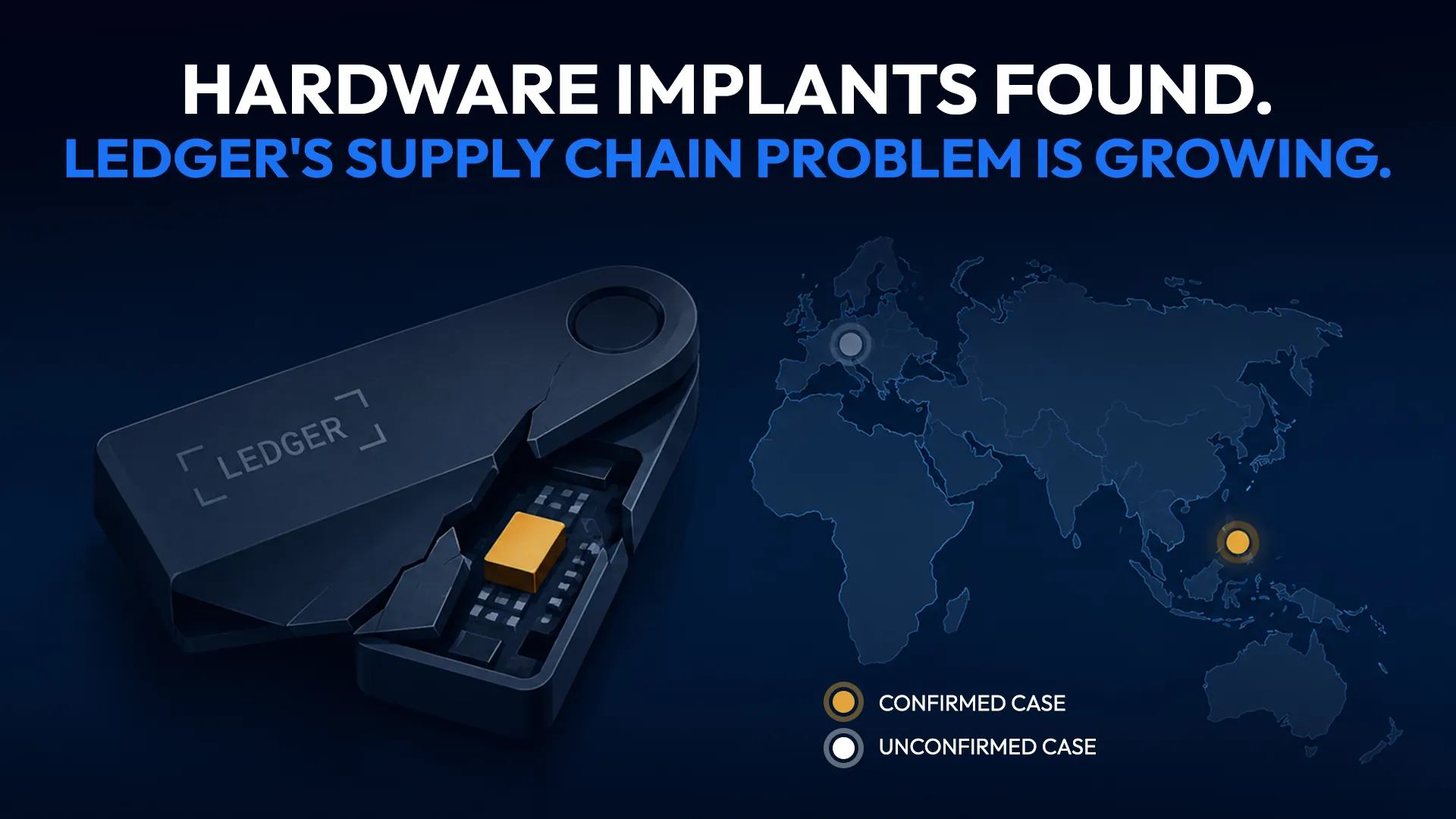
Ledger, the French hardware wallet manufacturer, confirmed on October 10 that an affected customer's device contained an unauthorised hardware implant. The discovery followed an investigation into reports of stolen funds involving wallets purchased through CryptoBilis, an authorised reseller operating in Indonesia, Malaysia and the Philippines.
By October 11, independent estimates suggested losses could have reached US$93.4 million (AU$134.5 million) across hundreds of wallets holding Bitcoin, Ethereum and Tron.
Ledger instructed CryptoBilis to stop sales and shipments immediately. Customers who purchased a device through the reseller within the previous 90 days were advised not to set it up, while those who had already activated their wallets were told to move their assets to a new device using a freshly generated seed phrase.
The attack is particularly concerning because it involved physical tampering rather than a conventional phishing attempt or software vulnerability.
Investigators found an implant positioned to intercept communication between the wallet's internal components and display screen. This allowed an attacker to capture the seed phrase during setup, giving them the information needed to access the wallet's private keys and transfer its assets.
More importantly, the implant could bypass Ledger's own authenticity checks. Customers who followed the recommended setup process and verified their devices could still have been compromised.
Investigators are also examining the fact that CryptoBilis changed ownership several months before the incidents became public, although the connection between that change and the tampering remains under investigation.
Concerns widened on October 12 when a European customer shared images of a Ledger device purchased through MediaMarktSaturn that appeared to contain similar unauthorised wiring.
Ledger has stressed that all confirmed cases remain connected to CryptoBilis and that the European report has not been verified. Independent researchers, including former Mt. Gox CEO Mark Karpelès, suggested the images were consistent with an older version of the implant, but that assessment does not establish that the cases are connected.
The possibility of a wider supply chain issue remains an open question.
For Australian users, the lesson is similar to the one we discussed following the Coldcard exploit in August. Self-custody gives individuals direct control of their assets, but it also places responsibility on the security of the hardware and software they use.
Even careful users cannot always identify a compromised device, particularly when the attack occurs before the product reaches them.
At Wayex, customer funds are protected through institutional-grade security, held separately from company funds and managed under Australian regulatory oversight. Regulated custody offers another way to manage risks that individual hardware wallet users may struggle to detect or prevent.
South Korea's First Bitcoin-Backed Bank Loan

Jeonbuk Bank, a subsidiary of JB Financial Group, became the first commercial bank in South Korea to offer won-denominated loans backed by Bitcoin on October 12.
The product is initially available to corporate customers seeking working capital, with Bitcoin serving as the only accepted collateral. A third-party custodian registered under South Korea's financial reporting laws holds the pledged assets, meaning the bank does not take direct custody of the cryptocurrency.
If a borrower defaults, the bank can seek recovery through court-ordered asset sales under amendments to South Korea's Civil Enforcement Rules that took effect on October 1.
These changes provide a formal legal process for seizing and selling digital assets used as collateral, addressing a major obstacle that previously prevented traditional banks from offering such loans.
The launch follows an earlier commitment from Jeonbuk Bank President Park Chun-won to develop crypto-focused financial products.
To support the lending service, the bank created its own digital asset valuation framework, incorporating loan-to-value ratios and margin call thresholds based on historical market volatility.
Bitcoin was selected because of its market capitalisation and trading volume. According to the bank, internal stress testing indicated that it could remain viable collateral even during significant price declines.
Initial loan sizes and interest rates have not been disclosed. The bank plans to review whether it can expand the service to additional assets and borrower categories as regulation and demand evolve.
The wider significance lies in the legal framework that made the product possible. Until October, South Korean banks lacked a reliable process for recovering funds from defaulted loans secured by digital assets.
The amended rules changed that, and Jeonbuk Bank moved to introduce its product within two weeks.
Other institutions have already explored similar lending models. JPMorgan Chase introduced Bitcoin-backed institutional loans through its Kinexys platform in March 2026, while Switzerland's Sygnum Bank has offered comparable services for some time.
What makes Jeonbuk Bank's move notable is that it comes from a traditional commercial bank operating within South Korea's mainstream banking system, rather than a specialist crypto lender.
The bank's president has also indicated plans to seek designation as an innovative financial service provider, potentially opening the door to further crypto-related banking products.
The XRP Bug That Could Have Minted Unlimited XRP
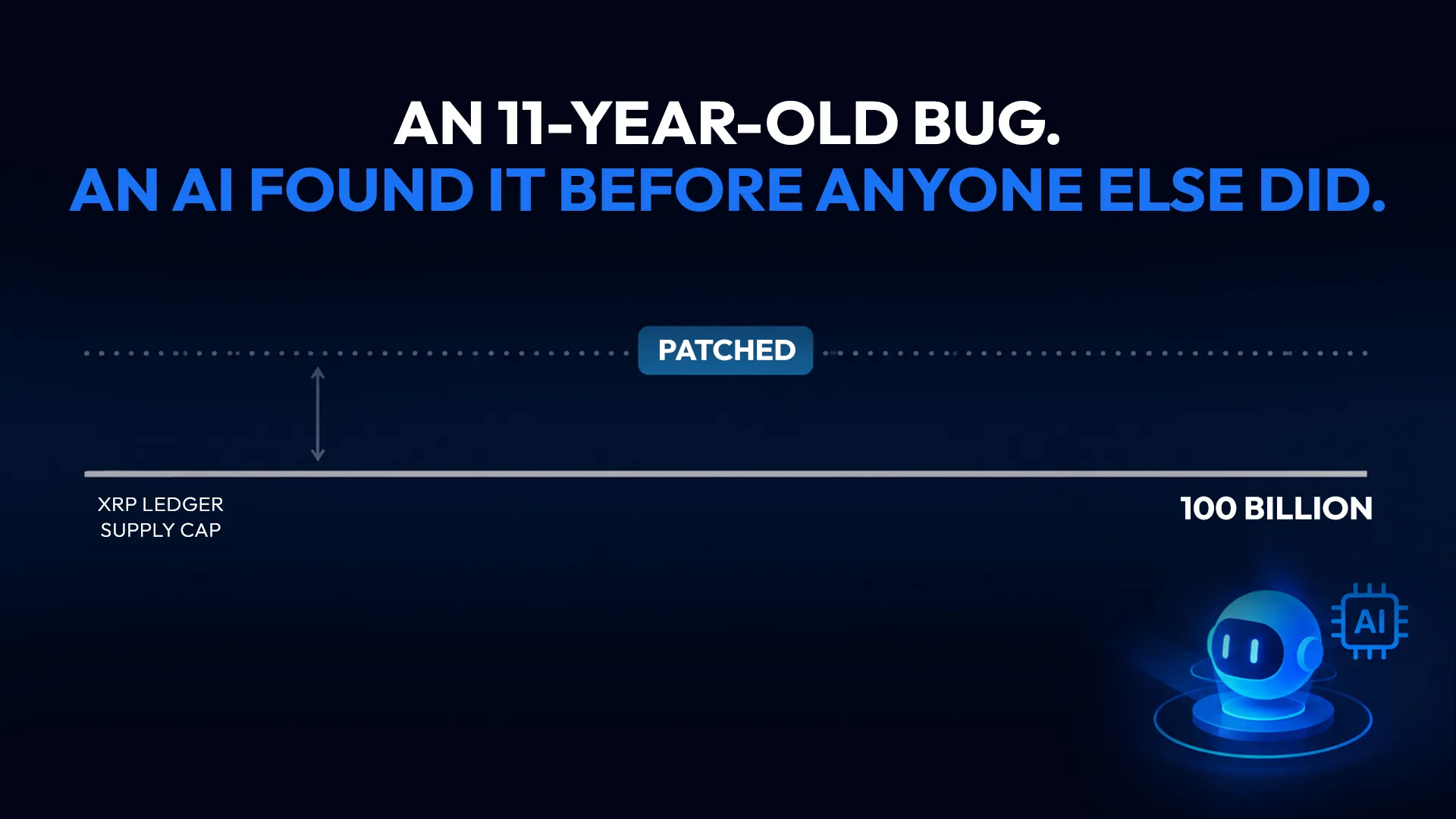
On October 9, the XRP Ledger Foundation disclosed a critical vulnerability that had existed in the network's code since 2015. The flaw could have allowed an attacker to create XRP beyond the network's intended supply limit, but it was discovered and patched before anyone exploited it.
The vulnerability involved an integer overflow in the payment engine, which calculates the amount of XRP needed to complete transactions across multiple order book offers.
An integer overflow occurs when a calculation produces a number larger than a computer system can store, causing the value to wrap around and generate an incorrect result. In this case, that error could have produced XRP that had never existed before, which could then be spent in later transactions.
The flaw had remained undetected for approximately 11 years, despite numerous security audits and code reviews.
It was eventually discovered by an AI agent developed by Veria Labs, a security startup co-founded by Cayden Liao.
Liao reported the issue through the XRP Ledger's bug bounty program on September 22, initially classifying it as a major vulnerability. RippleX engineers reproduced the problem on a standalone server, confirmed that the newly created XRP could be spent and upgraded its severity to critical.
The fix was released in version 3.4.1 of the XRP Ledger software on September 25. The foundation waited until October 9 to disclose the vulnerability publicly, giving network operators time to install the update.
The foundation confirmed that no unauthorised XRP had been created and that the existing supply remained consistent with expectations, at approximately 99.986 billion XRP.
Veria Labs received the maximum bug bounty payment of US$250,000 (AU$360,000), which Liao described as the largest reward he knew of for a vulnerability discovered entirely by an AI agent.
The response was notable because it departed from the XRP Ledger's usual public amendment process.
Normally, proposed network changes are published for validators to review and approve over several weeks. In this case, making the details public before the fix was widely installed could have given attackers enough information to exploit the flaw.
RippleX instead contacted node operators directly and coordinated deployment of the patch, reaching more than 80% validator adoption by September 25 before the vulnerability was disclosed.
The result was a serious security issue resolved without reported exploitation or losses.
For an industry that has experienced major losses from software vulnerabilities, the response offers an example of how coordinated disclosure, technical expertise and responsible security research can prevent an incident before it occurs.
It also highlights the growing role AI tools may play in identifying weaknesses that traditional code reviews have missed.
Metaplanet's Bonds and IREN's Secret Anthropic Deal
Two corporate developments this week highlight different ways crypto-related businesses are adapting as the market matures and demand for AI infrastructure grows.
Metaplanet, Japan's largest corporate Bitcoin holder, announced plans to issue ¥52 billion in zero-interest convertible bonds, equivalent to approximately US$329 million (AU$473.8 million).
The Tokyo-listed company holds around 30,823 BTC, worth approximately US$2.57 billion (AU$3.7 billion), and plans to use the funds to repay existing Bitcoin-backed loans and support share buybacks through its repurchase program ending October 28.
The proceeds will not be used to purchase additional Bitcoin.
Instead, Metaplanet is restructuring its debt while maintaining its existing holdings, reflecting a greater focus on managing its balance sheet alongside its long-term accumulation strategy.
The company continues to target 100,000 BTC by the end of 2026 and 210,000 BTC by 2027, goals that will require substantial additional capital.
Closer to home, Australian-founded Bitcoin mining company IREN is reportedly involved in a major cloud computing agreement with Anthropic, the AI company behind Claude.
According to an October 11 report from The Information, Anthropic has signed an unannounced multiyear cloud deal with IREN, which is listed on Nasdaq and headquartered in New South Wales.
Neither company has publicly confirmed the agreement.
IREN has spent the past two years shifting its focus from Bitcoin mining toward AI cloud infrastructure. During its August earnings call, the company disclosed that its multiyear cloud contracts included a major frontier AI laboratory, although it did not identify the customer.
The latest report has renewed speculation that Anthropic is the company involved, with IREN shares rising more than 5% following the news.
The financial implications could be substantial. The Information reported that bringing IREN's 245-megawatt facility online one month ahead of schedule could generate more than US$1.3 billion (AU$1.87 billion) in additional revenue, highlighting the value of securing computing capacity as AI demand grows.
The Australian Financial Review has also reported that Anthropic is seeking at least 1.4 gigawatts of cloud capacity from Australian data centres, with a decision potentially expected within weeks.
IREN is not the only company under consideration, and the reported agreement remains unconfirmed.
What makes the story significant is the broader shift in how infrastructure originally developed for Bitcoin mining is being used.
Mining companies invested heavily in power access, data centres and high-performance computing infrastructure. Those same assets are now attracting interest from AI companies competing to secure the energy and computing capacity needed to train and operate increasingly advanced models.
For Australia, that creates an opportunity to participate in the global AI infrastructure market using capabilities developed during the growth of Bitcoin mining.
The transition from crypto mining to AI computing is gathering pace, and Australian companies are becoming part of that shift.
ASIC Wants 10 More Years of CFD Protections. Digital Assets Included.
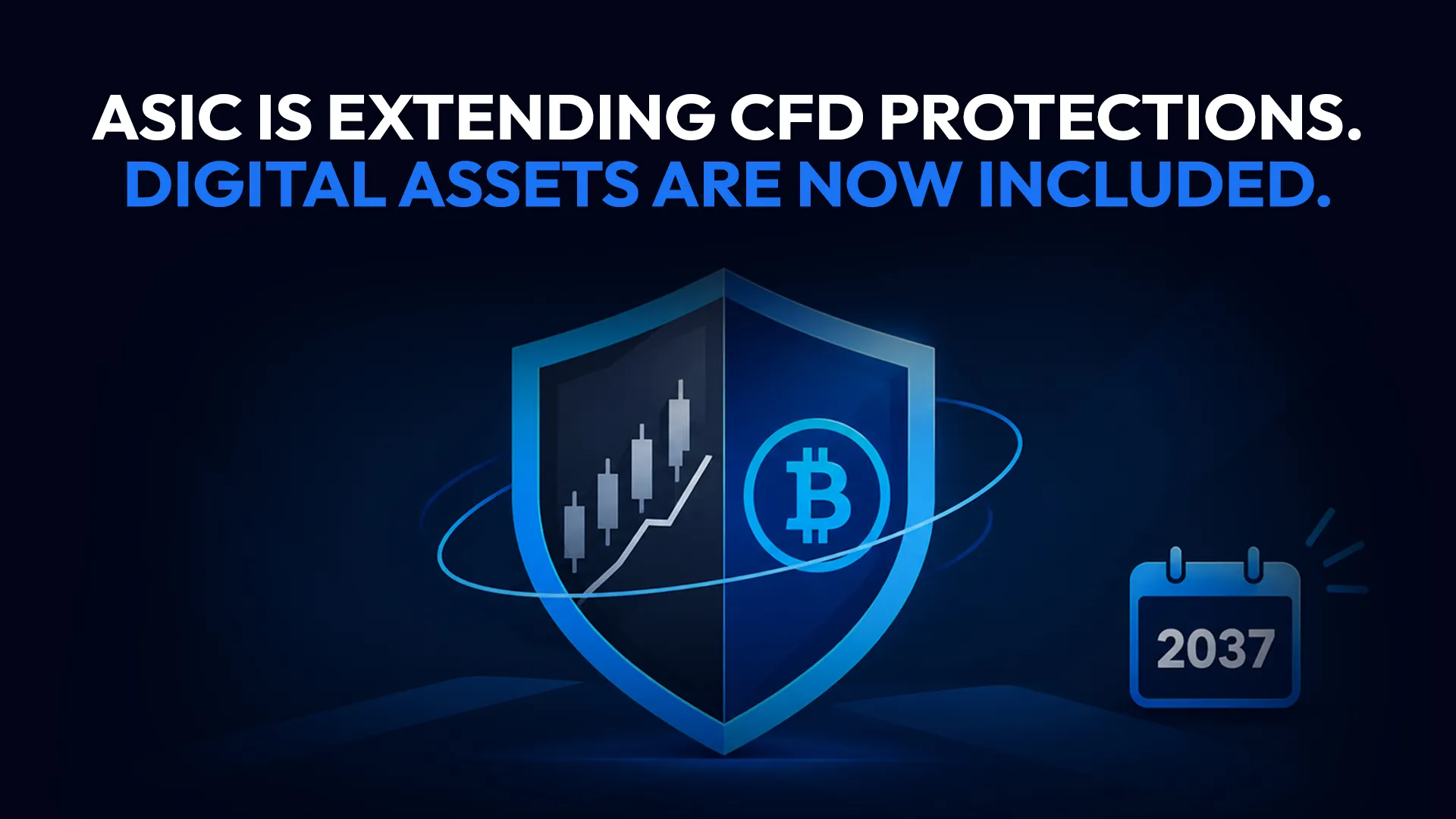
Australia's corporate regulator is seeking to extend its retail contracts for difference (CFD) protections for another decade, while expanding the rules to cover CFDs settled in digital assets for the first time.
ASIC has applied to the Federal Court to extend its existing product intervention order until October 2037.
CFDs allow traders to speculate on an asset's price movements without owning the underlying asset. They commonly use leverage, which can increase potential returns but also magnify losses.
ASIC introduced restrictions in 2021 after finding that retail traders were suffering substantial losses from leveraged CFD products.
The measures limited maximum leverage ratios and restricted promotional incentives that encouraged retail participation in products carrying significant risk.
According to ASIC's review, retail CFD losses fell sharply after the rules took effect. Net losses declined from approximately AU$774 million in the year before the intervention to AU$244 million in the following year, with further reductions recorded since.
ASIC believes the protections remain necessary and that removing them could expose retail traders to the same risks that prompted the original intervention.
The proposed expansion to digital asset-settled CFDs is particularly relevant to the crypto industry.
Some providers now offer CFDs where profits and losses are settled in cryptocurrency rather than Australian dollars. This can expose traders to two sources of risk: leverage on the underlying trade and price volatility in the cryptocurrency used for settlement.
ASIC wants these products covered by the same restrictions that apply to traditional CFDs, rather than allowing different settlement methods to create gaps in consumer protection.
For Australian traders, the direction is clear. Regulators are extending existing financial safeguards to cover newer digital asset products, particularly where leverage increases the potential for losses.
Australia's approach differs from the broader legislative changes being pursued in the United States, where the Digital Asset Market Clarity Act failed to pass the Senate last month.
Rather than waiting for an entirely new regulatory framework, ASIC is adapting existing protections to account for changes in how financial products are structured and settled.
For anyone trading crypto-related derivatives, understanding the provider's licensing arrangements, regulatory obligations and risk protections remains an important part of choosing where to trade.
Founder's Corner
Two stories stood out to me this week, and they show very different sides of what this industry is capable of.
The Ledger hardware implant story is the more concerning one. Not simply because the reported losses reached US$93.4 million (AU$134.5 million), but because of what it reveals about the limits of personal responsibility when it comes to self-custody.
The affected users purchased their devices through an authorised reseller, followed the recommended setup process and checked that their wallets were genuine. Yet an unauthorised component inside the hardware could intercept their seed phrases before they had even finished setting up.
That is not the kind of risk an individual can reasonably be expected to identify on their own. It is a supply chain problem, and even experienced users depend on manufacturers, distributors and retailers to maintain the integrity of the products they purchase.
At Wayex, we hold customer funds under institutional-grade security, fully segregated from company funds and under Australian regulatory oversight. That does not mean self-custody has no place in crypto. It means different approaches to holding assets come with different responsibilities, and regulated custody exists to help manage risks that individuals may not be equipped to detect or prevent.
The XRP Ledger vulnerability offers a very different example of how the industry can respond to security threats.
An AI agent discovered a flaw that had existed in the network's code for 11 years, despite repeated reviews and audits. Rather than exposing the vulnerability publicly before it could be fixed, the researchers and developers coordinated a patch, secured widespread adoption and disclosed the details only after the network was protected.
No reported exploitation, no losses and a US$250,000 (AU$360,000) reward for the researchers who found it.
What stands out to me is the difference in outcomes. One story shows how a weakness in the supply chain can undermine the precautions taken by careful users. The other shows what happens when security researchers, developers and network operators work together to address a serious problem before it causes harm.
Both are reminders that trust in crypto depends on more than the technology itself. It depends on the standards, processes and people responsible for keeping that technology secure.
At Wayex, we believe those standards need to improve as the industry grows. Security cannot be treated as something that is finished once a platform launches. It requires ongoing investment, oversight and accountability, particularly as more people rely on digital assets as part of their financial lives.
Richard Voice Co-Founder, Wayex
Things That Made Us Laugh This Week