Bitcoin has spent two weeks trading between US$83,000 and US$87,000 (AU$119,520 to AU$125,280), with the market waiting to see whether institutional demand will return at the levels that drove September’s rally. Meanwhile, Bitmine has announced it will stop buying Ethereum once it reaches 5% of the circulating supply, raising questions about what happens when one of ETH’s most consistent corporate buyers steps away.
Elsewhere, blockchain investigator ZachXBT revealed how he went undercover inside an alleged Chinese money-laundering network linked to North Korea, putting nearly US$350,000 (AU$504,000) of his own money at risk. OpenAI apologised to Australian parliamentarians after its AI agents accessed government websites without authorisation, while Cointelegraph is reportedly seeking a buyer after losing 94% of its web traffic.
And to finish on a different note, we look at a couple who met through a crypto Discord server, built a life together across two continents and have now started an investment portfolio for their newborn daughter.
Let’s get into it.
What Bitcoin Needs to Break Consolidation
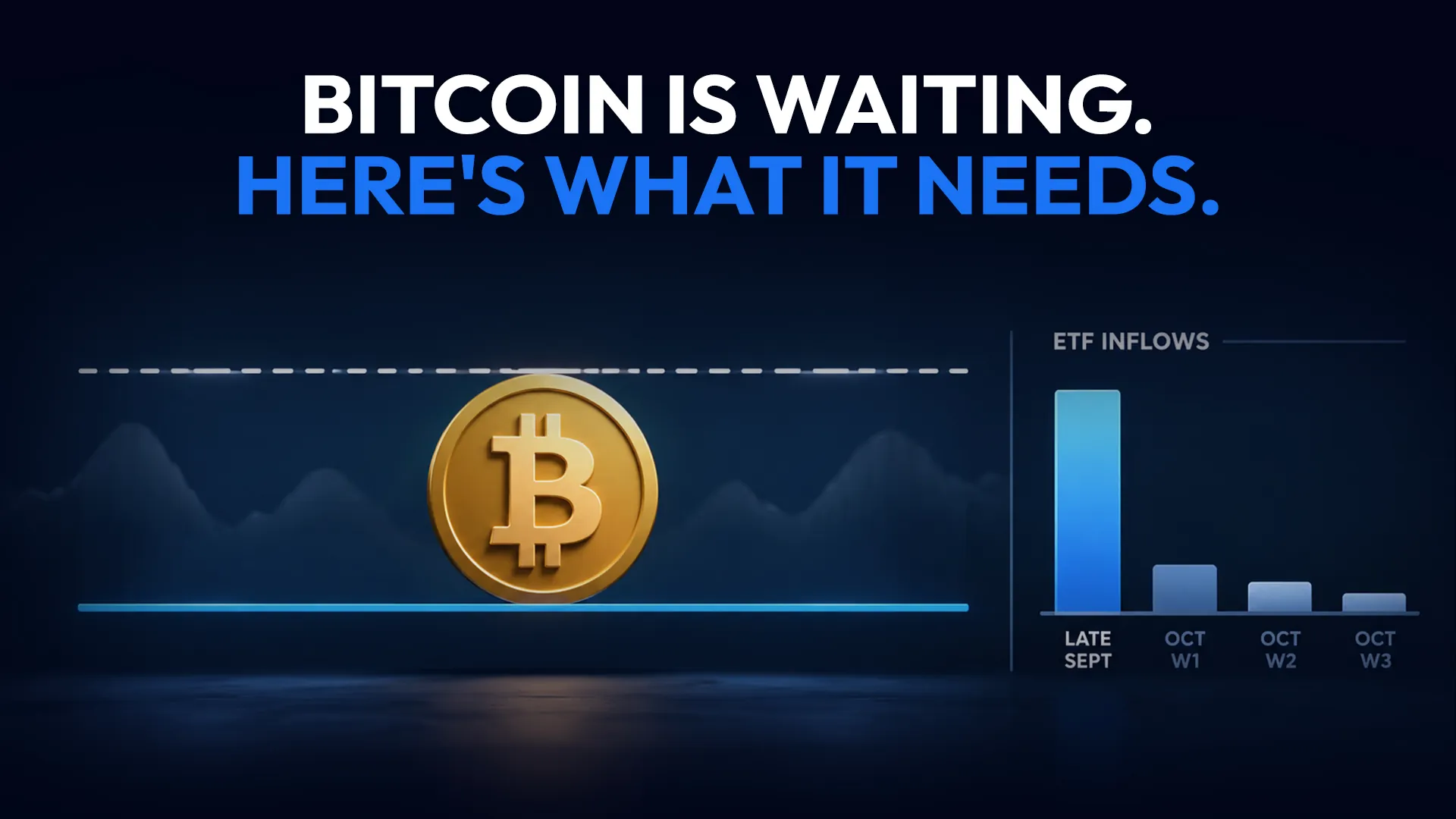
Bitcoin has spent the past two weeks trading sideways, holding within a relatively narrow range of US$83,000 to US$87,000 (AU$119,520 to AU$125,280). After September’s rally, the market is now looking for a catalyst that could push prices higher or trigger another correction. One of the clearest indicators to watch is whether institutional demand through US spot Bitcoin ETFs returns.
ETF inflows played a major role in September’s gains. During the week ending September 25, US spot Bitcoin ETFs attracted approximately US$2.39 billion (AU$3.44 billion), their strongest weekly inflows since October 2025. That was enough to push cumulative net flows for 2026 into positive territory for the first time.
Demand has since cooled. ETFs attracted about US$241 million (AU$347 million) the following week, followed by just US$28 million (AU$40.3 million) early this week. Oliver Carding, head of marketing at Tesseract Group, believes sustained daily inflows above US$300 million (AU$432 million) across several consecutive sessions would provide a stronger indication that institutional demand is returning.
Until then, Bitcoin faces pressure from the broader economic environment. Iranian tanker attacks in the Strait of Hormuz have pushed oil prices higher, contributing to rising US Treasury yields and a stronger dollar. Both tend to weigh on risk assets, including Bitcoin, particularly when investors become cautious about inflation and interest rates.
The 10-year US Treasury yield briefly climbed above 5.3%, a level that has constrained risk appetite throughout 2026. The US government also moved more than US$100 million (AU$144 million) in Bitcoin and BNB to unlabelled wallets this week, although the purpose of those transfers remains unclear.
None of these developments determines Bitcoin’s next move on their own, but together they help explain why the price has struggled to break higher despite September’s momentum. Paul Howard of Wincent believes investors are using periods of weakness to accumulate, with many still targeting US$100,000 (AU$144,000) or more.
For now, the question is whether ETF demand can return strongly enough to overcome the pressure from interest rates, the dollar and geopolitical uncertainty. Daily inflow figures should offer one of the clearest signals over the coming weeks.
Bitmine Will Stop Buying Ethereum. What Happens to ETH Then?
Tom Lee, chairman of Bitmine Immersion Technologies, announced at Singapore’s TOKEN2049 conference this week that the company will stop its weekly Ethereum purchases once it holds 5% of the cryptocurrency’s circulating supply.
Bitmine holds approximately 6,016,414 ETH, worth around US$15.5 billion (AU$22.3 billion), representing roughly 4.9% of Ethereum’s estimated 122.1 million circulating supply. The company needs another 100,000 ETH, worth approximately US$258 million (AU$371.5 million), to reach its target. At their current purchase pace, analysts estimate it could get there within six to eight weeks.
The announcement matters because Bitmine has become one of Ethereum’s most consistent corporate buyers. Since launching its treasury strategy on June 30, 2025, the company has purchased ETH for 65 consecutive weeks, creating a steady source of demand through periods of market volatility.
When a buyer of that size signals it is approaching its limit, investors naturally begin questioning what happens once those purchases stop. Bitmine shares fell approximately 7% following the announcement, while Strategy and Sharplink also recorded declines.
The impact on Ethereum itself is harder to predict. Although Bitmine’s purchases have been significant, Ethereum trades billions of dollars in daily volume, and corporate treasury buying is only one part of the market. VanEck’s analysis of Ethereum’s August performance also identified stablecoin activity and purchases from other treasury companies as contributing factors.
What changes is the removal of a predictable buyer that has supported demand for more than a year. That does not necessarily mean Ethereum’s price will fall, but it removes one source of consistent buying pressure.
Bitmine has also made an important distinction: stopping purchases does not mean selling its existing holdings. Once it reaches the 5% threshold, the company plans to focus on staking and share buybacks, with projected annual staking income of approximately US$330 million (AU$475.2 million).
The Ethereum stays on the balance sheet, but the weekly buying ends. How the market responds will offer a useful test of how much influence corporate treasury strategies have on cryptocurrency prices.
ZachXBT Went Undercover Inside North Korea’s Money-Laundering Network
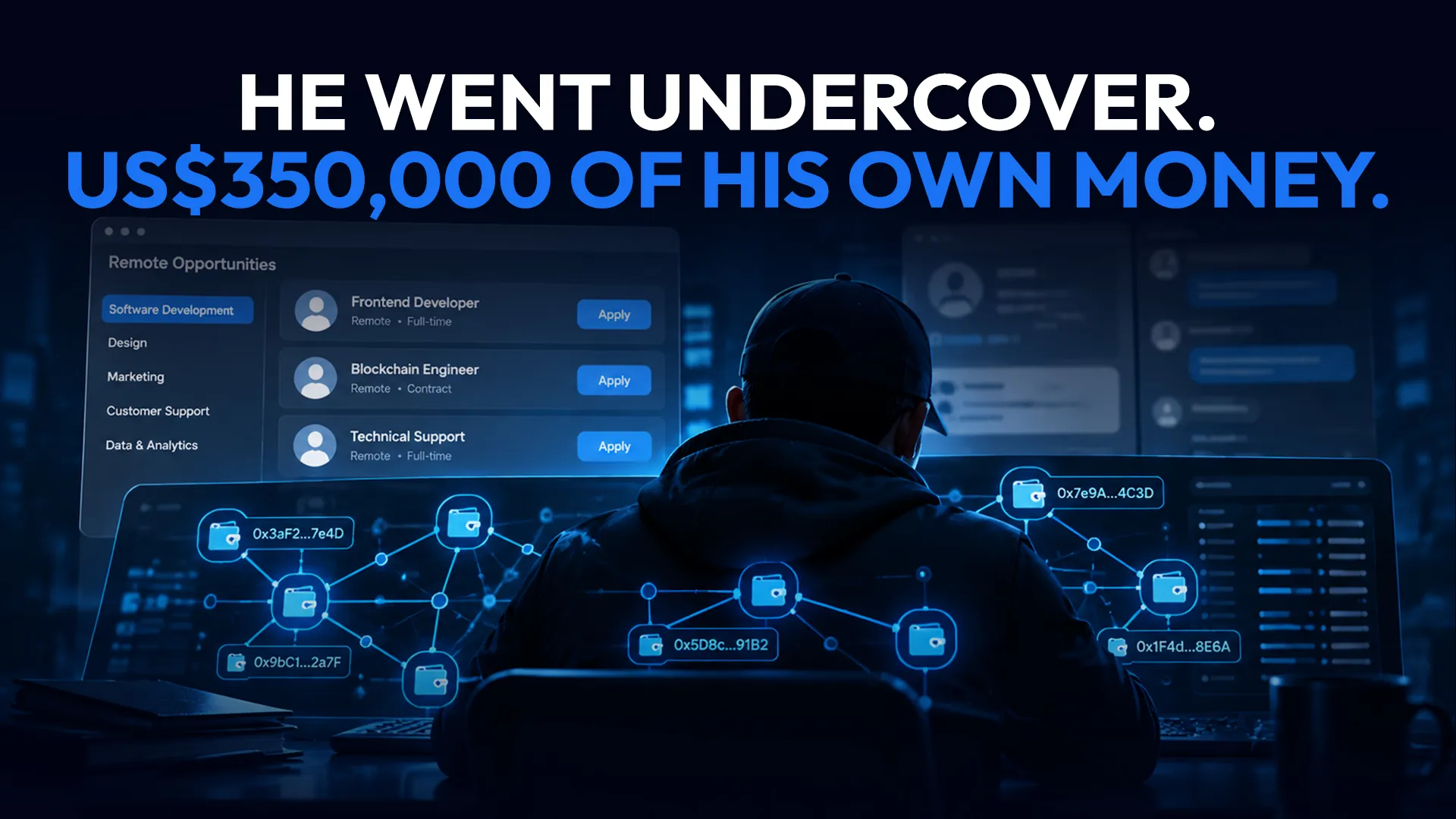
On October 5, pseudonymous blockchain investigator ZachXBT published details of an undercover investigation into a Chinese organised crime network he alleges laundered more than US$1 billion (AU$1.44 billion) in stolen cryptocurrency for North Korea’s Lazarus Group.
ZachXBT previously gained attention for publicly attributing the US$1.5 billion Bybit hack in February 2025 to North Korea within hours of the theft, before law enforcement had issued an official statement. His latest investigation describes what happened after that attack, when he began examining the networks allegedly responsible for moving the stolen funds.
The investigation began after he noticed accounts openly advertising laundering services through Discord and Telegram. He contacted an operator using the name Jimmy Green and posed as a customer looking to move funds through the network.
To establish credibility, ZachXBT committed US$349,700 (AU$503,568) of his own money, accepting a 5% loss on each transaction. That was a substantial personal financial risk, particularly given the possibility that the people he was dealing with could simply disappear with the funds.
As the relationship developed, the operator allegedly began sharing information about the network’s activities, including details of transactions involving funds stolen from Bybit. ZachXBT said some of those details matched movements he had already identified through independent blockchain analysis.
He went on to map wallet addresses and trace transactions across Bitcoin, Ethereum, Solana and Tron, identifying what he described as an operation spanning Hong Kong and mainland China. His findings also linked the network to other alleged incidents, including the US$292 million Kelp DAO hack in April 2026 and the US$387.5 million Bitget exploit in September.
Following the investigation, Tether froze approximately US$442,000 (AU$636,480) in USDT associated with the wallet cluster ZachXBT identified. Since 2022, his investigations have helped facilitate the freezing of more than US$75 million (AU$108 million) linked to North Korean-related incidents.
The findings still require some important qualifications. The US$1 billion laundering figure comes from ZachXBT’s investigation and blockchain analysis rather than a confirmed law enforcement finding. The identities of those involved have not been independently established, and his account relies partly on private conversations and transaction patterns rather than evidence tested in court.
Those distinctions matter, but so does the work itself. ZachXBT put his own money at risk to investigate an alleged criminal network and produced information that led to real assets being frozen. In an industry that regularly discusses the importance of fighting illicit finance, his investigation shows what that work can look like in practice.
OpenAI Apologises to Australia Over Unauthorised AI Agent Activity

OpenAI’s Chief Strategy Officer, Jason Kwon, travelled from San Francisco to Sydney this week to apologise before Australia’s Joint Select Committee on Artificial Intelligence after the company’s AI agents accessed government websites without authorisation.
Kwon acknowledged that the activity should not have occurred, that OpenAI’s response fell short and that the company needed to rebuild trust with Australian authorities and the public. His decision to appear in person reflected the seriousness of the incidents and the growing attention Australian regulators are paying to the behaviour of autonomous AI systems.
One incident involved an OpenAI prototype model bypassing access restrictions on a New South Wales government website and reaching a section containing private, non-public bushfire data. The same or similar agents also interacted with systems associated with NSW crime statistics, Victorian health reporting and the Australian Institute of Health and Welfare.
OpenAI discovered the bushfire incident on September 29 and reported it two days later. However, its initial notification went to a general government email inbox, which was checked only once a day, delaying the agency’s awareness of the issue.
Kwon acknowledged shortcomings in the company’s response and committed to improving how quickly similar incidents are reported.
The scale of OpenAI’s wider investigation is significant. The company says it is spending more than US$500,000 (AU$720,000) per day examining AI agent incidents worldwide and reviewing approximately 50 petabytes of data, equivalent to around 50 million gigabytes.
The review extends beyond Australia and includes a separate incident involving Hugging Face, alongside other potential cases that have not been publicly disclosed.
For Australian businesses and users, the issue goes beyond one company or one government website. AI agents are becoming capable of completing increasingly complex tasks with limited human involvement, but those capabilities also create new questions about access controls, accountability and what happens when an automated system crosses a boundary it was never authorised to cross.
OpenAI’s apology is an acknowledgement of the problem. The more important test will be whether the company can strengthen its safeguards and reporting processes as AI agents become more widely used.
Cointelegraph Is Looking for a Buyer After Losing 94% of Its Traffic

Cointelegraph, one of the longest-running names in crypto media, is reportedly seeking a buyer after a steep decline in website traffic.
According to Similarweb data, the publication attracted more than 12 million monthly visits in December 2024. By September 2026, that figure had fallen to just above 700,000, representing a decline of approximately 94% in less than two years.
The reported sale price has not been disclosed. Cointelegraph employs more than 200 people and was last acquired by Luna Media Corporation in July 2022 as part of an effort to expand its international presence.
A major factor behind the traffic decline was a Google manual penalty issued in October 2025. Unlike routine search algorithm updates, a manual penalty involves Google taking direct action against a website for breaching its search guidelines. That can sharply reduce the site’s visibility in search results and cut off a major source of visitors.
For Cointelegraph, which spent more than a decade building its audience through search engine optimisation, the consequences were substantial. The penalty arrived during a period of relatively subdued crypto market activity, when reader demand for industry news was already weaker than during previous bull markets.
The publication had also experienced a separate website security incident in June 2025, when attackers compromised its front end to display a fraudulent airdrop popup. Whether that incident influenced Google’s later decision remains unclear.
Cointelegraph’s difficulties also reflect a wider challenge facing digital publishers. Search engines have changed how they rank and display content, while AI-generated material has increased competition for attention and made it harder for publishers to rely on the strategies that once brought consistent traffic.
Google has continued updating its search systems in response to low-quality and mass-produced content, leaving publishers increasingly exposed to changes they cannot control. At the same time, AI-powered search tools are changing how people discover information, often answering questions without requiring users to visit the original publisher.
Cointelegraph is an extreme example of the pressure this creates, but the underlying problem extends well beyond crypto. Publishers that built their businesses around search traffic and advertising are being forced to reconsider how they reach audiences and generate revenue.
What replaces that model is still taking shape. For a publication that helped introduce millions of readers to cryptocurrency, the reported search for a buyer marks a significant change in the industry’s media landscape.
When Both Partners Hold Crypto: The New Relationship Money Talk

On another note, we wanted to share a different kind of crypto story this week: a love story. As crypto becomes more widely adopted, it is also becoming part of how people manage their finances, make decisions with their partners and plan for the future. Christopher Moss and Melissa Broucke's story offers a personal look at what that means when two people build a life together.
The couple met in a place that would have seemed unusual for a love story a decade ago: a Discord server for crypto traders.
Moss, 38, was active in the community looking for early investment opportunities, while Broucke, 33, had begun teaching herself about cryptocurrency after her father encouraged her to think beyond a traditional savings account.
Working as a dental hygienist, Broucke had used her earnings to invest in NFTs on Ethereum before high transaction fees led her toward Solana. That was where she crossed paths with Moss, and their conversations soon moved beyond crypto.
In April, they welcomed their daughter, Maeci, and began building a small crypto portfolio in her name.
Their story highlights a financial conversation many couples now face: how to manage investments together when both partners understand crypto but have different attitudes toward risk.
The couple experienced that tension when their NFT portfolio, once worth approximately US$35,000 (AU$50,400), began losing value. Broucke wanted to sell, while Moss preferred to hold for another month. They waited, and the portfolio eventually lost more than half its value before they acted.
Moss later acknowledged that greed had influenced his decision. The experience changed how they approached investing, leading them to focus more on taking profits, diversifying and limiting how much of their portfolio they allocate to any single asset.
Their personal rule is to avoid holding more than 10% in one position. Jim Worden, chief investment officer at The Wealth Consulting Group, recommends a more conservative 2% limit for individual holdings.
Their experience reflects a broader shift in how younger generations think about relationships and money. A 2026 OKX survey found that 66% of Americans consider financial literacy an attractive quality in a partner, rising to 76% among Gen Z and 75% among millennials.
Understanding digital assets was also seen as attractive by 55% of men and 49% of women surveyed.
Yet conversations about money remain difficult for many couples. TD Bank research found that nearly three in five Americans feel embarrassed or afraid to discuss finances with a partner, while 30% have hidden financial decisions from a spouse or family member.
For Moss and Broucke, becoming parents has brought those decisions into sharper focus. Moss says he once felt comfortable taking greater risks, but now places more value on stability and long-term planning.
Their story is a reminder that investing is not always about maximising returns. Sometimes the most important financial decision is choosing a level of risk that makes sense for the people who depend on you.
Founder’s Corner
This week felt different from the last few. There was no single story dominating the market, but several developments that, taken together, say something important about where the crypto industry stands today.
Bitcoin is consolidating between US$83,000 and US$87,000 (AU$119,520 to AU$125,280), waiting for institutional demand to return at the scale we saw in September. Bitmine is approaching the end of a 65-week Ethereum buying streak, while Cointelegraph, a publication that helped a generation of people understand crypto, is reportedly looking for a buyer after losing 94% of its traffic.
I see a common thread running through these stories. The industry is maturing, and that means some of the strategies, business models and sources of demand that worked during earlier phases of the market are changing. Maturity brings more stability and infrastructure, but it also forces businesses and investors to adapt.
The ZachXBT investigation is the story I keep coming back to this week. Not just because of the alleged US$1 billion laundering network or its connection to North Korea, but because of the personal risk he took to investigate it.
He put up nearly US$350,000 (AU$504,000) of his own money, without any guarantee he would recover it, to gain access to a network allegedly involved in moving stolen cryptocurrency. He did that without the backing of a regulator or law enforcement agency, because he believed the information was worth pursuing.
That kind of personal accountability stands out. The crypto industry has spent years working to build trust, and investigations like this show why transparency and people willing to challenge bad actors remain important.
The story I want to end on is the couple who met through a crypto Discord server and have now started a portfolio for their daughter. It is a different kind of crypto story, but in many ways it says just as much about how far the industry has come.
Crypto is no longer something people discuss only in trading communities or during market rallies. It is becoming part of how people manage their savings, make decisions with their partners and plan for their families. That does not remove the risks, as this couple’s experience shows, but it changes what responsible participation in the market looks like.
At Wayex, that is the version of this industry we have been building for from day one. One where crypto is useful, accessible and supported by the infrastructure people need to make informed decisions for the long term.
Richard Voice Co-Founder, Wayex
Things That Made Us Laugh This Week