What is a stablecoin card? A plain-English guide to spending USDC, USDT, DAI and PYUSD
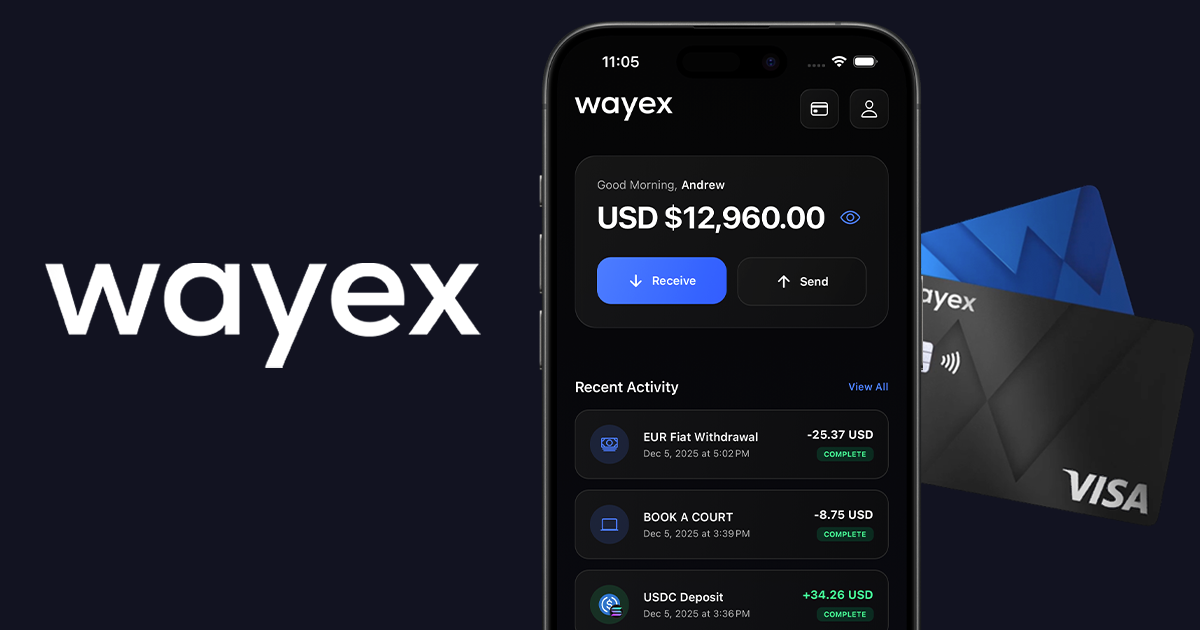
A stablecoin card is a debit card that lets you pay in normal dollars at normal shops. You deposit stablecoins into it — USDC, USDT, DAI, PYUSD, any supported variant — and those stablecoins convert to a plain USD balance the moment they land. When you tap at a coffee shop in Buenos Aires or a hotel in Bangkok, the terminal asks for pesos or baht, and the card draws from that USD balance. To the barista, it looks like any other Visa card. To you, the USD number on your phone just went down a few dollars.
That description sounds mundane. The reason it matters is that until two or three years ago it basically did not exist at consumer scale. The first generation of "crypto cards" ran on a different model entirely: you held bitcoin or ether on an exchange, the exchange sold a slice at the point of sale, and you paid capital gains tax on every coffee. Stablecoin cards do not have that problem, because a dollar-pegged stablecoin is already, give or take, a dollar. There is nothing to realize a gain against — the conversion from the stablecoin to USD happens once, at deposit.
Why the category suddenly matters
Visa's own data tells the story better than anyone else can. Crypto card spending crossed roughly eighteen billion dollars in annualized volume in early 2026, up from about a hundred million a month in early 2023. Visa-issued crypto card spending grew 525 percent year-on-year in 2025. And when the split is broken out, the stablecoin portion is now the majority of that growth. The bitcoin-card era was about ideology and novelty. The stablecoin-card era is about people who want a normal bank experience without the bank.
Three things happened at roughly the same time and made this possible. First, the tooling to convert stablecoins to fiat at the point of sale became fast and cheap enough that the end user does not notice it. Second, regulation clarified enough — the GENIUS Act in the United States, MiCA in Europe, the HKMA rules in Hong Kong — that banks and card networks felt comfortable putting their name on the product. And third, the user base stopped being exclusively crypto-native. The modal customer for a stablecoin card today is a freelancer in Lagos who gets paid in USDC, a graphic designer in Buenos Aires hedging against the peso, or a traveller tired of being billed a 3 percent foreign-transaction fee by their everyday bank card.
How the card actually works
Here is the simplified mechanics of a single purchase. Earlier — at some point before the coffee shop — you deposited $100 worth of USDC (or USDT, or DAI, or PYUSD) from your wallet on the chain of your choice. The moment that deposit landed on Wayex, it was converted into a USD balance. The stablecoin is gone from your card-facing view; the USD is there.
Now you authorize a $4.50 flat white on your phone. The card network sees an authorization request for $4.50. Your card issuer — Lead Bank, licensed by Visa U.S.A. — checks you have at least $4.50 available in your USD balance. The program manager — Bridge Ventures LLC, a Stripe company — settles with the merchant. The whole thing takes under a second and the merchant never knows stablecoins were involved. You do not pick a chain. You do not pick a coin. The card just spends USD.
This is on purpose. The first generation of stablecoin cards exposed the plumbing — users had to pick USDC on Polygon versus USDT on Tron for every top-up and every transaction, and it was exhausting. The current generation hides that complexity. You deposit whatever you have on whatever chain you have it on; the app converts it to USD; the card spends USD. The chain and coin plumbing is an implementation detail, not a daily decision.
Card-side knobs are the normal ones: pause the card, limit the transaction size, geofence by country, restrict merchant categories. What varies between providers is the FX fee on non-USD transactions, the monthly maintenance fee, and whether the card works with Apple Pay and Google Pay.
What to actually check before you pick one
Short list, in order of how often it will cost you money:
First, the USD transaction fee. Good cards charge zero. If you see a 1 or 2 percent fee on USD transactions, move on.
Second, the non-USD FX fee. The honest number is somewhere between 1.5 and 3 percent. Anything lower than that and the provider is eating the spread somewhere else (usually at the top-up or withdrawal layer).
Third, monthly maintenance. Should be zero. If it is not, the provider probably has a weak product and is trying to extract revenue before the user figures that out.
Fourth, what the card accepts as a deposit. A card that only accepts USDC and USDT leaves you fewer entry paths. A card that accepts USDC, USDT, DAI and PYUSD across Ethereum, Solana, Polygon, Arbitrum, Optimism, Base and a few more chains lets you top up from wherever your coins already live — gas-optimized and without a manual bridge. The balance ends up in plain USD either way; the question is just how many on-ramps you can use.
Fifth, issuer. If the card is issued by a real bank under a Visa or Mastercard license, someone audits the flow of funds. If the card is issued offshore by an entity you have never heard of, your money is being held by that entity, and a court in their jurisdiction decides what happens if things go wrong. The cleanest model today is Lead Bank plus Bridge plus Visa, which is what Wayex uses, but it is not the only good one.
Who uses this thing
The fastest-growing user segment right now is not traders. It is people who are paid in dollars but live somewhere else. A Filipino developer contracting for a U.S. startup. A Brazilian designer with clients in Lisbon and Berlin. An Argentine accountant whose pesos lose a double-digit percentage of their value every quarter. A South African freelance journalist with one foot in Johannesburg and one in London.
These people used to have two bad options. Option one was a local bank account in their country of residence, which meant converting inbound dollars to the local currency at a terrible rate and then losing purchasing power to inflation or exchange controls. Option two was a shadow dollar economy — a Payoneer account here, a wire transfer there, a stack of cash in a safe — which was inconvenient and not exactly legal. Stablecoin cards plus a global USD account give them a third option that is boring, fast, and legal in almost every country they touch.
Digital nomads are another loud segment. If you live in a different country every two months, the tax residency question gets complicated, but the day-to-day money question is simple: you want a card that does not gouge you on foreign-transaction fees and does not stop working the moment your bank notices a login from Bali. Most stablecoin cards are geography-agnostic in a way that traditional debit cards are not.
What to be careful about
Two things, mainly. The first is that a stablecoin is only as safe as its issuer. USDC and PYUSD are backed by cash and short-term Treasuries audited by major accounting firms. USDT's reserves are less transparent but the peg has held through several stress tests. DAI is over-collateralized by other crypto assets. If you want the safest profile, hold USDC. If you want the most liquid and most widely-accepted for off-ramping, hold USDT. If you value decentralization, hold DAI.
The second is that some stablecoin cards are effectively custodial — your stablecoins are held by the card provider — and others give you an address you control with the provider converting in and out as needed. Custodial is convenient. Non-custodial is resilient. Most mainstream products are custodial and that is fine for normal amounts, but if you are holding a significant balance, you should know which model you are using.
The bottom line
The reason a stablecoin card is worth having, if you live any part of your life across borders, is that it collapses three different problems into one: you get an account that can receive dollars from anywhere, a card that spends anywhere, and a balance that does not evaporate when your local currency has a bad month. That combination used to require three different products from three different companies in three different countries. Now it fits in an app.
If you want to skip the comparison shopping: Wayex offers a global stablecoin Visa card today, issued by Lead Bank, with zero USD fees and no monthly maintenance, backed by USDC, USDT, DAI and PYUSD across the chains that matter. The card is live in twenty-eight markets and the app is live in a hundred and sixty.